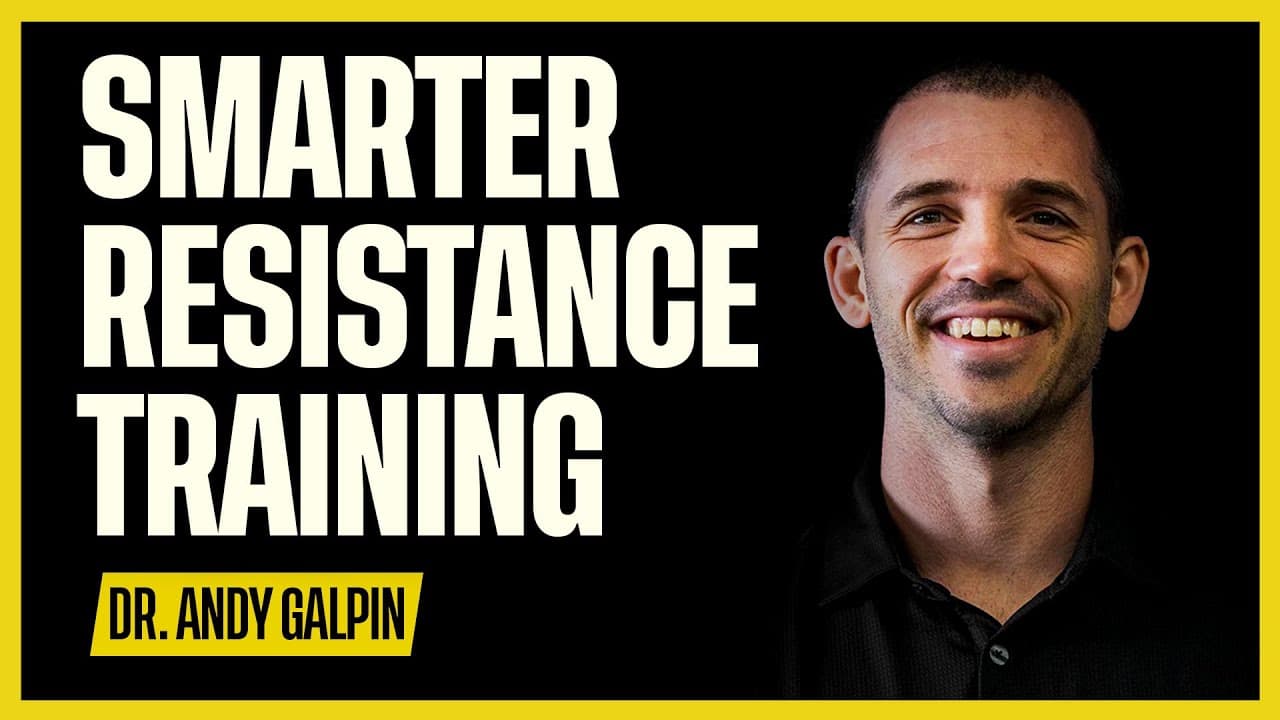
It's More Than Just Moving Weight Around - Dr. Andy Galpin
TL;DR
Dr. Galpin distinguishes strength, power, and hypertrophy in gym training.
Transcript
I know there's a a huge population I'd say more so than none uh that think that going into the gym and moving weight around is kind of just this one thing you're you're trying to achieve all the same performance outcomes just by walking into the gym but if we break down strength hypertrophy and power I mean you can train those three different syste... Read More
Key Insights
- Strength is defined as the maximum force one can exert in a single effort, focusing on heavy loads and low repetitions.
- Power combines force and velocity, requiring moderate loads moved at high speeds for optimal results.
- Hypertrophy is focused on muscle growth and size, not necessarily linked to functional outcomes like strength or power.
- Power training can indirectly enhance strength by improving acceleration, a crucial part of force production.
- Optimal strength development requires maximizing both force and acceleration, exemplified by powerlifting techniques.
- Training for power involves short, non-fatiguing exercises that prioritize peak velocity and moderate to low loads.
- Hypertrophy training offers flexibility in methods, as long as the end goal of muscle growth is achieved.
- Force velocity curve illustrates that as load increases, movement speed decreases, impacting power output.
Install to Summarize YouTube Videos and Get Transcripts
Explore YouTube Video Summarizer or Get YouTube Transcript Extractor
Questions & Answers
Q: What is the primary focus of strength training?
The primary focus of strength training is to maximize the amount of force one can exert in a single effort. This involves lifting heavy loads with low repetitions to achieve maximal force production. Strength is measured by the maximum load one can lift, push, or pull in one attempt.
Q: How does power differ from strength in training?
Power differs from strength as it involves the combination of force and velocity. While strength is about lifting the heaviest possible load, power focuses on how quickly a load can be moved. This requires moderate loads moved at high speeds to achieve optimal power output, as power is work done over time.
Q: What role does velocity play in power training?
In power training, velocity is crucial as it determines how fast a load can be moved. Power is calculated as force multiplied by velocity, so achieving high power output requires both significant force and high velocity. Training typically involves moderate loads to maximize speed and, consequently, power.
Q: What is hypertrophy, and how is it different from strength and power?
Hypertrophy is the increase in muscle size and is focused on muscle growth rather than functional outcomes like strength or power. Unlike strength and power, which require specific training methods, hypertrophy can be achieved through various methods as long as muscle growth is stimulated, without a focus on speed or force.
Q: How can power training indirectly improve strength?
Power training can indirectly improve strength by enhancing acceleration, which is a key component of force production. By focusing on velocity and acceleration in power training, one can improve the overall force exerted, thus contributing to strength development even though the primary focus is not on heavy loads.
Q: Why is the force velocity curve important in understanding power?
The force velocity curve is important because it illustrates the inverse relationship between load and movement speed. As the load increases, movement speed decreases, impacting power output. Understanding this relationship helps in designing training programs that optimize power by balancing force and velocity for maximum effectiveness.
Q: What is the significance of acceleration in strength training?
Acceleration is significant in strength training because it is half of the force production equation. By improving acceleration, one can enhance overall force, which is crucial for strength development. Training that focuses on both mass and acceleration, such as powerlifting, helps optimize force production and improve strength.
Q: How does powerlifting exemplify optimal strength development?
Powerlifting exemplifies optimal strength development by combining heavy lifting with speed to maximize force production. It focuses on one rep max efforts, prioritizing both mass and acceleration. This strategic approach ensures that both components of force production are addressed, leading to improved strength outcomes.
Summary & Key Takeaways
-
Dr. Andy Galpin explains the distinctions between strength, power, and hypertrophy in gym training. Strength focuses on maximal force with heavy loads, power combines force and velocity, and hypertrophy targets muscle growth. Each requires different training methods for optimal results.
-
Power training involves moderate loads and high velocity, indirectly improving strength by enhancing acceleration. This is crucial because acceleration is a key component of force production, which is essential for strength development.
-
For optimal strength development, training should focus on maximizing force and acceleration. Powerlifting, which combines heavy lifting and speed, exemplifies this approach, aiming to optimize overall force production through strategic training.
Read in Other Languages (beta)
Share This Summary 📚
Summarize YouTube Videos and Get Video Transcripts with 1-Click
Try YouTube Summary with ChatGPT & Claude or YouTube Transcript Generator
Explore More Summaries from The Nick Bare Podcast 📚





Summarize YouTube Videos and Get Video Transcripts with 1-Click
Try YouTube Summary with ChatGPT & Claude or YouTube Transcript Generator