Lose Fat While Gaining Muscle | Nutrition Myths #10
TL;DR
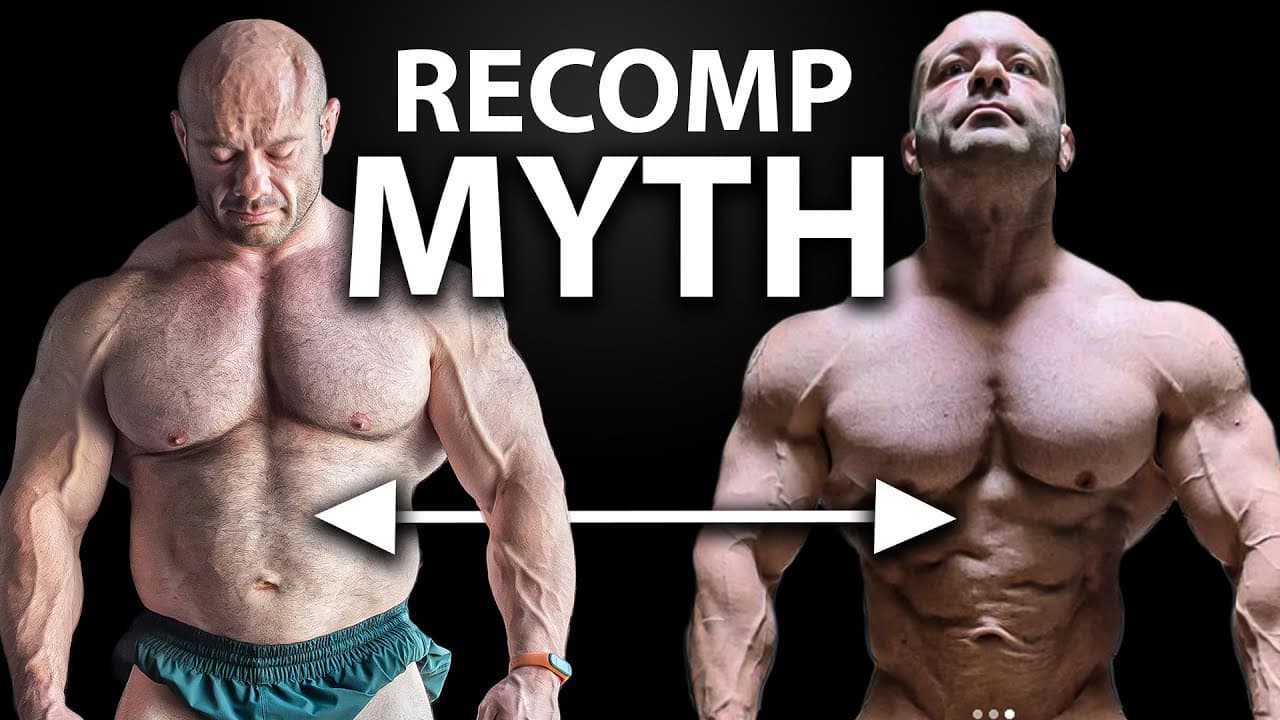
It is possible to gain muscle and lose fat simultaneously in certain circumstances, but overall, distinct muscle gain and fat loss phases are more effective.
Transcript
hey folks dr mike isrtel here for renaissance periodization nutrition myths number 10 losing fat while gaining muscle oh boy we're going to talk about the claim why it's wrong some silver linings as to how it could be right in some cases and then best practices moving forward here's the claim okay it's kind of a four-part claim with a fifth clarify... Read More
Key Insights
- 🤔 The claim that you can readily gain muscle and lose fat at the same time is mostly incorrect and lacks evidence. Lean gains and recomping have limitations.
- ♀️ There are a few circumstances where gaining muscle and losing fat simultaneously is possible, such as being a beginner, coming back from a long layoff, or using special sports supplements.
- ⚖️ Notable gains in muscle and fat loss are difficult to achieve through recomping. Technical gains can be measured in studies, but they may not be noticeable in practice.
- 💪 Sequencing distinct muscle gain and fat loss phases is more effective than relying solely on lean gains or recomping.
- 🔀 Recomping and lean gains may work well for beginners, who can achieve notable results without the need for extreme dieting or force-feeding.
- 📈 Once beginners have been body weight stable for several months, they may consider transitioning to either a fat loss or muscle gain phase.
- 🍽️ A hypercaloric condition is anabolic for muscle gain, while a caloric deficit is catabolic for fat loss. Utilizing both conditions separately yields better results than attempting lean gains or recomping continuously.
- 📚 It is important to recognize when recomping slows down and consider transitioning to intentional fat loss or muscle gain phases for optimal progress.
Install to Summarize YouTube Videos and Get Transcripts
Explore YouTube Video Summarizer or Get YouTube Transcript Extractor
Questions & Answers
Q: Is it possible to simultaneously gain muscle and lose fat?
Yes, it is possible, but in most cases, it is not the most effective approach. There are specific circumstances where it can occur, but for the best results, distinct muscle gain and fat loss phases should be implemented.
Q: Why is the phasic approach of distinct muscle gain and fat loss phases more effective?
The most profound muscle gains come from being in a slight caloric surplus, while the most effective fat loss occurs in a caloric deficit. By separating these phases, individuals can optimize their results and make more progress.
Q: Who is the recomping approach suitable for?
Recomping, where individuals try to gain muscle and lose fat simultaneously, can work well for beginners and those who are just starting their fitness journey. It allows for notable gains without the need for extreme dietary or training measures.
Q: What should individuals do when recomping is no longer yielding noticeable results?
Once the process of recomping slows down and becomes ineffective, individuals should switch to distinct phases of muscle gain or fat loss, depending on their goals. This allows for continued progress and prevents hitting a plateau.
Summary & Key Takeaways
-
The claim that you can readily gain muscle and lose fat at the same time is not entirely true for most people.
-
There are a few circumstances where simultaneous muscle gain and fat loss can occur, such as being a beginner, coming back from a long layoff, or using special sports supplements.
-
However, for the majority of individuals, distinct muscle gain and fat loss phases yield better results.
Read in Other Languages (beta)
Share This Summary 📚
Summarize YouTube Videos and Get Video Transcripts with 1-Click
Try YouTube Summary with ChatGPT & Claude or YouTube Transcript Generator
Explore More Summaries from Renaissance Periodization 📚



Summarize YouTube Videos and Get Video Transcripts with 1-Click
Try YouTube Summary with ChatGPT & Claude or YouTube Transcript Generator