How to Create Your Own Token on the Solana Blockchain
TL;DR
To create your own token on the Solana blockchain, set up a wallet and interact with the Solana program library to deploy your token contract. You can then mint tokens, which are created through a smart contract and associated with specific token accounts. Following the tutorial will guide you through the steps to successfully create and transfer your token.
Transcript
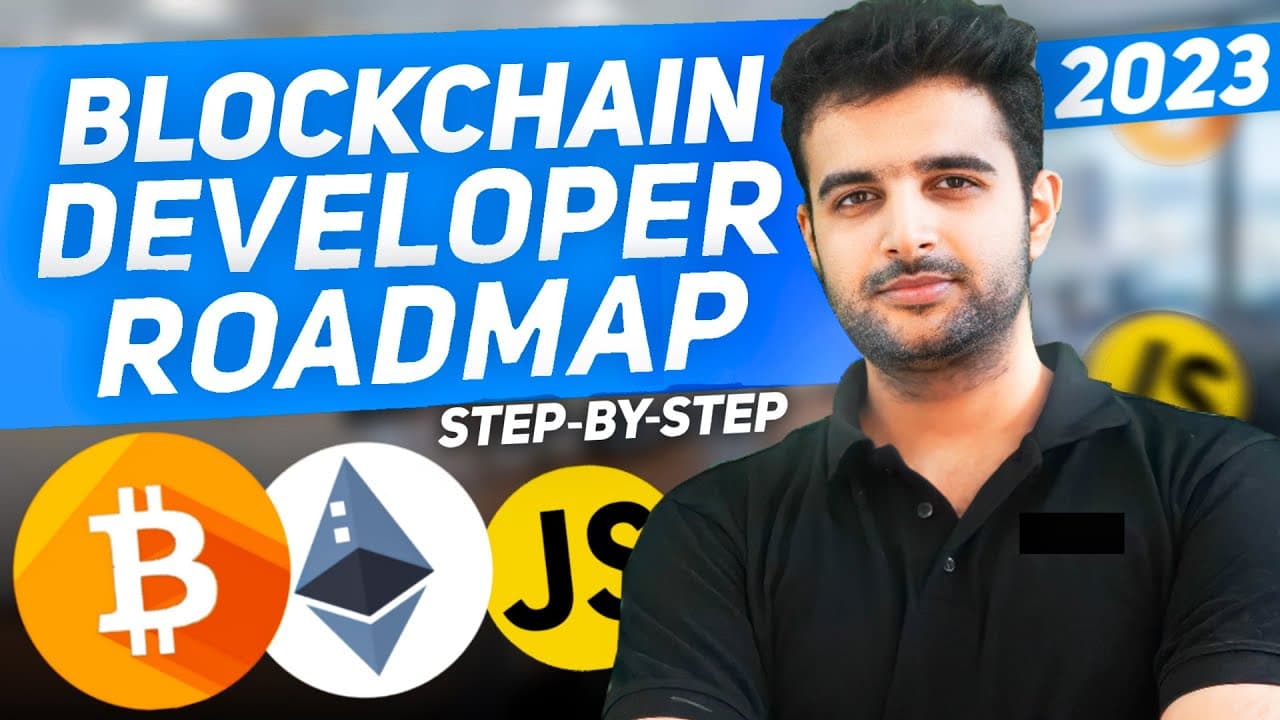
foreign hi everyone and welcome to a new video this video I am discussing a roadmap to web3 this is something a lot of people asked for but I'm going to do something different like the standard way of explaining a roadmap is telling some very high level things things like uh you need to learn solidity there is one blockchain called ethereum there's... Read More
Key Insights
- 💡 Piqued curiosity: The video aims to generate curiosity about the field of Web3 by introducing the concept of decentralized finance and explaining why it was introduced.
- 💰 Incentivization: The video offers incentives for viewers to complete the video and follow the steps provided, including receiving something in their crypto wallet as a reward for completion.
- 🔒 Decentralization: Decentralization is seen as a key factor in incentivizing and verifying actions in the Web3 world, as opposed to the centralized control seen in traditional financial systems.
- 💻 Learning blockchain: The video outlines a roadmap for viewers to learn about blockchain technology, including the different types of blockchains and how to create and code on a blockchain.
- 📈 Use cases of blockchain: The video discusses various use cases of blockchain technology, including exchanging currencies, financial transactions, and creating smart contracts that can be verified.
- 🌐 Multi-chain world: The video highlights the concept of a multi-chain world, where multiple blockchains coexist, each with its own unique features and capabilities.
- ⚡ Faster blockchains: Newer blockchains, such as Solana, are introduced as more efficient and faster alternatives to Ethereum, enabling higher transaction speeds and throughput.
- 🔑 Wallet creation: The video guides viewers on how to create a wallet to store their cryptocurrencies securely and introduces the concept of public and private keys.
- 🏦 Minting tokens: The video explains the process of creating and minting tokens on a blockchain, including the creation of a money printer or mint, and the distribution of tokens to user wallets.
Install to Summarize YouTube Videos and Get Transcripts
Explore YouTube Video Summarizer or Get YouTube Transcript Extractor
Questions & Answers
Q: How did the global financial crisis in 2008 lead to the introduction of cryptocurrencies like Bitcoin and Ethereum?
The global financial crisis exposed the vulnerabilities of centralized financial systems, leading to a lack of trust in traditional banking institutions. This prompted the creation of cryptocurrencies as a decentralized alternative to traditional currencies, allowing for peer-to-peer transactions without the need for intermediaries like banks. Bitcoin and later Ethereum were developed to offer secure and transparent financial systems that were not controlled by a central authority.
Q: How do Solana and other Layer 1 blockchains differ from Ethereum in terms of transaction throughput and consensus algorithms?
Solana and other Layer 1 blockchains aim to improve upon the scalability and transaction throughput issues faced by Ethereum. Unlike Ethereum, which primarily uses proof-of-work consensus, Solana and other Layer 1 blockchains employ different consensus algorithms such as proof-of-stake or proof-of-history. These algorithms allow for faster transaction processing and higher throughput, making them more suitable for handling large-scale transactions and decentralized applications.
Q: What is the role of wallets in the creation and transfer of tokens on the Solana blockchain?
Wallets are essential in the creation and transfer of tokens on the Solana blockchain. They serve as a secure storage for private keys, which are necessary for accessing and managing token balances. Wallets can be browser extensions or command-line interfaces, and they allow users to interact with smart contracts, create accounts, and send or receive tokens. Wallets also provide a user-friendly interface for viewing token balances and transaction history.
Q: How does the minting process work for creating tokens on the Solana blockchain?
The minting process involves creating a mint, which acts as a "money printer" for the token. First, the token contract is called to create a mint, which generates a unique identifier for the token and assigns it an initial supply of zero. The next step is to mint a specific number of tokens and transfer them to a designated account. This process increases the token supply and enables users to hold and transfer the newly minted tokens.
Q: What is the purpose of token metadata, and how can it be associated with a token on the Solana blockchain?
Token metadata provides additional information about a token, such as its name, symbol, image, or description. It allows users to identify and differentiate tokens within their wallets or when browsing token lists. On the Solana blockchain, token metadata can be associated with a token by specifying metadata attributes in a JSON format. This metadata is then stored on-chain and can be accessed by wallets and token explorers to display relevant information about the token.
Q: What steps can be taken to prevent the minting of additional tokens once a desired quantity has been reached?
To prevent additional minting once a desired token quantity has been reached, a "freeze" or "stop minting" function can be implemented in the token smart contract. This function can be called by the contract owner or a designated authority to halt the minting process permanently. By implementing this functionality, the token supply is effectively capped, ensuring that no additional tokens can be created in the future.
Summary & Key Takeaways
-
This video discusses the introduction of Web3 and the need for decentralized currencies due to the global financial crisis in 2008.
-
It explains the concept of cryptocurrencies, particularly Bitcoin and Ethereum, and their role in creating a decentralized monetary system.
-
The video then dives into the specific process of creating and transferring tokens on the Solana blockchain, showcasing the steps involved and the importance of token metadata.
Read in Other Languages (beta)
Share This Summary 📚
Summarize YouTube Videos and Get Video Transcripts with 1-Click
Try YouTube Summary with ChatGPT & Claude or YouTube Transcript Generator
Explore More Summaries from Harkirat Singh 📚


Summarize YouTube Videos and Get Video Transcripts with 1-Click
Try YouTube Summary with ChatGPT & Claude or YouTube Transcript Generator