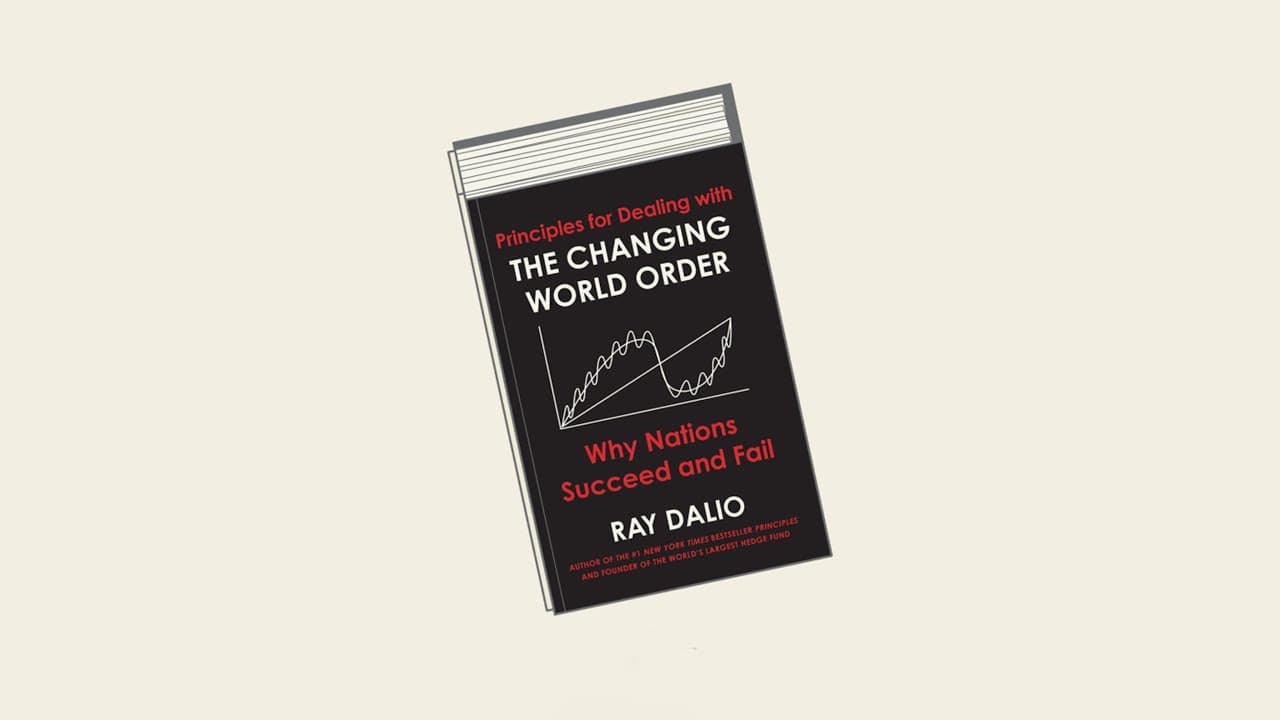
Ray Dalio's "Principles for Dealing with the Changing World Order: Why Nations Succeed and Fail"
TL;DR
Discussion on global power shifts and economic cycles with Ray Dalio and Henry Kissinger.
Transcript
welcome to csis online the way we bring you events is changing but we'll still present live analysis and award-winning digital media from our drakopolis ideas lab all on your time live or on demand this is csis online good afternoon everyone my name is john hamry i'm the president of csis in washington dc and delighted to have you t... Read More
Key Insights
- Ray Dalio's book explores the historical patterns of rise and decline in global powers, focusing on financial, political, and social factors.
- The discussion highlights the current economic challenges, such as high debt levels and wealth disparities, affecting global stability.
- China's rise as a global power is analyzed, with emphasis on its economic strategies and historical context.
- The importance of understanding historical cycles to predict future geopolitical shifts is emphasized by both Dalio and Kissinger.
- Technological advancements, particularly artificial intelligence, are seen as both opportunities and risks for global powers.
- The need for strategic dialogue and cooperation between the US and China is highlighted to prevent potential conflicts.
- Dalio and Kissinger stress the importance of national unity and purpose in maintaining a country's global leadership.
- The discussion concludes with a call for awareness and proactive measures to address global challenges and prevent conflicts.
Install to Summarize YouTube Videos and Get Transcripts
Explore YouTube Video Summarizer or Get YouTube Transcript Extractor
Questions & Answers
Q: What motivated Ray Dalio to write his book?
Ray Dalio wrote his book to understand the unprecedented events happening in the world today by studying historical patterns of rise and decline in empires. He aimed to identify the cycles of change and share these insights to help others navigate the current global economic and political landscape.
Q: How does Henry Kissinger view the current US-China relations?
Henry Kissinger sees US-China relations as a critical issue given the historical context of rising and static powers. He emphasizes the importance of strategic dialogue to avoid conflicts, recognizing the potential for mutual decline if both countries engage in a destructive competition rather than seeking cooperative solutions.
Q: What are the key factors affecting America's global leadership according to the discussion?
The discussion identifies America's financial instability, political polarization, and lack of national unity as key factors affecting its global leadership. Both Dalio and Kissinger stress the need for the US to rediscover common purposes and long-term objectives to maintain its influence and leadership in the world.
Q: What role does technology play in the global power dynamics discussed?
Technology, particularly artificial intelligence, plays a significant role in global power dynamics as it offers both economic opportunities and military advantages. The discussion highlights the importance of technological leadership in determining economic and military strength, while also acknowledging the potential risks of technological competition.
Q: How does the concept of 'common prosperity' influence China's policies?
The concept of 'common prosperity' in China reflects a more controlled and top-down approach to economic management, focusing on equitable wealth distribution and social stability. It represents a shift from the previous emphasis on rapid economic growth, indicating a balance between economic development and social harmony.
Q: What historical lessons does Ray Dalio emphasize in understanding current global shifts?
Ray Dalio emphasizes the importance of studying historical cycles of rise and decline in empires to understand current global shifts. He identifies recurring patterns in financial, political, and social factors that have historically led to changes in global power dynamics, using these insights to predict future trends.
Q: What are the potential outcomes of the US-China technological competition?
The US-China technological competition could lead to significant advancements and economic growth, but it also poses risks of escalating into a conflict. The discussion stresses the need for clear rules and strategic dialogue to manage this competition constructively, avoiding destructive outcomes and fostering mutual benefits.
Q: How can the US address its internal challenges to maintain global leadership?
To maintain global leadership, the US must address its internal challenges by fostering national unity, rediscovering common purposes, and setting long-term objectives. This involves bridging political divides, managing economic disparities, and investing in education and technological innovation to strengthen its global position.
Summary & Key Takeaways
-
Ray Dalio and Henry Kissinger discuss the themes of Dalio's book, focusing on historical patterns of rise and decline in global powers. They explore the current economic challenges, such as high debt levels and wealth disparities, and their impact on global stability.
-
The conversation highlights the rise of China as a global power, examining its economic strategies and historical context. The importance of understanding historical cycles to predict future geopolitical shifts is emphasized by both Dalio and Kissinger.
-
Technological advancements, particularly artificial intelligence, are discussed as both opportunities and risks. The need for strategic dialogue and cooperation between the US and China is highlighted to prevent potential conflicts, with a call for proactive measures to address global challenges.
Read in Other Languages (beta)
Share This Summary 📚
Summarize YouTube Videos and Get Video Transcripts with 1-Click
Try YouTube Summary with ChatGPT & Claude or YouTube Transcript Generator
Explore More Summaries from Center for Strategic & International Studies 📚
Summarize YouTube Videos and Get Video Transcripts with 1-Click
Try YouTube Summary with ChatGPT & Claude or YouTube Transcript Generator