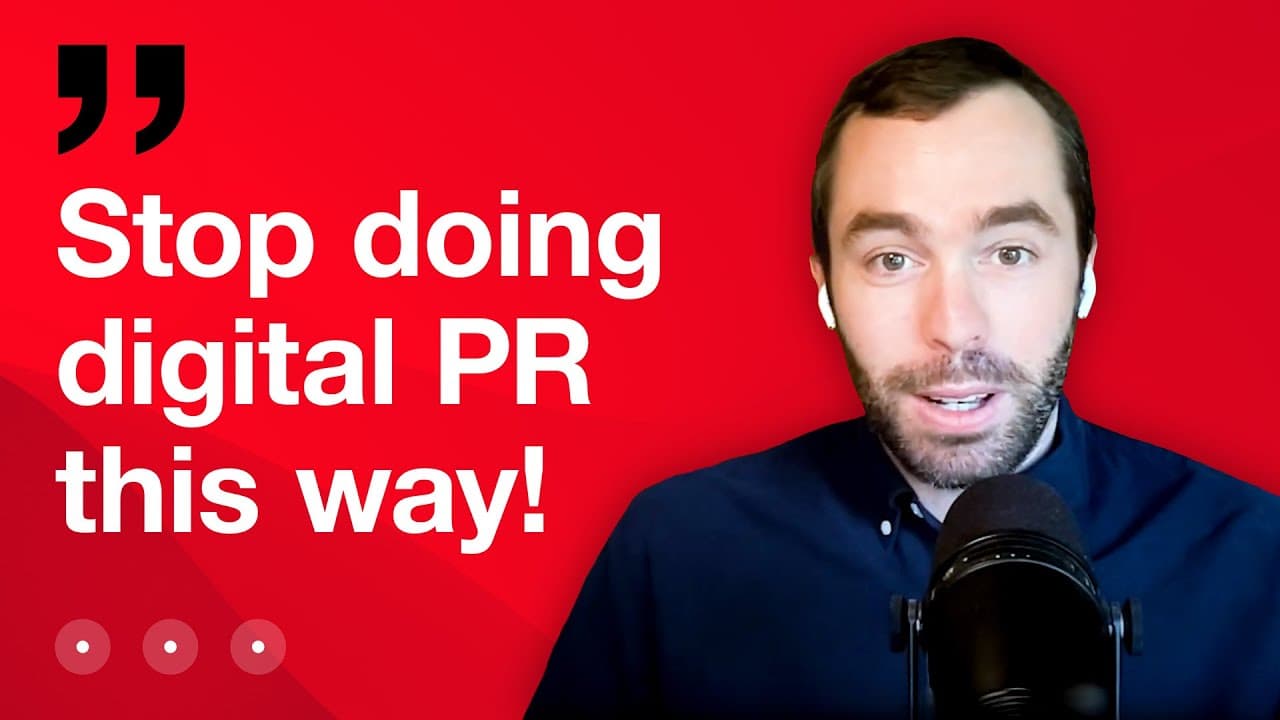
Why Most People Are Doing Digital PR Wrong
TL;DR
Most digital PR strategies fail due to inefficient link value.
Transcript
foreign welcome to another episode of content and conversation my name is Drew page and today I'm joined with our CEO and founder Ross Hudgins to go through why most people are doing digital PR wrong so Ross I feel like that's a great kickoff Point uh the ques the question is in the title so why are people doing digital VR wrongs one of the first w... Read More
Key Insights
- Many people fail in digital PR by not understanding the true ROI of links, which can lead to wasted resources.
- Lifetime link value is a crucial metric to determine the potential revenue a link can generate over time, usually calculated over 24 months.
- Different industries have varying link values; for instance, finance sites can have high link values, whereas tech sites might have low values due to organic linking.
- E-commerce is often a less effective industry for digital PR due to low link values and high costs, yet many agencies still apply it indiscriminately.
- The principal-agent problem in digital PR arises when agencies prioritize their interests over clients, leading to off-topic and inefficient campaigns.
- Successful digital PR campaigns should be relevant, data-driven, and executed sparingly to avoid audience fatigue and ensure high ROI.
- Internal linking strategies can enhance the effectiveness of digital PR by leveraging existing high-traffic content to boost new campaigns.
- Creating annual industry reports can establish thought leadership, attract organic links, and provide ongoing value to audiences.
Install to Summarize YouTube Videos and Get Transcripts
Explore YouTube Video Summarizer or Get YouTube Transcript Extractor
Questions & Answers
Q: Why do many digital PR strategies fail?
Many digital PR strategies fail because they do not accurately assess the ROI of links. Without understanding the lifetime link value, businesses may invest heavily in links that do not generate sufficient revenue, leading to inefficient use of resources and ultimately, a failed strategy.
Q: What is lifetime link value?
Lifetime link value is a metric used to estimate the potential revenue a link can generate over its lifespan, typically calculated over 24 months. It involves analyzing the traffic value of a site divided by the number of linking root domains, providing a monthly value per link that can guide strategic decisions.
Q: How does industry affect the value of links?
The value of links can vary greatly by industry. For example, finance sites often have high link values due to the competitive nature and high revenue potential of the industry. Conversely, tech sites might have lower link values as they naturally attract more organic links, reducing the need for paid digital PR efforts.
Q: What is the principal-agent problem in digital PR?
The principal-agent problem in digital PR occurs when agencies prioritize their own interests over those of their clients. This can result in campaigns that are off-topic or irrelevant, as agencies may focus on generating work for themselves rather than aligning with the client's strategic goals, leading to inefficiencies and poor results.
Q: How can digital PR campaigns be more effective?
Digital PR campaigns can be more effective by being relevant, data-driven, and executed sparingly. Focusing on quality over quantity and ensuring campaigns are aligned with industry trends and audience interests can improve ROI. Additionally, leveraging existing high-traffic content for internal linking can enhance campaign effectiveness.
Q: Why is e-commerce less effective for digital PR?
E-commerce is often less effective for digital PR because it tends to have lower link values and higher costs associated with acquiring links. This means the ROI for digital PR in e-commerce is not as favorable as in other industries, making it a less viable strategy unless executed with precise targeting and efficiency.
Q: What role does internal linking play in digital PR?
Internal linking plays a crucial role in digital PR by enhancing the visibility and authority of new campaigns. By linking new digital PR content to existing high-traffic pages, businesses can leverage the traffic and authority of these pages to boost the performance of new campaigns, increasing their reach and potential impact.
Q: How can annual industry reports benefit digital PR?
Annual industry reports can significantly benefit digital PR by establishing thought leadership and attracting organic links. These reports provide valuable, data-driven insights that audiences look forward to each year, creating ongoing value and engagement. Over time, they can become a reliable source of traffic and authority, enhancing the effectiveness of digital PR efforts.
Summary & Key Takeaways
-
Digital PR often fails because many do not calculate the lifetime link value, leading to poor ROI. This metric helps assess the potential revenue from links over time, guiding more strategic decisions.
-
Industries like finance can benefit greatly from digital PR due to high link values, whereas tech and e-commerce might not see the same returns. Understanding industry-specific link values is crucial.
-
Agencies should be wary of the principal-agent problem, where their interests might not align with the client's. A diverse content strategy that includes digital PR sparingly can avoid this issue.
Read in Other Languages (beta)
Share This Summary 📚
Summarize YouTube Videos and Get Video Transcripts with 1-Click
Try YouTube Summary with ChatGPT & Claude or YouTube Transcript Generator
Explore More Summaries from Content and Conversation 📚





Summarize YouTube Videos and Get Video Transcripts with 1-Click
Try YouTube Summary with ChatGPT & Claude or YouTube Transcript Generator