Flexible working - 6 Minute English
TL;DR
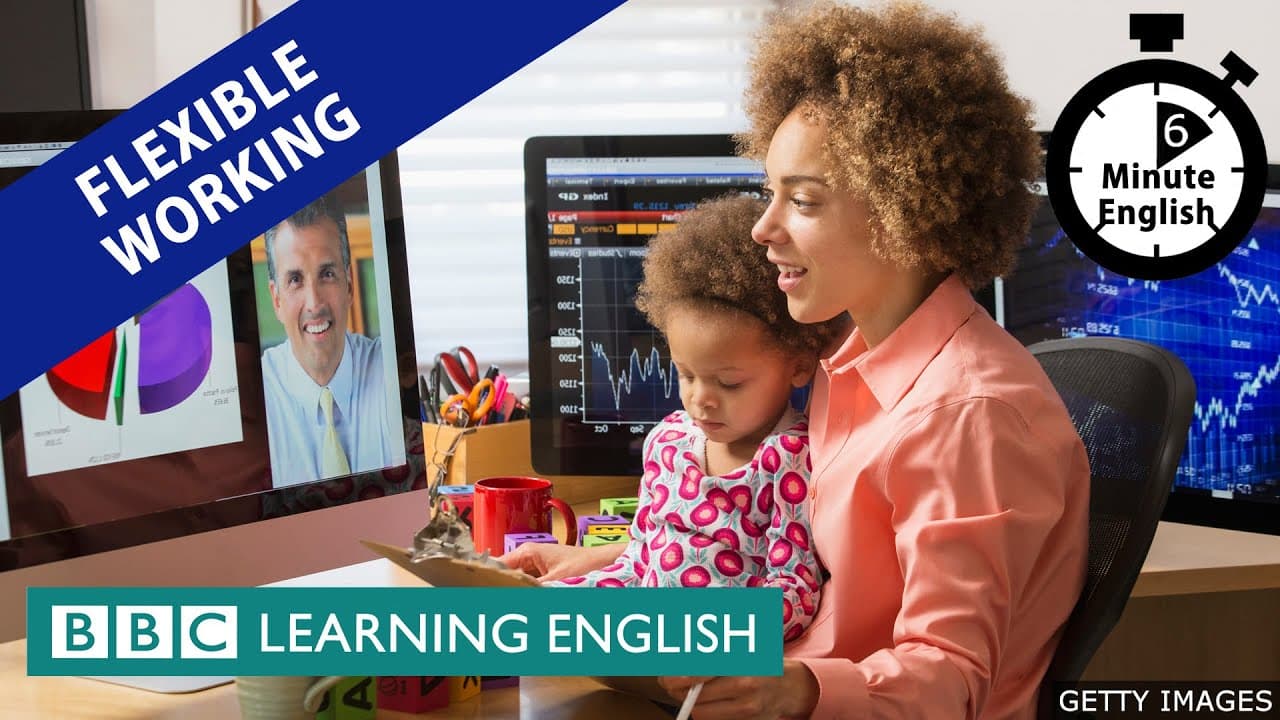
Flexible working offers choice and control over work schedules.
Transcript
Hello. This is 6 Minute English from BBC Learning English. I'm Georgina. And I'm Neil. In this programme, we're going to be talking about the world of work. Ah yes, travelling to an office five days a week, sitting at a desk all day, and then going home. Neil, it's not always like that. Office work doesn't have to be such a routine - the usual, fix... Read More
Key Insights
- Flexible working is not limited to working from home; it involves having control over when, where, and how long you work.
- The pandemic has accelerated the shift towards flexible working, but the trend began before COVID-19 with new laws enabling flexibility.
- In the UK, employees have had the right to request flexible working for 14 years, initially limited to parents and now available to everyone.
- Flexible working requires negotiation and agreement with employers, which can be challenging if the employer is inflexible.
- Men often face more challenges in getting flexible working requests approved, highlighting a bias in the system.
- Active fatherhood is linked to workplace equality, but biases against men's flexible working requests hinder progress.
- The OECD data reveals that Mexican workers have the longest working hours, averaging 2,255 hours per year.
- Key vocabulary includes routine, common sense, match, inflexible, bias, and active, which are essential for understanding flexible working.
Install to Summarize YouTube Videos and Get Transcripts
Explore YouTube Video Summarizer or Get YouTube Transcript Extractor
Questions & Answers
Q: What is the primary focus of flexible working?
Flexible working primarily focuses on providing employees with control over their work schedules, including when, where, and how long they work. It is not just about working from home but involves a sensible approach to balancing job requirements with personal and family needs.
Q: How has the pandemic influenced flexible working?
The pandemic has significantly accelerated the adoption of flexible working as many employees shifted to remote work. This change has led to a reevaluation of traditional work models, with more people embracing the flexibility of choosing their work hours and locations.
Q: What rights do UK employees have regarding flexible working?
In the UK, employees have had the right to request flexible working for the past 14 years. Initially, this right was limited to parents with young children, but since 2014, all employees can request flexible working, making it an inclusive policy for everyone.
Q: Why do men face challenges in getting flexible working requests approved?
Men often face challenges in getting flexible working requests approved due to systemic biases that favor traditional gender roles. Employers may be less willing to accommodate men's requests, affecting their ability to be active fathers and contributing to workplace inequality.
Q: What impact does active fatherhood have on workplace equality?
Active fatherhood is crucial for achieving workplace equality as it challenges traditional gender roles and promotes equal participation in childcare. Encouraging men to take on active parenting roles can lead to more balanced responsibilities at home and greater gender equality in the workplace.
Q: Which country has the longest working hours according to OECD data?
According to OECD data, Mexico has the longest working hours, with the average worker clocking in 2,255 hours per year. This translates to approximately 43 hours per week, highlighting the demanding work culture in Mexico compared to other countries.
Q: What vocabulary is essential for understanding flexible working?
Key vocabulary for understanding flexible working includes terms like routine (fixed way of doing things), common sense (making sensible decisions), match (working equally on both sides), inflexible (unwilling to change), bias (unfair treatment), and active (being involved). These terms help navigate the flexible working landscape.
Q: How does flexible working benefit employees and employers?
Flexible working benefits employees by providing better work-life balance and control over their schedules, which can lead to increased job satisfaction and productivity. For employers, it can result in a more motivated workforce, reduced absenteeism, and the ability to attract and retain top talent.
Summary & Key Takeaways
-
Flexible working is about having control over your work schedule, including when, where, and how long you work. This concept has gained traction, especially during the pandemic, but was already being adopted due to changing work laws.
-
In the UK, employees can request flexible working, but securing approval requires negotiation with employers. Men face more challenges in this regard, indicating a system bias that affects workplace equality.
-
Data from the OECD shows that Mexican workers have the longest working hours. Understanding terms like routine, common sense, and bias is crucial for navigating flexible working environments.
Read in Other Languages (beta)
Share This Summary 📚
Summarize YouTube Videos and Get Video Transcripts with 1-Click
Try YouTube Summary with ChatGPT & Claude or YouTube Transcript Generator
Explore More Summaries from BBC Learning English 📚
Summarize YouTube Videos and Get Video Transcripts with 1-Click
Try YouTube Summary with ChatGPT & Claude or YouTube Transcript Generator