How Much House Can I Afford in 2024? (By Salary)
TL;DR
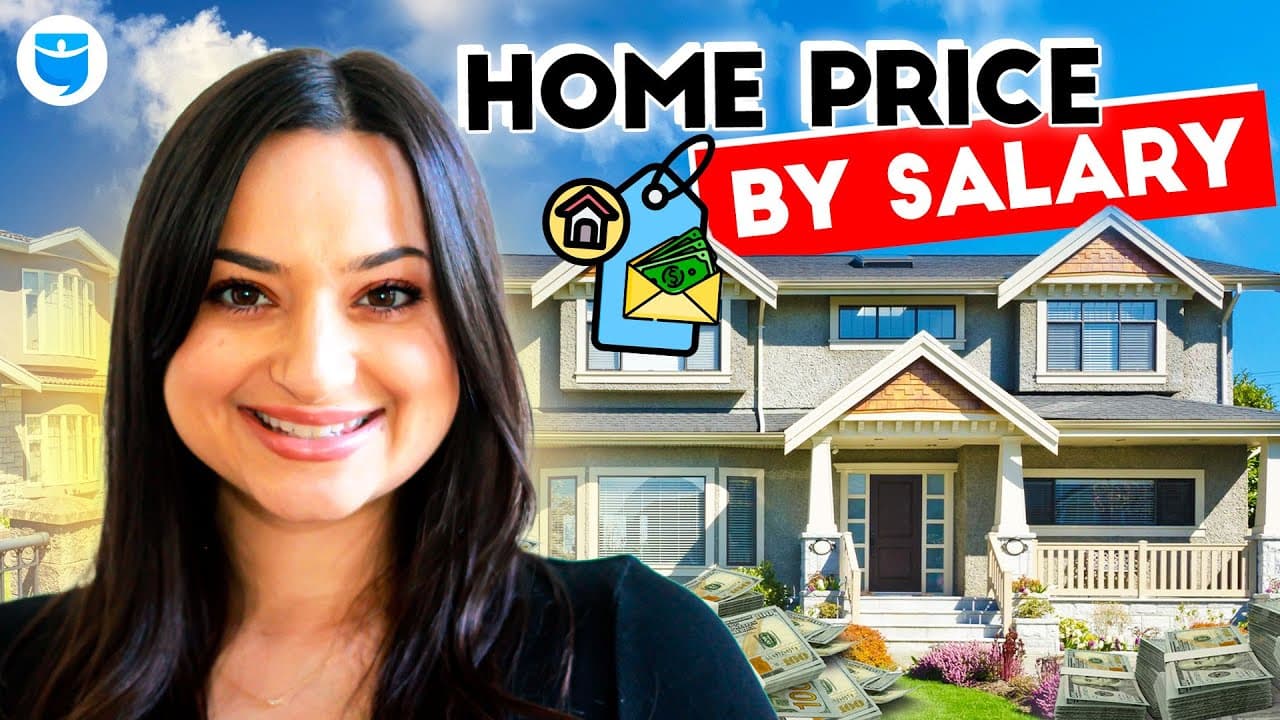
Mortgage advisor explains house affordability based on salary in 2024.
Transcript
as a mortgage adviser the number one question I get is how much house can I afford well wait no longer today we'll be breaking down how much house you can afford based off of your salary in today's market I'm Hannah eser I'm a mortgage advisor and rookie investor with two properties and I can't wait to talk with you about this topic today obviously... Read More
Key Insights
- Renting offers lower monthly payments and fewer responsibilities compared to homeownership, which involves property taxes, insurance, and maintenance.
- Homeownership builds equity and contributes to higher net worth, but it comes with additional costs like taxes, insurance, and repairs.
- The 28/36 rule suggests using 28% of income for housing expenses and 36% for total debt, including other liabilities.
- For a $75,000 salary, a $260,000 home is affordable with current interest rates and a 20% down payment.
- A $100,000 salary allows for purchasing a $350,000 home under the same financial conditions.
- With a $150,000 salary, one can afford a $530,000 home, considering a 7% interest rate and 20% down payment.
- Homeowners should save for repairs using the 1% rule, which suggests saving 1% of the property's purchase price annually.
- Insurance costs are rising due to natural disasters, and excessive claims can lead to higher premiums or denial of coverage.
Install to Summarize YouTube Videos and Get Transcripts
Explore YouTube Video Summarizer or Get YouTube Transcript Extractor
Questions & Answers
Q: What are the advantages of renting compared to owning a home?
Renting offers several advantages, including potentially lower monthly payments and fewer responsibilities. Renters do not have to pay property taxes, insurance, or maintenance costs. If something breaks, they can call the landlord or property manager for repairs. Renting also provides more flexibility and less financial commitment compared to owning a home.
Q: How does homeownership contribute to building wealth?
Homeownership contributes to building wealth primarily through home equity. As homeowners pay down their mortgage, they increase their equity in the property. Over time, property values generally appreciate, further increasing equity. This equity can be a significant part of an individual's net worth, providing financial security and opportunities for future investments or borrowing.
Q: What is the 28/36 rule in mortgage lending?
The 28/36 rule is a guideline used in mortgage lending to determine how much an individual can afford to spend on housing. According to this rule, no more than 28% of a person's gross monthly income should be spent on housing expenses, including mortgage payments, property taxes, and insurance. Additionally, no more than 36% of income should be spent on total debt, including housing costs and other liabilities like car loans and credit card payments.
Q: How does a $75,000 salary translate into home affordability?
With a $75,000 annual salary, which breaks down to about $6,250 monthly, using the 28% rule, an individual can afford to allocate $1,750 per month for housing expenses. This translates to being able to purchase a home priced around $260,000, assuming a 7% interest rate and a 20% down payment. These calculations include estimates for principal, interest, property taxes, and insurance.
Q: What is the significance of the 1% rule in homeownership?
The 1% rule is a guideline for estimating annual repair costs for a property. It suggests that homeowners should save 1% of the property's purchase price each year for maintenance and repairs. For example, if a property is purchased for $500,000, the homeowner should set aside $5,000 annually. This proactive saving helps cover unexpected repair costs without relying excessively on insurance claims.
Q: Why is it important to be cautious with insurance claims?
Being cautious with insurance claims is important because excessive claims can lead to higher premiums or even denial of coverage in the future. Due to the increasing number of natural disasters, insurance companies are becoming more stringent. Frequent claims can make an individual a high-risk customer, causing insurance companies to raise rates or refuse coverage, especially in areas prone to natural disasters.
Q: How does a $100,000 salary affect home affordability?
With a $100,000 annual salary, which equates to approximately $8,333 monthly, an individual can afford a monthly housing expense of $2,333 using the 28% rule. This allows for the purchase of a home priced around $350,000, assuming a 7% interest rate and a 20% down payment. This estimate includes costs for principal, interest, property taxes, and insurance.
Q: What should one consider when choosing a mortgage lender?
When choosing a mortgage lender, it's important to work with a trusted and reputable professional who can provide guidance tailored to your financial situation. Consider lenders who offer competitive rates, transparent terms, and a variety of loan products. It's also beneficial to seek recommendations or use resources like BiggerPockets to find investor-friendly lenders who understand your real estate goals.
Summary & Key Takeaways
-
The video discusses how much house one can afford in 2024 based on different salary levels, considering the current market conditions and interest rates. It emphasizes the importance of understanding the costs associated with homeownership, such as taxes, insurance, and maintenance.
-
Hannah Escher, a mortgage advisor, explains the pros and cons of renting versus owning a home. While renting can offer lower monthly payments and fewer responsibilities, owning a home can build equity and contribute to a higher net worth over time.
-
The video provides specific examples of home affordability based on salaries of $75,000, $100,000, and $150,000. It uses a conservative financial metric, the 28/36 rule, to calculate how much house one can afford, considering a 7% interest rate and 20% down payment.
Read in Other Languages (beta)
Share This Summary 📚
Summarize YouTube Videos and Get Video Transcripts with 1-Click
Try YouTube Summary with ChatGPT & Claude or YouTube Transcript Generator
Explore More Summaries from Real Estate Rookie 📚





Summarize YouTube Videos and Get Video Transcripts with 1-Click
Try YouTube Summary with ChatGPT & Claude or YouTube Transcript Generator