How to Thin the Field and Take the Win
TL;DR
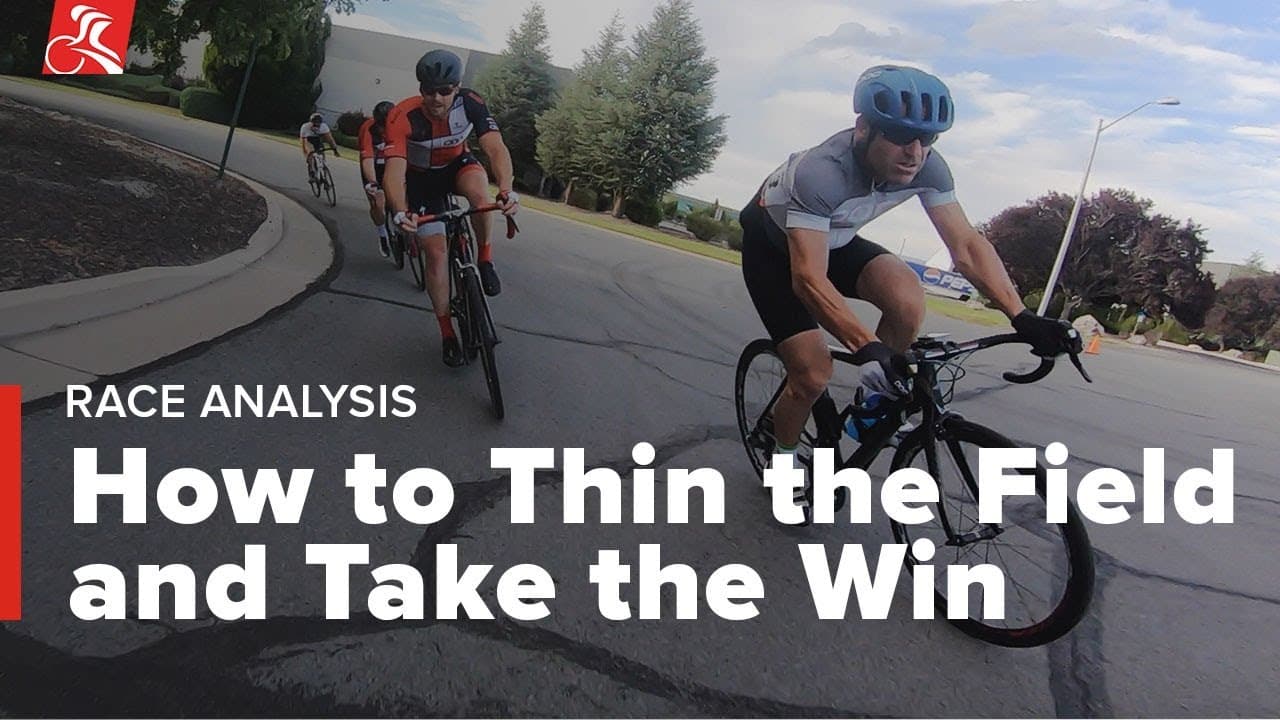
Cyclist reviews his strategy and decision-making during a crit race in Reno, highlighting key moments and tactics.
Transcript
this is a three for five race in Reno the air center crit we all started back for away from the start line because of lists shady was very hot it wasn't well into the 90s I've raced this course more than any other course I've raced in Reno it's our local crit course not unlikely to get national champions racing with you in a field of twelve but thi... Read More
Key Insights
- 👻 The race starts slowly, with minimal attacks, allowing riders to conserve energy.
- 🖐️ Smooth riding and strategic positioning play a crucial role in breakaway success.
- 💄 Assessing the competition's strengths and weaknesses helps in making effective attacking decisions.
- 🏁 Timing and positioning are crucial during a sprint finish, especially in a tailwind stretch.
- 😉 Choosing the right moment for an attack can surprise competitors and lead to a winning advantage.
- 😚 Attacking into a headwind or windy section can force competitors to work harder to close the gap.
- 📶 Matching strengths with a suitable drafting partner in a breakaway can optimize performance.
Install to Summarize YouTube Videos and Get Transcripts
Explore YouTube Video Summarizer or Get YouTube Transcript Extractor
Questions & Answers
Q: How does the cyclist deal with the low pace and lack of attacks in the first half of the race?
The cyclist stays sheltered in the pack and conserves energy, waiting for the right moment to make a move.
Q: Why does the cyclist initiate a short attack during the race?
The cyclist wants to see who can respond to the attack and assess the competition's strength.
Q: How does the breakaway group form during the race?
After a few riders join and leave the breakaway, a definitive group is established with the cyclist and several other riders working together.
Q: What factors influence the cyclist's decision to make a decisive attack towards the end of the race?
The slow pace and positioning of other riders prompt the cyclist to take advantage of the tailwind and establish a gap.
Summary & Key Takeaways
-
The race starts slowly, with minimal attacks in the first half.
-
The cyclist initiates a short attack to test the competition and assess who can respond.
-
A breakaway group is formed and the cyclist focuses on smooth riding and staying in a good position.
-
The cyclist makes a decisive attack towards the end of the race, creating a gap and ultimately winning the sprint.
Read in Other Languages (beta)
Share This Summary 📚
Summarize YouTube Videos and Get Video Transcripts with 1-Click
Try YouTube Summary with ChatGPT & Claude or YouTube Transcript Generator
Explore More Summaries from TrainerRoad 📚



Summarize YouTube Videos and Get Video Transcripts with 1-Click
Try YouTube Summary with ChatGPT & Claude or YouTube Transcript Generator