Google is Stealing Your Traffic (New SEO Plan)
TL;DR
Google's AI overviews reduce clicks; diversify SEO strategy.
Transcript
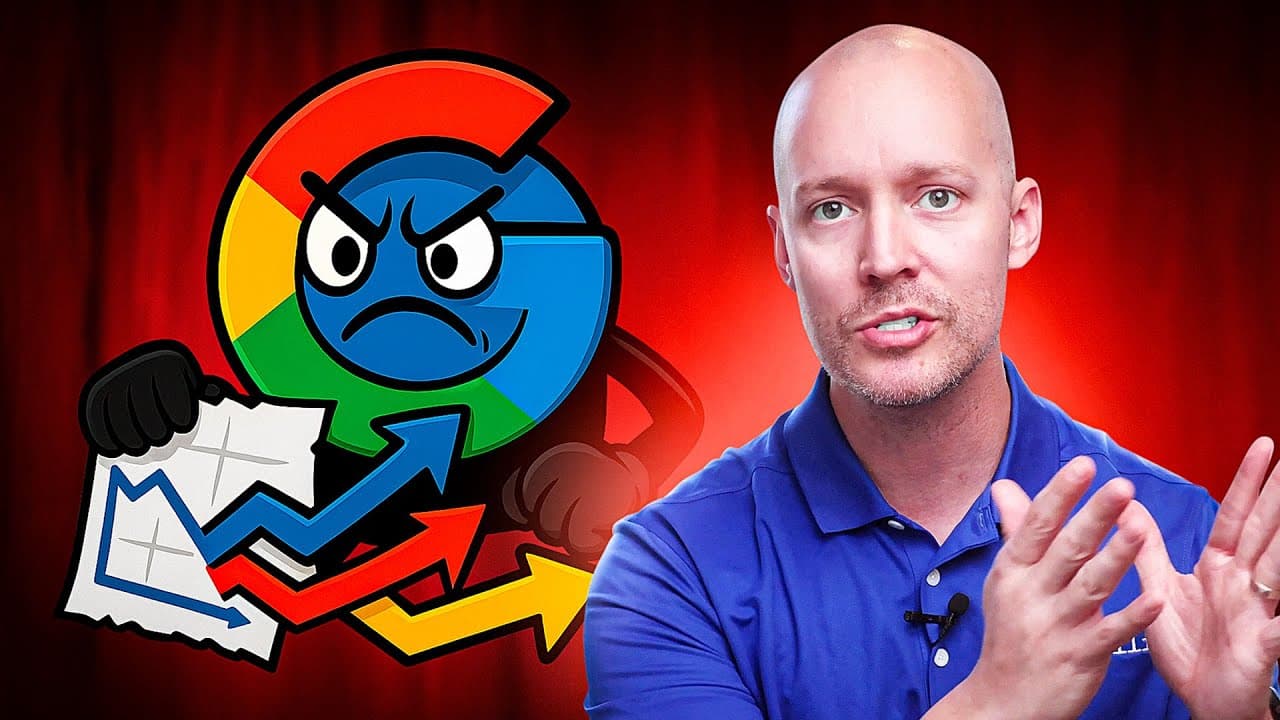
so Google claims that AI overviews help you get more clicks and traffic but HR has found that AI overviews actually reduce clicks by 34% so here's the truth the SEO game has changed and you have to modify your strategy if you want to survive and thrive going forward so here's a new SEO plan that'll help so the way that you're going to combat Google... Read More
Key Insights
- Google's AI overviews have been found to reduce organic clicks by 34%, challenging traditional SEO strategies.
- SEO strategies must now focus on omnipresence across Google and other platforms, not just websites.
- Creating content across multiple platforms like YouTube, LinkedIn, and running ads is crucial for dominating search results.
- Relevance remains critical for driving visibility across Google and other platforms, requiring a focus on topic domination.
- The strategy should start at the bottom of the funnel, targeting keywords that directly drive revenue before expanding.
- Owned assets such as websites and email lists are vital, while platforms like YouTube and LinkedIn are considered rented assets.
- Paid and earned media should complement owned and rented strategies to maximize reach and capture more SER real estate.
- The ultimate goal is to build topical relevance across all platforms, transitioning from SEO to holistic digital marketing.
Install to Summarize YouTube Videos and Get Transcripts
Explore YouTube Video Summarizer or Get YouTube Transcript Extractor
Questions & Answers
Q: How do Google's AI overviews impact SEO strategies?
Google's AI overviews have been found to reduce organic clicks by 34%, which significantly impacts traditional SEO strategies that rely heavily on website traffic. As a result, businesses must now diversify their SEO efforts beyond just their websites to include multiple platforms such as YouTube, LinkedIn, and other search engines.
Q: What is the new approach to SEO in the AI era?
The new approach to SEO involves focusing on omnipresence across multiple platforms. This means creating content not just for websites but also for YouTube, LinkedIn, and other platforms to capture more SER real estate. The strategy also emphasizes starting at the bottom of the funnel with keywords that directly drive revenue.
Q: Why are owned assets important in the new SEO strategy?
Owned assets like websites and email lists are crucial in the new SEO strategy because they are the only platforms businesses can fully control. Unlike rented assets such as YouTube channels, which can be suspended, owned assets provide a stable foundation for building a long-term digital marketing strategy.
Q: What role do paid and earned media play in the new SEO strategy?
Paid and earned media play a complementary role in the new SEO strategy. Paid media, such as Google ads, can help capture additional SER real estate and drive traffic, while earned media, like backlinks, is critical for improving search rankings. Together, they enhance the reach and effectiveness of owned and rented strategies.
Q: How does relevance affect SEO success in the AI era?
Relevance remains a critical factor for SEO success, as it drives visibility across Google and other platforms. Businesses need to focus on dominating a single topic across multiple channels to build topical relevance. This involves creating content that is hyper-focused on specific topics to improve search rankings and visibility.
Q: What is the importance of starting at the bottom of the funnel in SEO?
Starting at the bottom of the funnel in SEO is important because it targets keywords that directly drive revenue. By focusing on these high-converting keywords first, businesses can generate immediate returns and then progressively expand their efforts to broader topics. This approach ensures that SEO efforts are aligned with business goals.
Q: How can businesses build topical relevance across platforms?
Businesses can build topical relevance across platforms by creating consistent and relevant content on their websites, YouTube, LinkedIn, and other channels. This involves focusing on a single topic and creating various content types, such as long-form and short-form videos, blog posts, and social media updates, to establish authority and visibility.
Q: What is the ultimate goal of the new SEO strategy?
The ultimate goal of the new SEO strategy is to transition from being solely an SEO expert to becoming a holistic digital marketer. This involves integrating SEO with other digital marketing efforts, such as content marketing, social media, and paid advertising, to create a comprehensive system that maximizes visibility and drives business growth.
Summary & Key Takeaways
-
Google's AI overviews are reducing clicks by 34%, necessitating a change in SEO strategies. The focus should now be on omnipresence across multiple platforms, including Google, YouTube, and LinkedIn, to capture more search engine real estate and drive traffic.
-
Relevance is key to success in SEO, with a focus on dominating a single topic across various channels. The strategy involves starting at the bottom of the funnel with revenue-driving keywords and progressively working upwards to broader topics.
-
Owned assets like websites and email lists are crucial, while platforms like YouTube and LinkedIn are rented assets. Complementing these with paid and earned media helps capture more SER real estate and build topical relevance across all platforms.
Read in Other Languages (beta)
Share This Summary 📚
Summarize YouTube Videos and Get Video Transcripts with 1-Click
Try YouTube Summary with ChatGPT & Claude or YouTube Transcript Generator
Explore More Summaries from Nathan Gotch 📚


Summarize YouTube Videos and Get Video Transcripts with 1-Click
Try YouTube Summary with ChatGPT & Claude or YouTube Transcript Generator