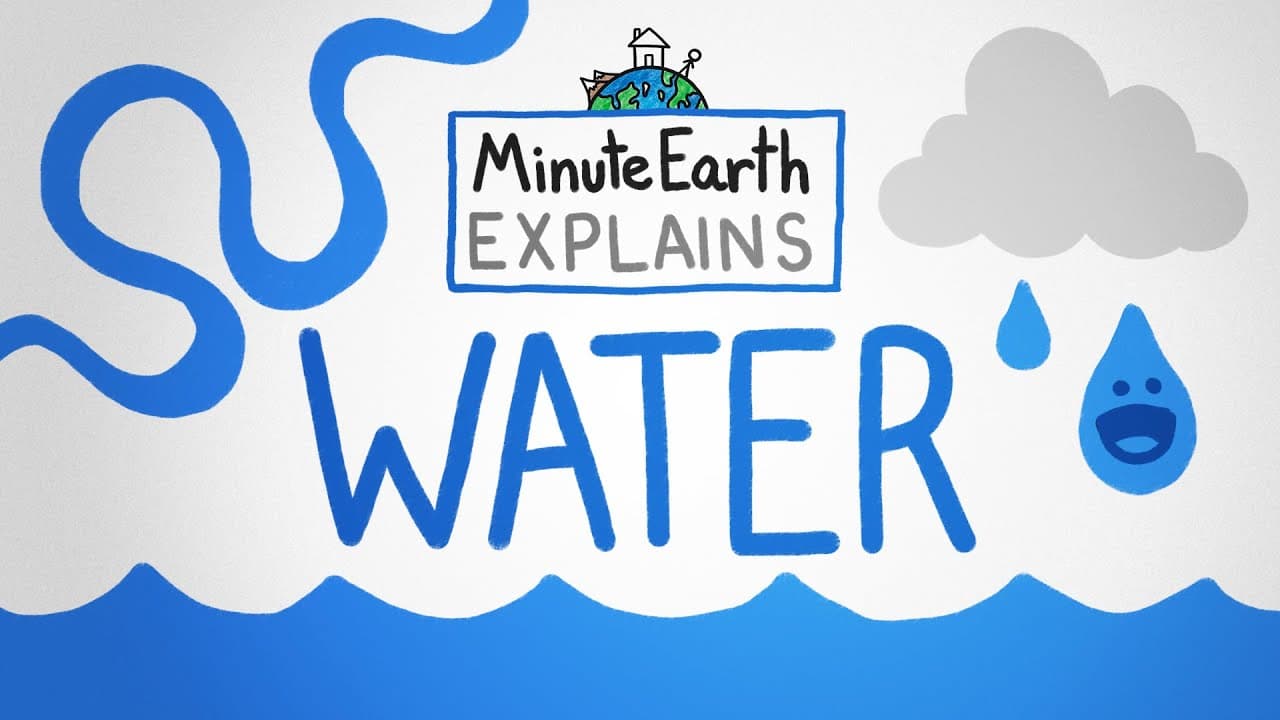
MinuteEarth Explains: Water
TL;DR
Earth's water likely came from meteorites, clouds are formed through a complex process involving evaporation and condensation, rivers meander due to erosion and sediment buildup, and a geological process called inverted relief can turn landscapes inside out.
Transcript
Hi, I am Emily from MinuteEarth. And from a distance.. The world looks blue and green. And white and kind of yellowish brown. But from a greater distance, it just looks blue. Which makes it unique. It's the only planet that we know of that's covered in liquid water. Coming up four short videos for you, about the weirdness of Earth's water. Let's di... Read More
Key Insights
- ☄️ Earth's water likely came from meteoroids or comets originating in the outer solar system, such as carbonaceous chondrites.
- 💁 Cloud formation involves a complex process of evaporation and condensation, with warm humid air rising and cooling to form clouds.
- 🇳🇿 River meandering is caused by disturbances and erosion, leading to the formation of new land on one bank and slower water flow on the other.
Install to Summarize YouTube Videos and Get Transcripts
Explore YouTube Video Summarizer or Get YouTube Transcript Extractor
Questions & Answers
Q: How did Earth's surface end up being 70% covered in liquid water?
Earth's water likely came from meteorites or other bodies originating in the outer solar system, such as carbonaceous chondrites, which contain water and have a similar heavy hydrogen composition to Earth water.
Q: How are clouds formed?
Clouds are formed through a process of evaporation and condensation. Solar energy evaporates water from oceans, plants, and soil, and as the patch of air above collects moisture and heat, cooler, heavier air sinks around it. This causes the air to rise and cool, allowing water vapor to condense into droplets and form clouds.
Q: Why do rivers in plains meander?
Rivers in plains meander due to disturbances and erosion. For example, if a muskrat burrows near a stream bank, the bank weakens and collapses, diverting the water flow and causing erosion. This creates deeper holes on one bank and slower, shallower water on the other, leading to a meandering river.
Q: What is inverted relief?
Inverted relief is a geological process where river channels can become inverted. When a stream in a desert dries up, some groundwaters drawn upward by capillary action evaporate and leave behind dissolved minerals, cementing the sediments at the river bed. Over time, wind erosion removes the softer surrounding rock, resulting in an inverted river channel.
Summary & Key Takeaways
-
Earth's water likely came from meteorites or other bodies originating in the outer solar system, such as carbonaceous chondrites, which contain water and have a similar heavy hydrogen composition to Earth water.
-
Clouds are formed through a process of evaporation and condensation, with warm humid air rising and cooling at higher altitudes, causing water vapor to condense into droplets and form clouds.
-
Rivers in plains meander due to disturbances and a process called erosion, where weakened banks collapse and water diverts into deeper holes, creating new land on one bank and slower, shallower water on the other.
-
Inverted relief is a geological process where river channels can become inverted due to cementation of sediments at the river bed, making them more resistant to erosion compared to the surrounding rock.
Read in Other Languages (beta)
Share This Summary 📚
Summarize YouTube Videos and Get Video Transcripts with 1-Click
Try YouTube Summary with ChatGPT & Claude or YouTube Transcript Generator
Explore More Summaries from MinuteEarth 📚


Summarize YouTube Videos and Get Video Transcripts with 1-Click
Try YouTube Summary with ChatGPT & Claude or YouTube Transcript Generator