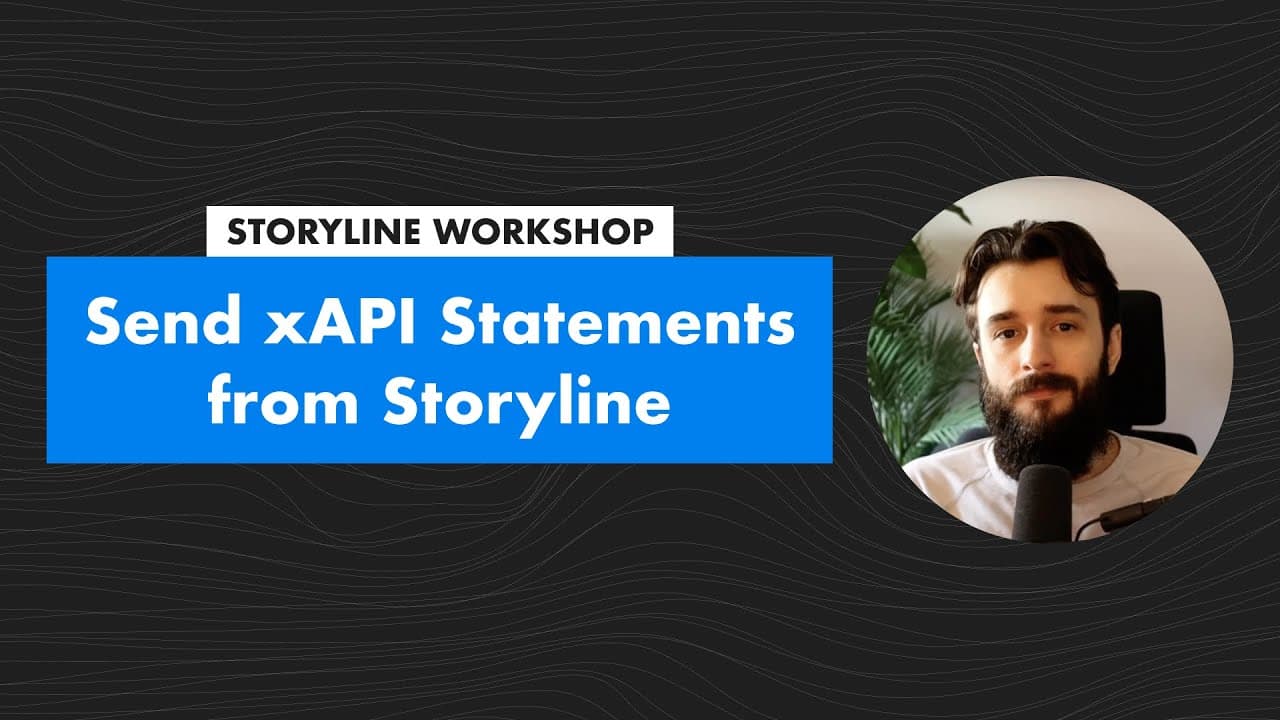
How to Send xAPI Statements from Storyline
TL;DR
This video provides an overview of how to use Storyline's new XAPI functionality to collect data about user engagement in a learning experience.
Transcript
hello my friends in this live session replay we take a look at storyline's new xapi functionality which lets us collect very specific data about how people engage with a learning experience so we we collect out about which question answers people select how long they spend on specific slides and more and this is all without writing any code at all ... Read More
Key Insights
- 👻 XAPI is a language that standardizes data tracking in learning experiences, allowing for the collection of specific engagement data without writing code.
- 👶 Storyline's new XAPI functionality enables users to send XAPI statements from their projects, facilitating data collection without relying on a learning management system.
- 💯 XAPI statements consist of actor verb object structures, and additional context can be added using objects like result and score.
- 👻 The ability to customize the actor object in XAPI statements in Storyline allows for greater control over collecting user data without the need for custom code.
- 🫵 XAPI statements can be sent for various interactions, such as answering questions and viewing specific slides, enhancing the granularity of data collection.
- 🤗 Adding custom data fields to XAPI statements, such as responses to open-ended questions, allows for the collection of qualitative data in addition to quantitative data.
- 🧑🏭 Storyline's XAPI functionality provides options to configure the actor object and specify an external learning record store for data reporting.
Install to Summarize YouTube Videos and Get Transcripts
Explore YouTube Video Summarizer or Get YouTube Transcript Extractor
Questions & Answers
Q: What is XAPI and how does it work?
XAPI is a language that standardizes data tracking in learning experiences. It uses actor verb object statements to track user actions and interactions.
Q: How can I collect specific data about user engagement in a learning experience?
With Storyline's XAPI functionality, you can send XAPI statements from your project without writing code. This allows you to track user actions such as selecting answers and spending time on specific slides.
Q: Can XAPI statements be sent without using a learning management system?
Yes, Storyline allows you to send XAPI statements as either an XAPI or a SCORM package. This means you can collect data without relying on a learning management system.
Q: How can I identify the actor in an XAPI statement?
The actor in an XAPI statement can be identified using the actor's name and email address or an account identifier. The email address is often used as a unique identifier.
Summary & Key Takeaways
-
The video introduces Storyline's new XAPI functionality, which allows users to collect specific data about user engagement without writing any code.
-
XAPI is a language that standardizes data tracking in learning experiences, using actor verb object statements.
-
The video demonstrates how to send XAPI statements from a Storyline project using built-in triggers and how to customize the data collected.
Read in Other Languages (beta)
Share This Summary 📚
Summarize YouTube Videos and Get Video Transcripts with 1-Click
Try YouTube Summary with ChatGPT & Claude or YouTube Transcript Generator
Explore More Summaries from Devlin Peck 📚






Summarize YouTube Videos and Get Video Transcripts with 1-Click
Try YouTube Summary with ChatGPT & Claude or YouTube Transcript Generator