How Do Brine Shrimp Survive In Packaging For Years?
TL;DR
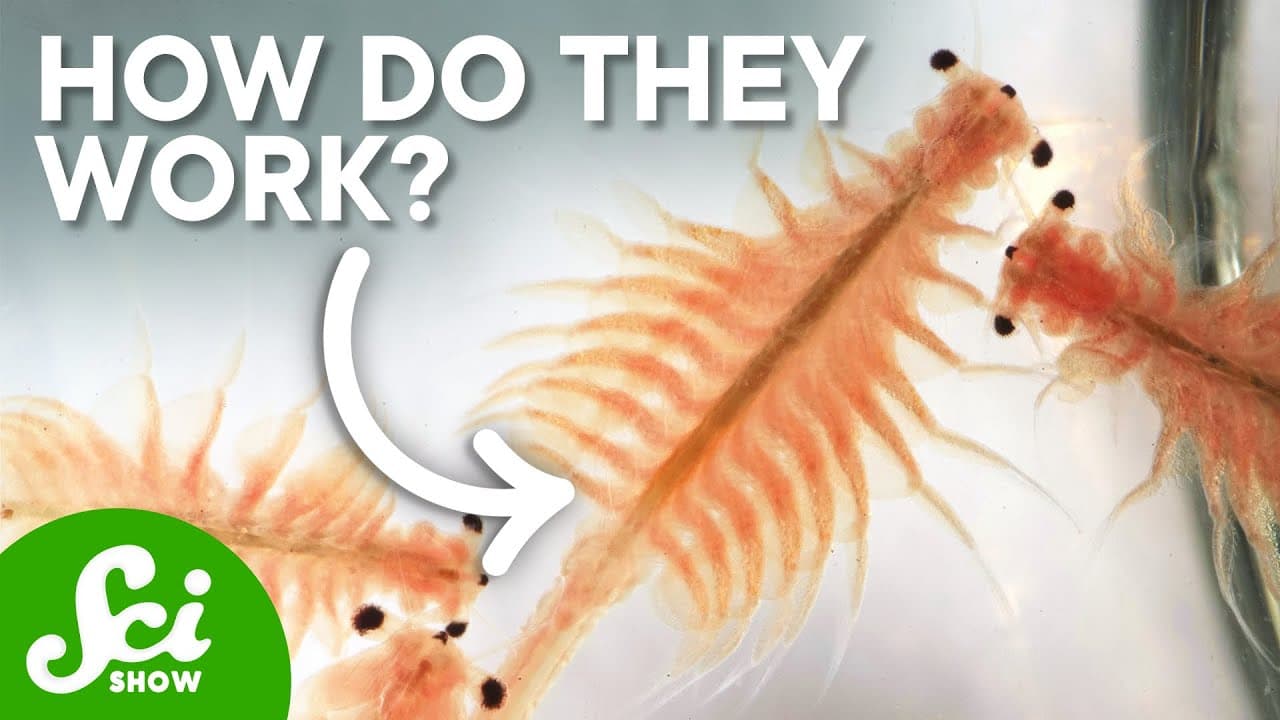
Brine shrimp can enter a state of dormancy for years, surviving extreme conditions and then hatching when conditions improve. This ability is also theoretically possible for human embryos.
Transcript
[ ♪ INTRO ] Thanks to Brilliant for supporting this SciShow video. You can keep building your STEM skills at Brilliant.org/SciShow with 20% off an annual premium subscription! When you go to the toy store, you might see a box on the shelf that advertises living animals. And while it’s not quite the same as a dog from the shelter, you could buy that... Read More
Key Insights
- 🍤 Brine shrimp, like Artemia, can survive extreme conditions by entering a state of dormancy as cysts, which protects them until conditions become favorable.
- 🐣 Dormant brine shrimp can stay in this state for years and still hatch when provided with oxygen and suitable conditions.
- 🍤 Protective layers and specific chemicals in the brine shrimp embryos help them survive and avoid significant damage during dormancy.
- ❓ Human embryos also have the potential to enter a state of dormancy, although they require implantation or incubation for successful development.
- 🍤 Brine shrimp's ability to withstand extreme conditions and adapt to different environments showcases their remarkable biological adaptations.
- 👻 Studying brine shrimp in their dormant state allows researchers to gain insights into important biological processes, such as metabolism and protection mechanisms.
- 🍤 Admiring the geometric patterns of dehydrated brine shrimp cysts can serve as an educational opportunity to learn about geometry.
Install to Summarize YouTube Videos and Get Transcripts
Explore YouTube Video Summarizer or Get YouTube Transcript Extractor
Questions & Answers
Q: How do brine shrimp enter a state of dormancy?
In harsh conditions, pregnant brine shrimp release dormant eggs called cysts, which pause their essential functions and protect them from the environment.
Q: How long can brine shrimp stay dormant?
Studies have found that brine shrimp cysts can hatch even after four years of being in extreme temperatures and without oxygen, suggesting they can stay dormant for extended periods.
Q: Are there any negative effects on brine shrimp after dormancy?
Only a small percentage (4%) of brine shrimp showed developmental deficiencies after four years of dormancy. The protective layers and certain chemicals in the embryos likely prevent significant damage.
Q: Can human embryos enter a state of dormancy?
While other animals, including humans, can undergo embryonic dormancy in the lab, brine shrimp have the unique ability to hatch without any external intervention.
Summary & Key Takeaways
-
Brine shrimp have the ability to enter a state of dormancy, called cysts, where their essential functions pause and they become dehydrated eggs.
-
These dormant brine shrimp can survive harsh conditions like extreme temperatures and lack of oxygen for years until they are exposed to favorable conditions.
-
Most of the dormant brine shrimp appear to be unaffected once they hatch, thanks to protective layers and certain chemicals in the embryos.
Read in Other Languages (beta)
Share This Summary 📚
Summarize YouTube Videos and Get Video Transcripts with 1-Click
Try YouTube Summary with ChatGPT & Claude or YouTube Transcript Generator
Explore More Summaries from SciShow 📚


Summarize YouTube Videos and Get Video Transcripts with 1-Click
Try YouTube Summary with ChatGPT & Claude or YouTube Transcript Generator