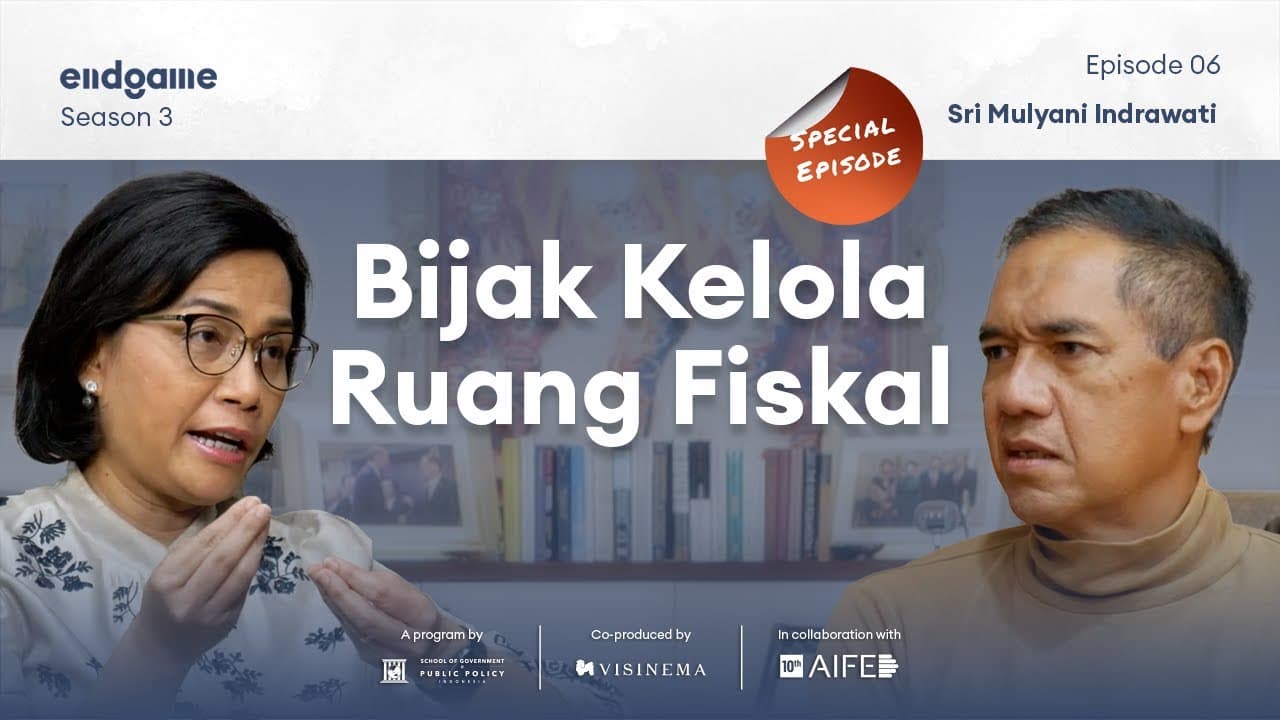
How Does Sri Mulyani Manage Indonesia's Fiscal Policy?
TL;DR
Sri Mulyani discusses the challenges and strategies in managing Indonesia's fiscal policy, emphasizing the importance of timely and balanced decisions. She highlights the need for innovative fiscal measures to address the economic impact of COVID-19 and structural challenges. The conversation covers topics like crisis management, investment attraction, and the future of Indonesia's economy.
Transcript
The hard choices amongst policymakers are that if you are too little too late, or you're overdoing it and overkilling, looking for the right timing point and the right dose is the most challenging work of policy makers. [Voiceover: This is Endgame] GITA WIRJAWAN: Hi friends, today we have Ibu Sri Mulyani, Indonesia's current minister of finance Mba... Read More
Key Insights
- Sri Mulyani emphasizes the importance of finding the right timing and dose in policy-making to avoid being too late or overreacting.
- Indonesia's economy has undergone significant changes since the 1997-1998 crisis, with increased independence and accountability in financial institutions.
- The COVID-19 pandemic required extraordinary fiscal measures, including social safety nets and health sector support, to mitigate economic impacts.
- Indonesia's fiscal deficit increased due to necessary spending during the pandemic, but measures are in place to reduce it over the next few years.
- The global liquidity surge has led to asset bubbles, with policymakers needing to carefully manage inflation and economic recovery.
- Investment climate improvements, such as the Job Creation Act and infrastructure development, are crucial for attracting foreign direct investment.
- Decarbonization efforts in Indonesia focus on transitioning from coal to renewable energy, requiring significant investment and international support.
- Blockchain technology presents both opportunities and challenges, with regulators needing to address its energy consumption and potential for illicit financing.
Install to Summarize YouTube Videos and Get Transcripts
Explore YouTube Video Summarizer or Get YouTube Transcript Extractor
Questions & Answers
Q: How does Sri Mulyani manage economic crises in Indonesia?
Sri Mulyani manages economic crises by implementing timely and balanced fiscal policies, focusing on the right timing and dosage to avoid being too late or overreacting. During crises, she prioritizes social safety nets, health sector support, and financial stability to mitigate economic impacts and ensure a swift recovery.
Q: What changes occurred in Indonesia's economy after the 1997-1998 crisis?
After the 1997-1998 crisis, Indonesia's economy underwent significant changes, including increased independence and accountability in financial institutions. Bank Indonesia became independent, and the APBN planning process became more transparent, with rigorous supervision by the DPR and audits by the BPK.
Q: How did Indonesia respond to the COVID-19 pandemic economically?
Indonesia's economic response to the COVID-19 pandemic involved extraordinary fiscal measures, such as expanding social safety nets and increasing health sector support. The government increased the fiscal deficit to fund these measures, ensuring that vulnerable populations received necessary assistance and that the health system could effectively combat the virus.
Q: Why did Indonesia's fiscal deficit increase during the pandemic?
Indonesia's fiscal deficit increased during the pandemic due to necessary spending on health and social safety nets, combined with a decrease in tax revenues as economic activity slowed. The government prioritized supporting vulnerable populations and maintaining economic stability, with plans to reduce the deficit over the next few years as the economy recovers.
Q: What is the impact of global liquidity on asset bubbles?
The global liquidity surge, driven by monetary policies during the pandemic, has led to asset bubbles as excess money seeks investment opportunities. This has caused rising asset prices, including stocks and cryptocurrencies, creating challenges for policymakers in managing inflation and ensuring a balanced economic recovery.
Q: How is Indonesia attracting foreign direct investment?
Indonesia is attracting foreign direct investment through policy reforms like the Job Creation Act, which simplifies business processes and provides investment incentives. Infrastructure development and a stable economic environment also contribute to making Indonesia an attractive destination for investors seeking growth opportunities.
Q: What are Indonesia's decarbonization efforts?
Indonesia's decarbonization efforts focus on transitioning from coal to renewable energy sources, such as hydro and solar power. This transition requires significant investment and international support to retire coal plants early and build renewable capacity, ensuring energy reliability and meeting climate goals.
Q: What challenges does blockchain technology present to regulators?
Blockchain technology presents challenges to regulators due to its potential for illicit financing and high energy consumption. Regulators need to address these issues by developing appropriate regulations and considering the technology's impact on the financial system, while also recognizing its efficiency and low transaction costs.
Summary & Key Takeaways
-
Sri Mulyani discusses her journey from an academic background to becoming Indonesia's Minister of Finance, highlighting her experiences during economic crises and her role in shaping fiscal policy. She emphasizes the importance of timely, balanced policy decisions to manage economic challenges.
-
The conversation covers Indonesia's response to the COVID-19 pandemic, including the implementation of social safety nets and health sector support. Sri Mulyani explains the rationale behind increasing the fiscal deficit and the measures in place to manage debt and ensure economic stability.
-
Sri Mulyani addresses the importance of attracting foreign investment through policy reforms and infrastructure development. She also discusses the challenges of decarbonization and the potential impact of blockchain technology on the financial system, emphasizing the need for careful regulation and international cooperation.
Read in Other Languages (beta)
Share This Summary 📚
Summarize YouTube Videos and Get Video Transcripts with 1-Click
Try YouTube Summary with ChatGPT & Claude or YouTube Transcript Generator
Explore More Summaries from Gita Wirjawan 📚




Summarize YouTube Videos and Get Video Transcripts with 1-Click
Try YouTube Summary with ChatGPT & Claude or YouTube Transcript Generator