How to Illustrate Leather
TL;DR
Learn how to render different types of leather fabrics, including vegan options, by understanding their shine, texture, and shadow placement.
Transcript
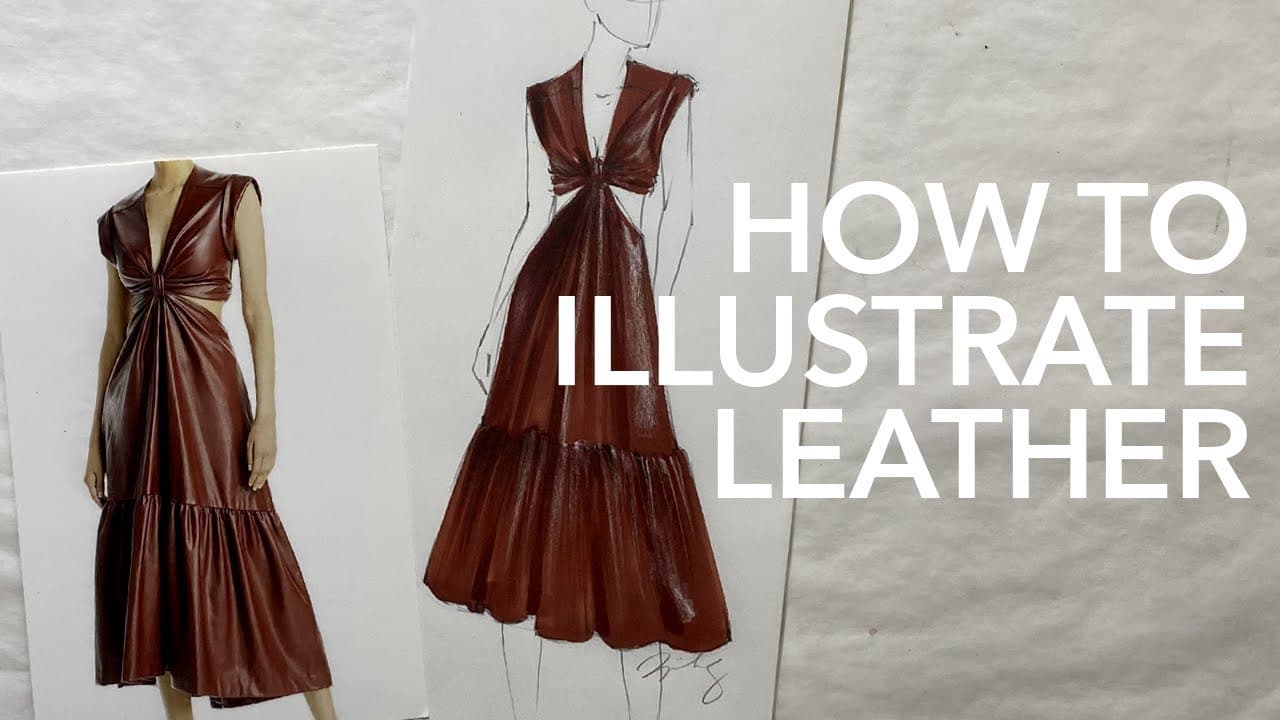
hey party people let's render some leather all right listen leather is not a fabric it's not even a material it is a category of materials and i'm including vegan leathers in this whether it's plastic or made you know ethically out of mushrooms and stuff because the point is fake leathers are trying to mimic the look of real leather so regardless o... Read More
Key Insights
- ☄️ Leather is not a fabric but a category of materials that come from different sources and have varying thicknesses and surface finishes.
- ❓ When rendering leather, it is important to consider its bulkiness when gathered and its shininess compared to fabrics.
- ❓ Accurately rendering the shine of leather requires paying attention to highlight placement and shadow colors.
- 🅰️ Different types of leather may require different shading techniques, such as using warm gray markers for certain shades of leather.
- 🙂 Understanding the lighting source and using diagonal light can enhance the three-dimensional look of leather garments.
- 🙂 Shadows in leather garments can be categorized as shadows under the light, shadows on the dark side of the light, and cast shadows.
- ❓ Highlight and shadow placement is crucial for rendering crinkles and texture in leather garments.
Install to Summarize YouTube Videos and Get Transcripts
Explore YouTube Video Summarizer or Get YouTube Transcript Extractor
Questions & Answers
Q: What is leather and why is it important to render it accurately in fashion illustrations?
Leather is a category of materials that come from various sources and have different thicknesses and surface finishes. Accurately rendering leather in fashion illustrations is important for conveying the texture, shine, and overall look of the garment.
Q: How does leather differ from fabrics in terms of bulkiness and shine?
Leather is bulkier when gathered compared to fabrics, which lay flatter. Leather also has a shinier surface, with distinct dark brown shadows and white highlights. Fabrics may have less noticeable shadows and a different type of shine, depending on their composition.
Q: What should you consider when rendering shiny leather versus non-shiny leather?
When rendering shiny leather, pay attention to the level of shine and the placement of highlights. Use a base color and add darker shadows in appropriate areas. Non-shiny leather may require a different approach, focusing on shadow placement to create depth and dimension.
Q: How can you render crinkles and texture in leather garments?
Crinkles in leather can be depicted using highlight and shadow techniques. The top of the crinkle should be highlighted, while the bottom should be shadowed. Layering different shades of gray or black can help create the illusion of depth and texture.
Summary & Key Takeaways
-
Leather is not a fabric but a category of materials, including vegan alternatives, that aim to mimic the look of real leather.
-
When comparing leather to fabrics, leather is bulkier when gathered and has a shinier surface.
-
Render leather by accurately depicting its shine, using appropriate shadow placement, and choosing the right colors for different types of leather.
Read in Other Languages (beta)
Share This Summary 📚
Summarize YouTube Videos and Get Video Transcripts with 1-Click
Try YouTube Summary with ChatGPT & Claude or YouTube Transcript Generator
Explore More Summaries from Zoe Hong 📚


Summarize YouTube Videos and Get Video Transcripts with 1-Click
Try YouTube Summary with ChatGPT & Claude or YouTube Transcript Generator