How to Use 10 Common English Expressions
TL;DR
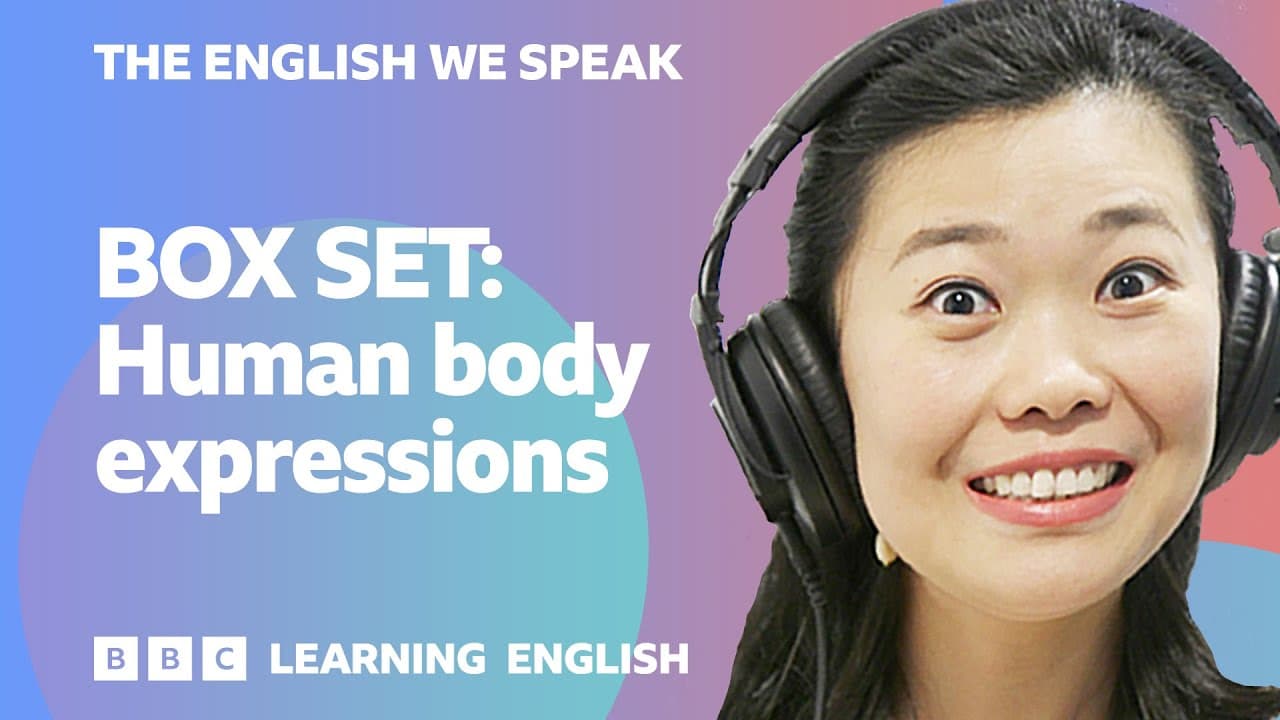
Learn 10 English expressions related to the human body in just 25 minutes. This video provides practical examples and explanations to help you understand and use phrases like 'an old hand', 'hard-nosed', and 'skeleton crew' in everyday conversations. Improve your vocabulary and speaking skills with engaging dialogues and real-life scenarios.
Transcript
Hello and welcome to The English We Speak. I'm Feifei. And I'm Neil. Hey Feifei, shouldn't we be celebrating? Why? Haven't we presented a hundred of these The English We Speak programmes together? A hundred? Oh no, we've done way more than that. I could present these programmes standing on my head! That I would love to see! Not literally. I mean do... Read More
Key Insights
- An 'old hand' is someone who is very skilled and experienced at doing something.
- The term 'hard-nosed' describes someone who is practical, determined, and tough-minded.
- 'Knees-up' is an informal term for a lively party with dancing.
- 'Skeleton crew' refers to the minimum number of people needed to run a business or organization.
- 'Eat your heart out' is used humorously to compare one's abilities to a famous person.
- 'Brain fade' denotes a short period when you can't think clearly or remember things.
- 'To pull the wool over someone's eyes' means to trick or deceive someone.
- 'Bone idle' describes someone who is extremely lazy.
Install to Summarize YouTube Videos and Get Transcripts
Explore YouTube Video Summarizer or Get YouTube Transcript Extractor
Questions & Answers
Q: How to use 'an old hand' in a sentence?
The expression 'an old hand' is used to describe someone who is very experienced and skilled in a particular area. For example, you might say, 'She's an old hand at baking, so her cakes always turn out perfectly.' It conveys a sense of expertise and familiarity with a task.
Q: What does 'hard-nosed' mean?
The term 'hard-nosed' refers to someone who is practical, determined, and tough-minded. It is often used to describe individuals who are focused and resilient in achieving their goals. For instance, a 'hard-nosed negotiator' is someone who is firm and uncompromising in business deals.
Q: What is a 'knees-up'?
A 'knees-up' is an informal British term for a lively party or gathering, usually involving dancing. It is used to describe a fun and energetic social event. For example, 'We're having a knees-up for my birthday, so be ready to dance!' implies a celebration with music and dancing.
Q: When is 'skeleton crew' used?
The phrase 'skeleton crew' is used to describe the minimum number of people needed to operate a business or organization, especially during emergencies or crises. For example, 'The office is running on a skeleton crew due to the holiday season,' means only essential staff are working during reduced operations.
Q: How is 'eat your heart out' used humorously?
The phrase 'eat your heart out' is used humorously to compare one's achievements to those of a famous person, often in a playful or joking manner. For example, after painting a picture, you might say, 'Eat your heart out, Picasso!' suggesting your work rivals that of the renowned artist, even if it's not true.
Q: What does 'brain fade' signify?
'Brain fade' signifies a temporary lapse in memory or concentration, where someone can't think clearly or remember something. It's often used informally to describe moments of forgetfulness, like entering a room and forgetting why you went there. It's a relatable expression for minor mental lapses.
Q: How is 'to pull the wool over someone's eyes' used?
The phrase 'to pull the wool over someone's eyes' means to deceive or trick someone, preventing them from seeing the truth. It is often used in contexts where someone is being misled. For example, 'He tried to pull the wool over the boss's eyes by hiding the report errors,' indicates an attempt to deceive.
Q: What does 'bone idle' mean?
'Bone idle' is a colloquial term used to describe someone who is extremely lazy. It suggests a deep-seated laziness, implying the person is inactive to the core. For instance, 'He's bone idle; he won't even tidy his room,' highlights a person's unwillingness to engage in even simple tasks.
Summary & Key Takeaways
-
The video introduces 10 English expressions with explanations and examples, focusing on terms like 'old hand' and 'hard-nosed'. Each expression is presented with dialogues to demonstrate its use in context, aiding in vocabulary expansion.
-
Expressions such as 'skeleton crew' and 'knees-up' are explained with real-life examples, making it easier for learners to grasp their meanings and applications in everyday conversations.
-
The video emphasizes the humorous and practical aspects of English expressions like 'eat your heart out' and 'brain fade', encouraging viewers to use them confidently in various situations.
Read in Other Languages (beta)
Share This Summary 📚
Summarize YouTube Videos and Get Video Transcripts with 1-Click
Try YouTube Summary with ChatGPT & Claude or YouTube Transcript Generator
Explore More Summaries from BBC Learning English 📚
Summarize YouTube Videos and Get Video Transcripts with 1-Click
Try YouTube Summary with ChatGPT & Claude or YouTube Transcript Generator