Underdog's Jeremy Levine on how to navigate regulatory risks as a start-up | Masters of Scale
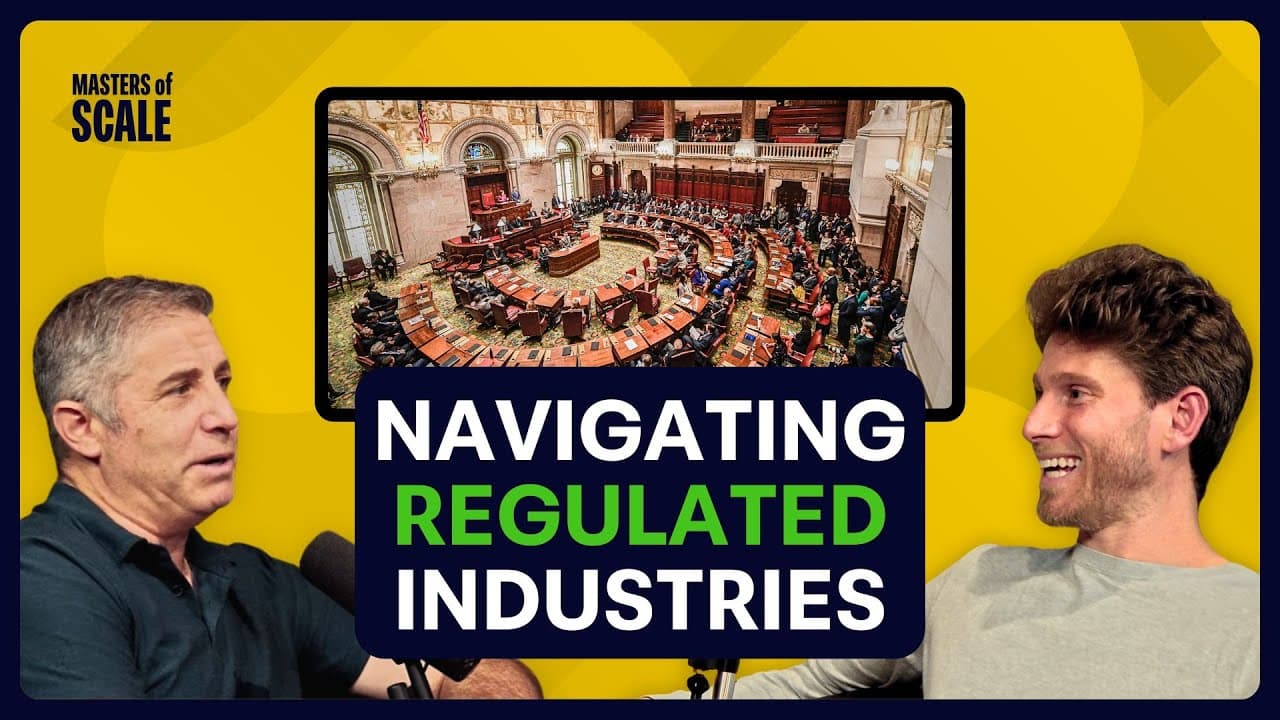
TL;DR
Fantasy sports industry navigated legal challenges through collaboration and consumer demand.
Transcript
People love playing fantasy sports and ultimately as the industry went to politicians and said, "Hey, this should be legal and it should be clarified." It's ultimately what do the constituents want? What do what do people want? And over 60 million people play some form of fantasy sports, right? It's kind of a pastime. It's something we all love and... Read More
Key Insights
- Jeremy Levine shared how fantasy sports navigated legal gray areas by collaborating with competitors and leveraging consumer demand.
- The distinction between games of skill and gambling was crucial for legal clarity in the fantasy sports industry.
- Over 60 million people play fantasy sports, highlighting significant consumer interest and demand for legal clarity.
- The Fantasy Sports Trade Association played a key role in uniting industry players to address regulatory challenges.
- New York was a pivotal battleground for fantasy sports legislation, with emergency Senate sessions leading to legal clarity.
- Consumer companies have successfully used direct customer relationships to influence policy and regulatory changes.
- Working with legal experts and understanding laws are essential for entrepreneurs entering regulated industries.
- Jeremy Levine emphasized the importance of understanding constituent desires in shaping legislation and regulatory outcomes.
Install to Summarize YouTube Videos and Get Transcripts
Explore YouTube Video Summarizer or Get YouTube Transcript Extractor
Questions & Answers
Q: How did the fantasy sports industry address the legal challenges it faced?
The fantasy sports industry addressed legal challenges by collaborating with competitors and forming the Fantasy Sports Trade Association. This collective effort focused on clarifying the distinction between games of skill and gambling, ultimately leading to legislation in over 20 states that defined fantasy sports as legal based on accumulated player statistics from multiple teams.
Q: What role did consumer demand play in shaping fantasy sports legislation?
Consumer demand played a significant role in shaping fantasy sports legislation. With over 60 million people playing fantasy sports, the industry leveraged this substantial consumer interest to advocate for legal clarity. The widespread popularity of fantasy sports helped convince legislators that these games should be legally recognized as games of skill rather than gambling.
Q: Why was New York a pivotal battleground for fantasy sports legislation?
New York was a pivotal battleground for fantasy sports legislation because it was the first state where the attorney general declared daily fantasy sports illegal. This decision prompted a concentrated industry effort to pass legislation clarifying the legality of fantasy sports. The emergency Senate sessions in New York, driven by consumer demand, ultimately led to a favorable outcome for the industry.
Q: How did the Fantasy Sports Trade Association contribute to the industry's success?
The Fantasy Sports Trade Association contributed to the industry's success by uniting key players like FanDuel, DraftKings, and Draft to address regulatory challenges collectively. This collaboration focused on clarifying the legal status of fantasy sports, advocating for legislation that recognized them as games of skill, and demonstrating the industry's commitment to legal compliance.
Q: What strategies did Jeremy Levine suggest for navigating regulated industries?
Jeremy Levine suggested several strategies for navigating regulated industries, including collaborating with competitors, working with legal experts to understand laws, and leveraging consumer demand to influence policy changes. He emphasized the importance of aligning with constituent desires and being proactive in addressing regulatory challenges to create lasting change in the market.
Q: How did the industry distinguish between games of skill and gambling?
The industry distinguished between games of skill and gambling by focusing on the role of accumulated player statistics from multiple teams in fantasy sports. By demonstrating that fantasy sports require skillful analysis and decision-making, the industry argued that these games should not be regulated as gambling, leading to legal clarity in over 20 states.
Q: What lessons can entrepreneurs learn from the fantasy sports industry's experience?
Entrepreneurs can learn several lessons from the fantasy sports industry's experience, including the importance of collaboration with competitors, understanding legal frameworks, and leveraging consumer demand to influence policy changes. The industry's success demonstrates the value of aligning with constituent desires and proactively addressing regulatory challenges to achieve favorable outcomes.
Q: How did emergency Senate sessions impact the fantasy sports industry?
Emergency Senate sessions, particularly in New York, had a significant impact on the fantasy sports industry by leading to the passage of legislation that clarified the legality of fantasy sports. These sessions, driven by consumer demand and industry advocacy, resulted in a favorable outcome that recognized fantasy sports as games of skill, setting a precedent for other states to follow.
Summary & Key Takeaways
-
Jeremy Levine discussed the challenges and strategies for navigating the legal gray area in the fantasy sports industry. By collaborating with competitors and leveraging consumer demand, the industry successfully clarified the legality of fantasy sports across multiple states, particularly focusing on the distinction between games of skill and gambling.
-
The Fantasy Sports Trade Association played a crucial role in uniting companies like FanDuel, DraftKings, and Draft to address regulatory challenges. New York emerged as a key battleground, with emergency Senate sessions leading to legislation that clarified the legality of fantasy sports, driven by significant consumer interest and demand.
-
Jeremy Levine highlighted the importance of working with legal experts, understanding laws, and leveraging customer relationships to influence policy changes. The industry demonstrated that aligning with constituent desires can effectively shape legislation and create lasting change in regulated markets.
Read in Other Languages (beta)
Share This Summary 📚
Summarize YouTube Videos and Get Video Transcripts with 1-Click
Try YouTube Summary with ChatGPT & Claude or YouTube Transcript Generator
Explore More Summaries from Masters of Scale 📚

Summarize YouTube Videos and Get Video Transcripts with 1-Click
Try YouTube Summary with ChatGPT & Claude or YouTube Transcript Generator