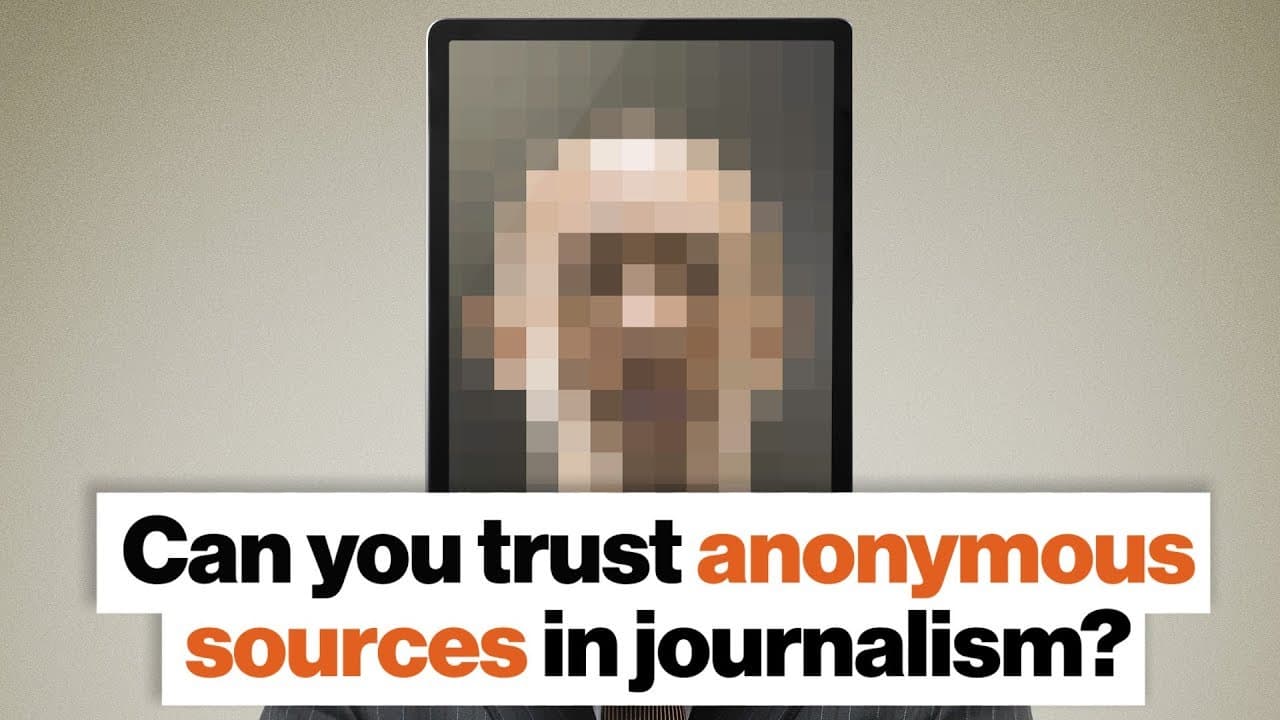
Can you trust anonymous sources in journalism? | Jill Abramson | Big Think
TL;DR
BuzzFeed's anonymous sourcing in the Michael Cohen story raises questions about credibility and trustworthiness.
Transcript
Anonymous sourcing was an issue in BuzzFeed's story about Michael Cohen saying he was directed to lie to Congress. The story as I recall was sourced to two people who were involved in an investigation of Trump Tower Moscow. But we don't know who they are. We have to suspend disbelief, and believe the reporters, and decide whether BuzzFeed news and ... Read More
Key Insights
- 🤨 Anonymous sourcing in BuzzFeed's Michael Cohen story raises concerns about credibility and trustworthiness.
- ℹ️ The use of anonymous sources is prevalent in journalism, particularly in Washington, due to the risk of prosecution for leaking classified information.
- ℹ️ BuzzFeed News, with experienced investigative reporters and editors, believes their story deserves trust and has confidence in their anonymous sources.
- ℹ️ The reliance on anonymous sources has led to debates about the credibility of information and the need for transparency in journalism.
- ℹ️ While named sources add credibility to news, anonymity may be necessary to protect sources' identities or acquire vital information.
- 📰 Different news organizations have varying standards for using anonymous sources, with senior editors often involved in assessing their credibility.
- 🖐️ The public's trust in journalists and news organizations plays a significant role in accepting stories based on anonymous sources.
Install to Summarize YouTube Videos and Get Transcripts
Explore YouTube Video Summarizer or Get YouTube Transcript Extractor
Questions & Answers
Q: What was the issue with BuzzFeed's story about Michael Cohen?
The issue lies in the use of anonymous sources, as the story's credibility is based on the trust readers place in the reporters and the news organization. Without knowing the identity of the sources, doubts arise.
Q: Are anonymous sources prevalent in journalism?
Yes, anonymous sourcing is commonly used, especially in Washington, where leak investigations and prosecution for leaking classified information have created a fear of putting names behind information. This makes it challenging to reduce the reliance on anonymous sources.
Q: Why is it essential to have named sources in journalism?
News attached to a named source tends to hold more credibility. Knowing the identity of the source allows readers to assess their credibility, motivations, and potential biases. However, in some cases, anonymity may be necessary to protect sources or obtain crucial information.
Q: What are the different standards for using anonymous sources in news organizations?
Each news organization has its own guidelines for anonymous sourcing. These standards are often determined by senior editors who assess the credibility of the information, the danger faced by the source, and the public interest in the story.
Summary & Key Takeaways
-
BuzzFeed's story about Michael Cohen being directed to lie to Congress was based on anonymous sources, leading to concerns about the reliability of the information.
-
Despite the lack of transparency in the sourcing, BuzzFeed claims to have confidence in their two reporters and the confirmation they received from two sources.
-
Anonymous sourcing is a common practice in journalism, particularly in Washington, due to the risk of prosecution and the credibility attached to named sources.
Read in Other Languages (beta)
Share This Summary 📚
Summarize YouTube Videos and Get Video Transcripts with 1-Click
Try YouTube Summary with ChatGPT & Claude or YouTube Transcript Generator
Explore More Summaries from Big Think 📚




Summarize YouTube Videos and Get Video Transcripts with 1-Click
Try YouTube Summary with ChatGPT & Claude or YouTube Transcript Generator