DC Resistivity Measurement and Loss Factor Measurement - High Voltage Engineering
TL;DR
This content discusses the construction of electrodes and measuring circuits for DC resistivity measurement of solid and liquid specimens.
Transcript
hello friends welcome back to the lecture series on high voltage engineering we are going to discuss our next topic that is dc resistivity measurement so let us begin with the discussion here we have a resistivity that is already i said in the previous lecture given by the equation r is equal to rho l upon a for this dc circuit rho means resistivit... Read More
Key Insights
- 😵 DC resistivity is calculated using the formula R = ρL/A, where R is the resistance, ρ is the resistivity, L is the length of the material, and A is the cross-sectional area.
- 🫓 Solid specimens for resistivity measurement should have a flat plate shape with plain and parallel surfaces.
- ❓ Different electrode arrangements, such as the three-electrode system, are used for accurate resistivity calculations.
- ✊ Measuring circuits for resistivity measurement include a stabilized power supply, voltmeter, and calorimeter.
- ✋ DC amplifiers may be used to achieve higher sensitivities in resistivity measurement.
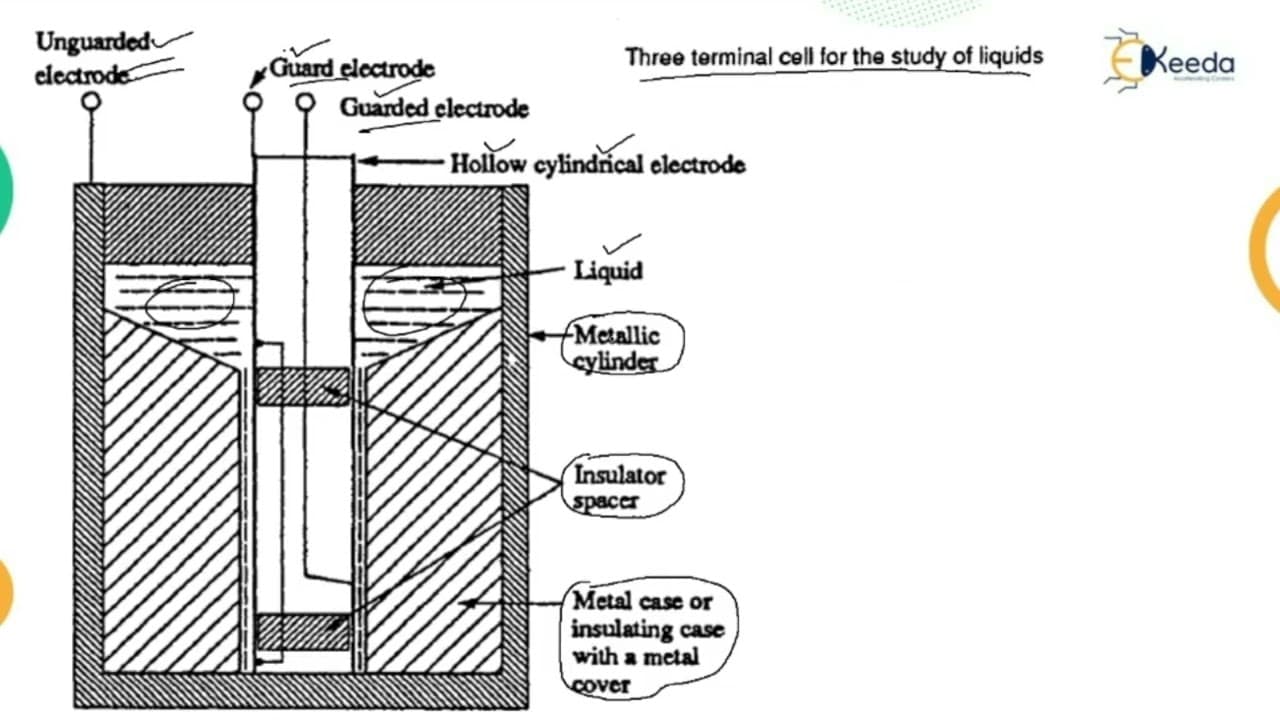
- 🫗 Measuring circuits for liquid specimens may consist of measuring cells or cylindrical containers.
- ❓ The alignment and finishing of electrode surfaces are critical for accurate resistivity measurements.
Install to Summarize YouTube Videos and Get Transcripts
Explore YouTube Video Summarizer or Get YouTube Transcript Extractor
Questions & Answers
Q: What is the equation for resistivity in DC circuits?
The equation for resistivity in DC circuits is R = ρL/A, where R is the resistance, ρ is the resistivity, L is the length of the material, and A is the cross-sectional area.
Q: What is the recommended shape for solid specimens in resistivity measurement?
The preferable shape for solid specimens is a flat plate with plain and parallel surfaces. Circular specimens are commonly used, with diameters ranging from 5 to 10 centimeters and thicknesses of 3 to 12 millimeters.
Q: How does the three-electrode arrangement work in resistivity measurement?
The three-electrode arrangement consists of an unguarded electrode, a guard electrode, and a guarded electrode. The unguarded electrode is connected to the high voltage terminal, while the guarded electrode surrounds the measuring electrode and is connected to a suitable terminal of the measuring circuit.
Q: What are the key components of a measuring circuit for resistivity measurement?
The key components of a measuring circuit include a stabilized power supply, voltmeter, calorimeter, and a shunt resistance. A DC amplifier may also be used for higher sensitivities.
Summary & Key Takeaways
-
DC resistivity is determined using the formula R = ρL/A, where ρ is the resistivity, L is the length of the material, and A is the cross-sectional area.
-
For solid specimens, a flat plate shape with plain and parallel surfaces is ideal, while liquid specimens require different arrangements such as a measuring cell or cylindrical container.
-
Electrode arrangements such as the three-electrode system and variations of it are used for accurate resistivity calculations.
-
Measuring circuits include a stabilized power supply, voltmeter, and calorimeter, and may require the use of a DC amplifier for higher sensitivities.
Read in Other Languages (beta)
Share This Summary 📚
Summarize YouTube Videos and Get Video Transcripts with 1-Click
Try YouTube Summary with ChatGPT & Claude or YouTube Transcript Generator
Explore More Summaries from Ekeeda 📚





Summarize YouTube Videos and Get Video Transcripts with 1-Click
Try YouTube Summary with ChatGPT & Claude or YouTube Transcript Generator