How 17,000 silkworms built a giant structure | Neri Oxman and Lex Fridman
TL;DR
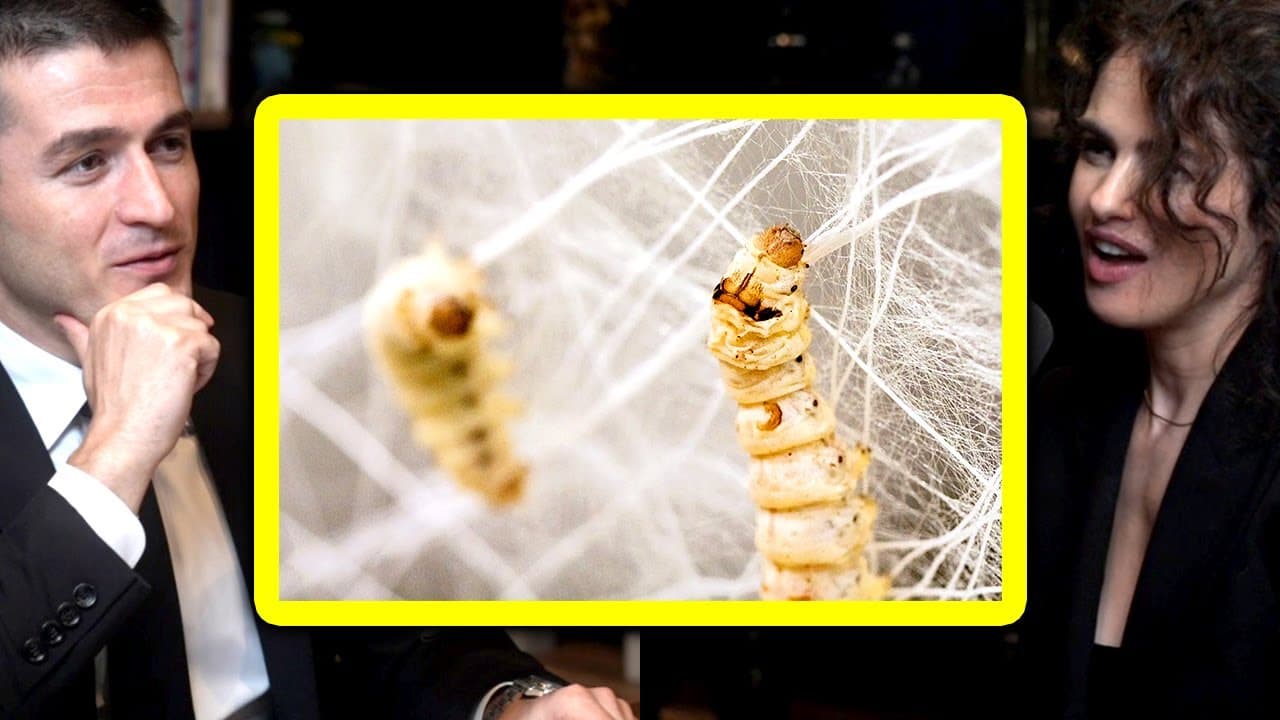
This content discusses how the Mediated Matter Group at MIT has been dedicated to bio-based design, using synthetic biology and computational templating to create various embodiments, such as fibers, cellular solids, biopolymers, and pigments, by leveraging bacteria and organisms like silkworms and bees.
Transcript
it'd be amazing to just talk about what it takes with the robotic arms or in general the whole process of how to build the life form stuff you've done in the past maybe stuff you're doing now how to use bacteria this kind of synthetic biology how to grow stuff by leveraging bacteria is there examples from the past and yes and just take a step back ... Read More
Key Insights
- ⚾ The Mediated Matter Group at MIT explores the intersection of nature and technology in bio-based design.
- 🐝 They have created various bio-based materials, including fibers, cellular solids, and pigments, using organisms like silkworms, bees, and bacteria.
- 👻 Computational templating allows for control and guidance of the organisms' behavior and production processes.
- 😒 The concept of "hero organisms" drives the selection and use of organisms in different projects.
- 👥 The group aims to move from templating to a more emergent approach, where biological organisms assume agency.
- ❓ They have achieved success in creating collaborative and cooperative behavior between silkworms, which are traditionally egocentric creatures.
- 💁 The concept of empowerment in nature refers to increasing information dimension and reducing entropy.
Install to Summarize YouTube Videos and Get Transcripts
Explore YouTube Video Summarizer or Get YouTube Transcript Extractor
Questions & Answers
Q: What is the main focus of the Mediated Matter Group at MIT?
The main focus of the Mediated Matter Group is bio-based design, in which they explore the synergy between nature and technology through various embodiments and materials.
Q: How do they leverage bacteria in their bio-based design process?
The group uses synthetically engineered bacteria to produce pigments, which are used in their bio-based materials. This demonstrates the potential for using bacteria to grow and create functional materials.
Q: What role do silkworms and bees play in the bio-based design process?
Silkworms and bees are used as "hero organisms" in different projects. Silkworms are used to produce fibers, while bees contribute to the creation of cellular solids. Their behavior and architecture are guided through physical and environmental templates.
Q: How do they ensure control over the growth and development of the bio-based materials?
The group's approach is based on computational templating, which allows them to create templates for the natural environment. By manipulating various factors such as heat, light, and pheromones, they can guide the behavior and production of the organisms involved.
Summary & Key Takeaways
-
The Mediated Matter Group at MIT has focused on bio-based design, seeking to bridge the gap between nature and technology through synthetic biology and computational templating.
-
They have created various embodiments, including fibers, cellular solids, biopolymers, and pigments, using organisms like silkworms, bees, and bacteria.
-
By using physical and environmental templates, they have been able to guide the growth and development of these bio-based materials.
Read in Other Languages (beta)
Share This Summary 📚
Summarize YouTube Videos and Get Video Transcripts with 1-Click
Try YouTube Summary with ChatGPT & Claude or YouTube Transcript Generator
Explore More Summaries from Lex Clips 📚




Summarize YouTube Videos and Get Video Transcripts with 1-Click
Try YouTube Summary with ChatGPT & Claude or YouTube Transcript Generator