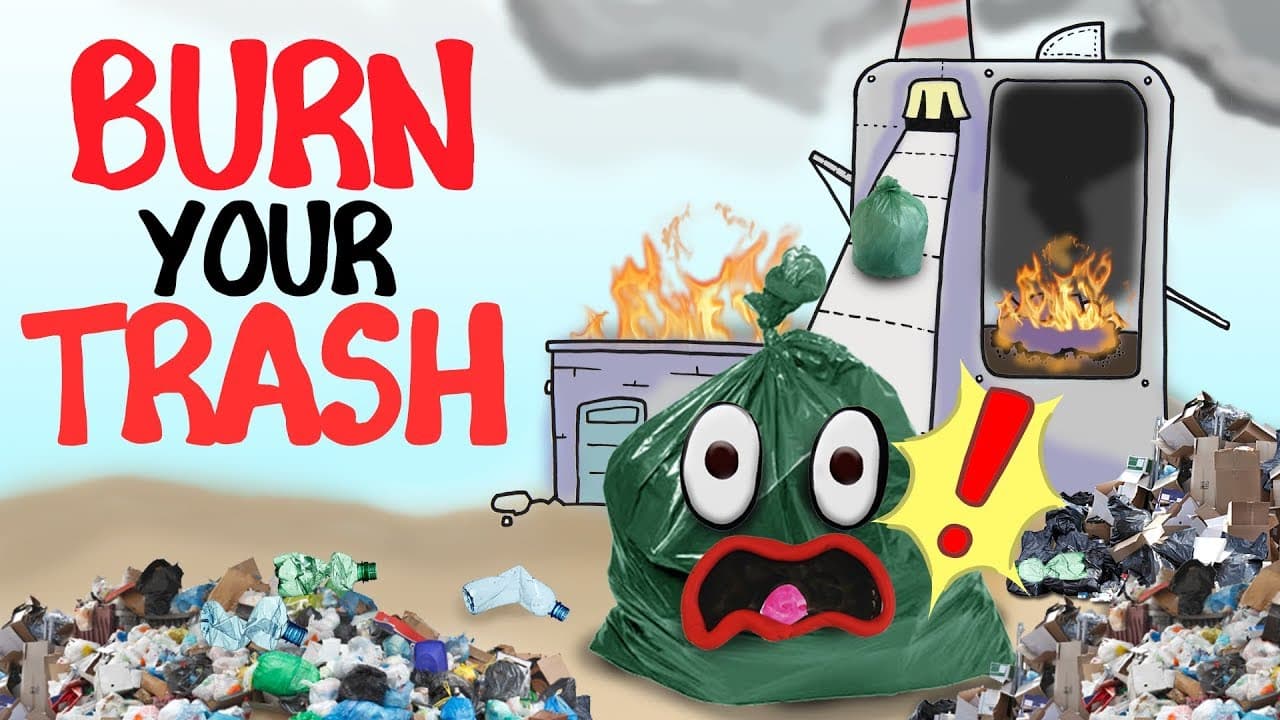
What If We Just Burned All Our Trash?
TL;DR
Burning trash, whether in backyards or industrial incinerators, poses significant environmental risks, including air pollution and increased carbon emissions.
Transcript
Every minute, one garbage truck full of plastic is dumped into our seas. It is estimated that by 2050, there will be more plastic than fish in the ocean by biomass and that is not a cute look. And that's just the plastic. There is 1.3 billion tons of food wasted each year, that is two trillion six hundred billion pounds of wasted food and to be hon... Read More
Key Insights
- 😋 Plastic and food waste contribute to the pollution of oceans and landfills on a massive scale.
- 🔥 Burning trash in backyards and open waste burning globally lead to toxic air pollution and increased health risks.
- 💆 Industrial incinerators can reduce waste mass, but proper management is essential to mitigate the release of toxic compounds.
- 🗑️ Sweden's waste-to-energy approach highlights the potential of burning waste for energy, but it also results in CO₂ emissions.
- ⛽ Recycling plastic is a more sustainable alternative to burning it, as it reduces energy consumption and reliance on fossil fuels.
- ⛽ The interest of fossil fuel companies in plastic-to-fuel conversion raises concerns about promoting the burning of plastics to maintain oil extraction.
- 🇨🇷 The cost of incineration is typically higher than landfill disposal, making landfill a more cost-effective option for many countries.
- 🗑️ Future technology and innovation, such as pyrolysis, offer potential solutions to the waste crisis.
Install to Summarize YouTube Videos and Get Transcripts
Explore YouTube Video Summarizer or Get YouTube Transcript Extractor
Questions & Answers
Q: Why is it harmful to burn trash in backyards?
Burning trash in backyards releases toxic pollutants and increases cancer rates due to the increase in toxic air pollution. This poses significant health risks to individuals and the surrounding environment.
Q: How do industrial incinerators reduce waste mass?
Industrial incinerators burn trash at high temperatures, reducing waste mass by 80 to 85%. The process turns waste into ash and flue gas, which require proper management to prevent environmental contamination.
Q: What are the environmental consequences of burning trash in incinerators?
Incineration releases dioxins and CO₂ into the atmosphere, contributing to air pollution and climate change. The toxic ash produced also requires proper treatment and disposal to prevent further contamination.
Q: Why is recycling plastic preferable to burning it?
Burning plastic requires more energy than recycling it, and it perpetuates the need for extracting oil and gas to make new plastics. Recycling plastic promotes a circular economy and reduces the environmental impact of plastic waste.
Summary & Key Takeaways
-
The amount of plastic and food waste dumped into the oceans and landfills is staggering, with detrimental effects on the environment.
-
Burning trash in backyards leads to toxic pollutants and increased cancer rates, while open burning of global waste contributes to toxic air pollution.
-
Industrial incinerators can reduce waste mass and generate energy, but they produce toxic ash and flue gas that require proper management.
Read in Other Languages (beta)
Share This Summary 📚
Summarize YouTube Videos and Get Video Transcripts with 1-Click
Try YouTube Summary with ChatGPT & Claude or YouTube Transcript Generator
Explore More Summaries from AsapSCIENCE 📚






Summarize YouTube Videos and Get Video Transcripts with 1-Click
Try YouTube Summary with ChatGPT & Claude or YouTube Transcript Generator