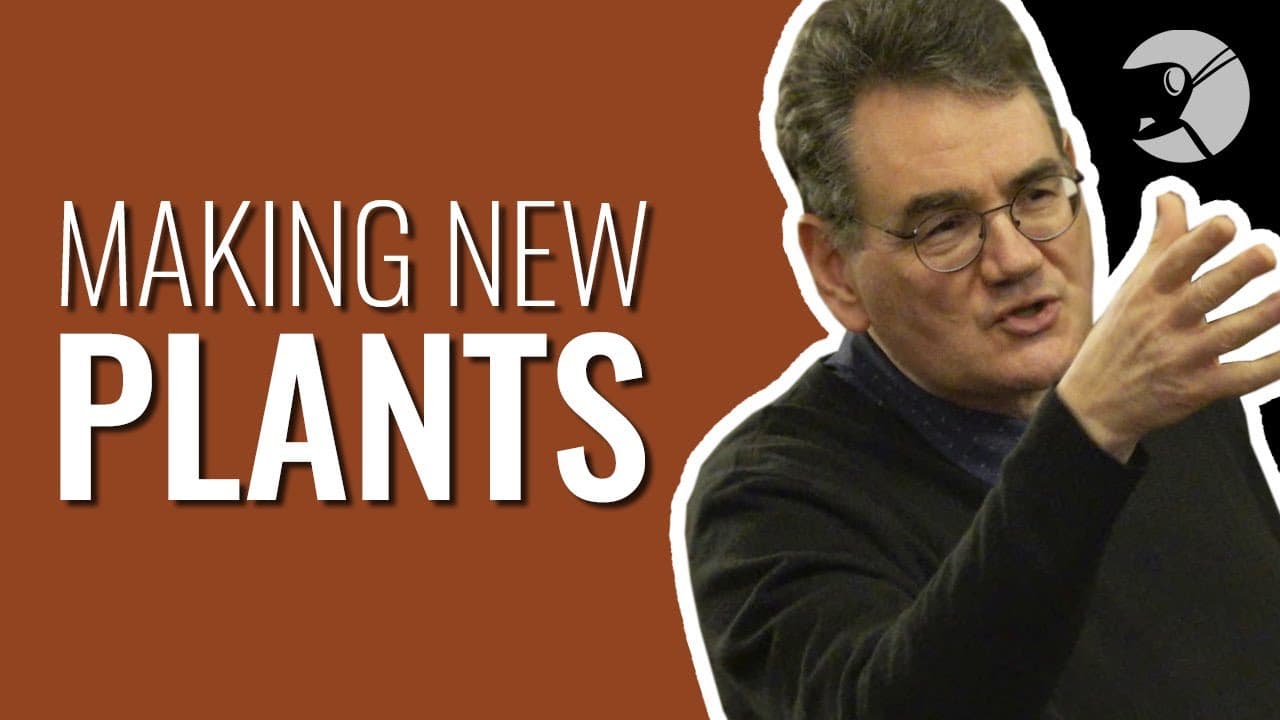
Making New Plants: A History
TL;DR
Utopian dreams of creating new plant species through genetic modification have historical roots, connected to Francis Bacon's visions in his unfinished book "The New Atlantis." The mutation theory introduced by Hugo de Vries at the beginning of the 20th century, along with advancements in experimental evolution, sparked excitement about controlling and improving nature. These ideas found their way into popular media, fueling imagination and influencing works such as Charlotte Perkins Gilman's novel "Herland."
Transcript
my name is Jim Enders B thank you for turning out on this rather horrible cold and wet evening this is the third in a series on utopian gardens and as you can see tonight have given it the title making new plants a history and I want to specced recive that it's a history not the history there are many many ways we could tell this story and vast amo... Read More
Key Insights
- 🌱 Genetic modification of plants has historical roots in Francis Bacon's utopian dreams described in his book "The New Atlantis."
- 🙃 The mutation theory proposed by Hugo de Vries in the early 20th century suggested that species could undergo rapid change through sudden genetic mutations.
- ⛽ Advancements in experimental evolution and the establishment of the Station for Experimental Evolution at Cold Spring Harbor fueled excitement about controlling and improving nature through genetic modification.
- 🔉 Ideas surrounding genetic modification and utopia permeated popular media, shaping public perception of these concepts.
Install to Summarize YouTube Videos and Get Transcripts
Explore YouTube Video Summarizer or Get YouTube Transcript Extractor
Questions & Answers
Q: What is the historical connection between Francis Bacon's utopian dreams and genetic modification of plants?
Francis Bacon's book "The New Atlantis" described a lost world where specialized gardens created new animals and plants, inspiring the idea of remaking nature. This concept influenced the mutation theory, linking Bacon's utopian dreams to the history of genetic modification.
Q: How did the mutation theory contribute to advancements in experimental evolution?
The mutation theory, proposed by Hugo de Vries, suggested that species could undergo rapid change through sudden genetic mutations. This idea led to experiments in controlled breeding and the establishment of the Station for Experimental Evolution at Cold Spring Harbor, where scientists could study and manipulate genetics to create new species.
Q: How did the media contribute to the dissemination of the ideas surrounding genetic modification and utopia?
Media coverage, such as newspaper articles and magazines, created excitement around the possibilities of genetic modification. Stories about creating new species to order and the potential to breed better crops or produce superhumans circulated in popular media, sparking imagination and shaping public perception of these ideas.
Q: How did Charlotte Perkins Gilman incorporate the ideas of genetic modification and utopia into her novel "Herland"?
Gilman's novel "Herland" portrayed a utopian society where nature and human genetics were remade to meet human needs. The herlanders used the idea of mutation to explain their ability to produce new generations without men and selectively nurtured variations in their population. Gilman's work was influenced by the concepts of controlled breeding and remaking nature found in the mutation theory.
Summary & Key Takeaways
-
Genetic modification of plants traces back to Francis Bacon's utopian dreams in his book "The New Atlantis."
-
The mutation theory introduced by Hugo de Vries in the early 20th century revived interest in creating new plant species through controlled mutation.
-
The Carnegie Institution's funding of the Station for Experimental Evolution at Cold Spring Harbor led to media excitement about the possibilities of breeding better crops and improving the human race.
-
Charlotte Perkins Gilman's novel "Herland" was influenced by the ideas of mutation theory, showcasing a utopian society where nature and human genetics were remade to meet human needs.
Read in Other Languages (beta)
Share This Summary 📚
Summarize YouTube Videos and Get Video Transcripts with 1-Click
Try YouTube Summary with ChatGPT & Claude or YouTube Transcript Generator
Explore More Summaries from Gresham College 📚
Summarize YouTube Videos and Get Video Transcripts with 1-Click
Try YouTube Summary with ChatGPT & Claude or YouTube Transcript Generator