How Trees Secretly Talk to Each Other in the Forest | Decoder
TL;DR
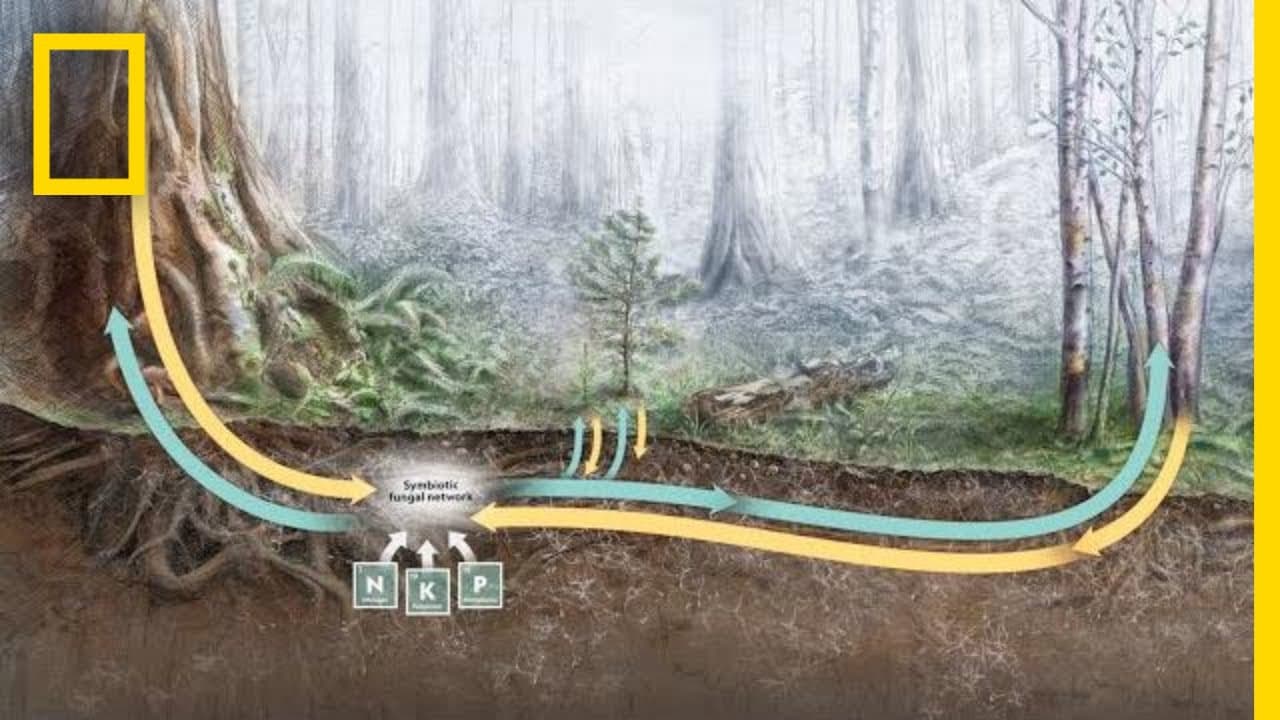
Trees communicate with each other through a vast underground network of fungi, exchanging water, nutrients, and even warning signals.
Transcript
Ouch! What do you think you’re doing? The idea of talking trees has been capturing the human imagination for generations. Did you say something? My bark is worse than my bite. Okay, so maybe they don’t talk to us, but it turns out, trees can “talk” to each other. The trees are speaking to each other. But that does beg the question: What do trees... Read More
Key Insights
- 💁 Trees communicate through a symbiotic relationship with fungi, forming an underground communication network.
- 🖐️ Hub trees play a crucial role in facilitating the communication network by providing excess resources.
- 🌲 DNA analysis reveals that trees in a forest are connected to numerous other trees through the fungal network.
- 👻 The underground network allows trees to exchange water, nutrients, and even send warning signals.
- 🌲 Removing hub trees disrupts the network more than randomly removing trees.
- 💱 Studying underground exchanges in forests is important for enhancing forest resilience.
- 🌲 Trees have a complex language that humans are still striving to understand.
Install to Summarize YouTube Videos and Get Transcripts
Explore YouTube Video Summarizer or Get YouTube Transcript Extractor
Questions & Answers
Q: How do trees communicate with each other?
Trees communicate through a symbiotic relationship with fungi called mycorrhiza. Fungi absorbs the excess sugar produced by trees, providing the trees with nutrients in return.
Q: What is the role of hub trees in the communication network?
Hub trees, being the oldest and tallest in the forest, have greater access to sunlight and produce more sugar than they need. They serve as the central connection point for the network, providing resources to other trees.
Q: How are trees connected in a forest?
Trees are connected through their root systems, with fungi forming a network of threads called mycelium. This interconnected underground system allows trees to exchange water, nutrients, and even send warning signals.
Q: What happens when hub trees are removed?
Removing hub trees from a forest disrupts the network and causes more connections to be lost compared to randomly removing trees. This highlights the importance of hub trees in sustaining the communication network.
Summary & Key Takeaways
-
Trees have a hidden communication network underground, facilitated by fungi connections.
-
Hub trees, the oldest and tallest in the forest, produce excess sugar that is absorbed by fungi in exchange for nutrients.
-
DNA analysis in a Canadian forest revealed that one tree can be connected to 47 other trees.
Read in Other Languages (beta)
Share This Summary 📚
Summarize YouTube Videos and Get Video Transcripts with 1-Click
Try YouTube Summary with ChatGPT & Claude or YouTube Transcript Generator
Explore More Summaries from National Geographic 📚



Summarize YouTube Videos and Get Video Transcripts with 1-Click
Try YouTube Summary with ChatGPT & Claude or YouTube Transcript Generator