How to Foster Dialogue in Polarized Times
TL;DR
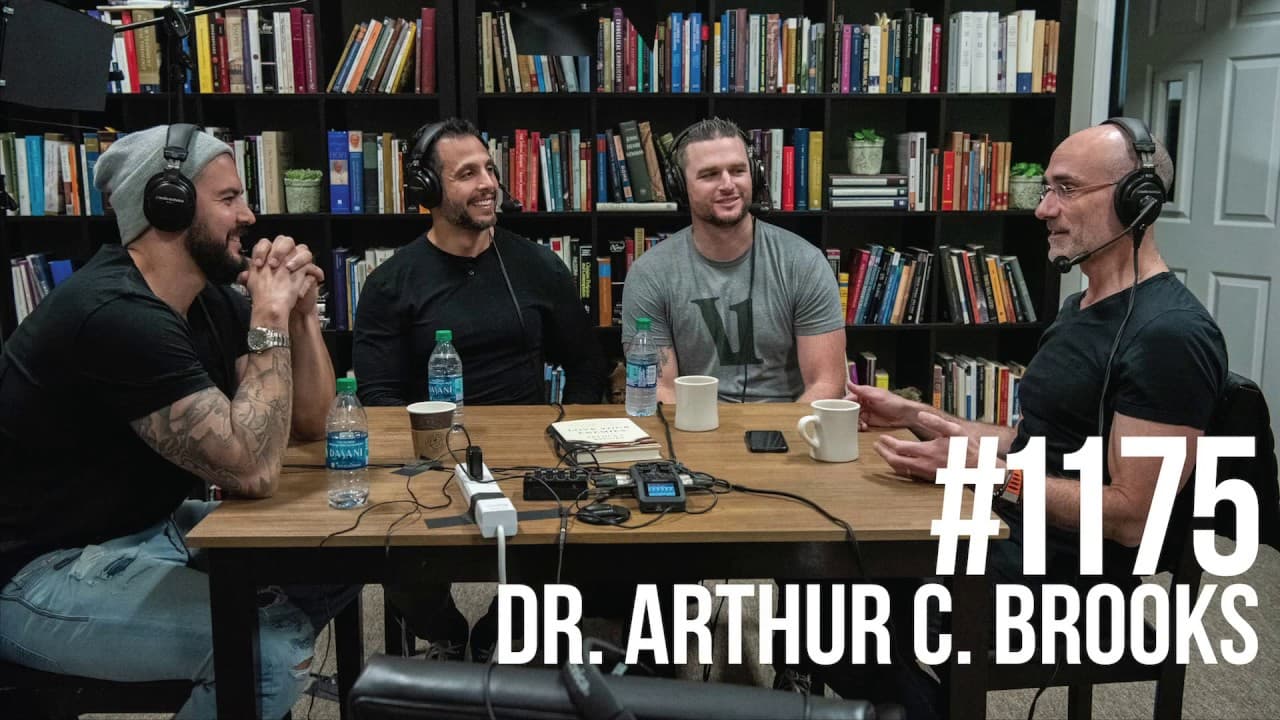
Dr. Arthur C. Brooks emphasizes the importance of loving your enemies to bridge divides in a polarized society. By understanding and respecting opposing viewpoints, individuals can foster dialogue and cooperation. Brooks argues that contempt, not anger, is the true barrier to constructive communication, and encourages people to focus on shared values and mutual respect.
Transcript
If you want to pump your body and expand your mind, there's only one place to go, Mind Pump. Mind Pump with your hosts Sal Dphano, Adam Schaefer, and Justin Andrews. So, in this episode of Mind Pump, we got to meet somebody that we have uh a lot of admiration for. Very, very smart individual. Um, Dr. Arthur Brooks. He's a professor at the Harvard B... Read More
Key Insights
- Dr. Arthur Brooks is a Harvard professor and former president of the American Enterprise Institute.
- Motive attribution asymmetry is a psychological phenomenon fueling political division.
- Contempt, not anger, is the leading cause of relationship breakdowns.
- Loving your enemies can lead to personal happiness and societal harmony.
- The outrage industrial complex profits from societal division.
- Effective dialogue requires understanding the motivations behind opposing views.
- Entrepreneurship and free enterprise have lifted billions out of poverty.
- Friendship, family, faith, and work are key components of happiness.
Install to Summarize YouTube Videos and Get Transcripts
Explore YouTube Video Summarizer or Get YouTube Transcript Extractor
Questions & Answers
Q: How can we bridge divides in a polarized society?
To bridge divides, we must focus on understanding and respecting opposing viewpoints. By recognizing that people on the other side are motivated by love and a desire to help, we can foster dialogue and cooperation. Dr. Arthur C. Brooks emphasizes the importance of loving your enemies, which can lead to personal happiness and societal harmony.
Q: What is motive attribution asymmetry?
Motive attribution asymmetry is a psychological phenomenon where opposing sides in a conflict believe they are motivated by love, while the other side is motivated by hate. This misunderstanding creates intractable conflicts and is a key factor in political and social polarization, similar to the Israeli-Palestinian conflict.
Q: Why is contempt more damaging than anger in relationships?
Contempt is more damaging because it combines anger with disgust, leading to the belief that the other person is worthless. This conviction of worthlessness can cause deep emotional pain and is a leading predictor of relationship breakdowns. Unlike anger, which can indicate that you care, contempt shuts down communication and connection.
Q: How does loving your enemies benefit you?
Loving your enemies can make you happier and more persuasive. By responding to contempt with warmth and understanding, you can improve your own well-being and potentially change others' perspectives. This approach also helps to reduce societal division and contributes to a more harmonious community.
Q: What role does the outrage industrial complex play in societal division?
The outrage industrial complex profits from societal division by fueling anger and hatred. It consists of media and political figures who gain power, fame, and wealth by encouraging people to despise those with opposing views. Dr. Brooks suggests that by loving our enemies, we can subvert this complex and promote unity.
Q: How can we effectively communicate with those we disagree with?
Effective communication involves understanding the motivations behind opposing views and finding common ground. Start by acknowledging the other person's good intentions and shared values. This approach fosters respect and opens the door for constructive dialogue, making it more likely to persuade and connect with others.
Q: What is the relationship between happiness and the four key components identified by Brooks?
Happiness is closely linked to faith, family, friendship, and meaningful work. Faith provides a sense of purpose beyond oneself, while family and friendships offer emotional support and connection. Meaningful work, which involves earning success and serving others, contributes to a sense of accomplishment and purpose.
Q: How has entrepreneurship and free enterprise impacted global poverty?
Entrepreneurship and free enterprise have significantly reduced global poverty by lifting billions of people out of destitution. These systems promote economic growth, innovation, and opportunity, enabling individuals to improve their living standards and achieve prosperity. Dr. Brooks highlights the humanitarian benefits of free enterprise in addressing poverty.
Summary & Key Takeaways
-
Dr. Arthur C. Brooks discusses the concept of motive attribution asymmetry, where opposing sides believe they are motivated by love while the other side is motivated by hate. This misunderstanding fuels political and social division, similar to the Israeli-Palestinian conflict.
-
Brooks emphasizes the power of loving your enemies as a way to subvert the outrage industrial complex. By responding to contempt with warmth, individuals can foster dialogue and potentially change minds, while also improving their own happiness.
-
Contempt is identified as a major barrier to communication and relationships, more so than anger. Brooks suggests that understanding and articulating shared values can help bridge divides, and that personal happiness is closely linked to faith, family, friendship, and meaningful work.
Read in Other Languages (beta)
Share This Summary 📚
Summarize YouTube Videos and Get Video Transcripts with 1-Click
Try YouTube Summary with ChatGPT & Claude or YouTube Transcript Generator
Explore More Summaries from Mind Pump Show 📚



Summarize YouTube Videos and Get Video Transcripts with 1-Click
Try YouTube Summary with ChatGPT & Claude or YouTube Transcript Generator