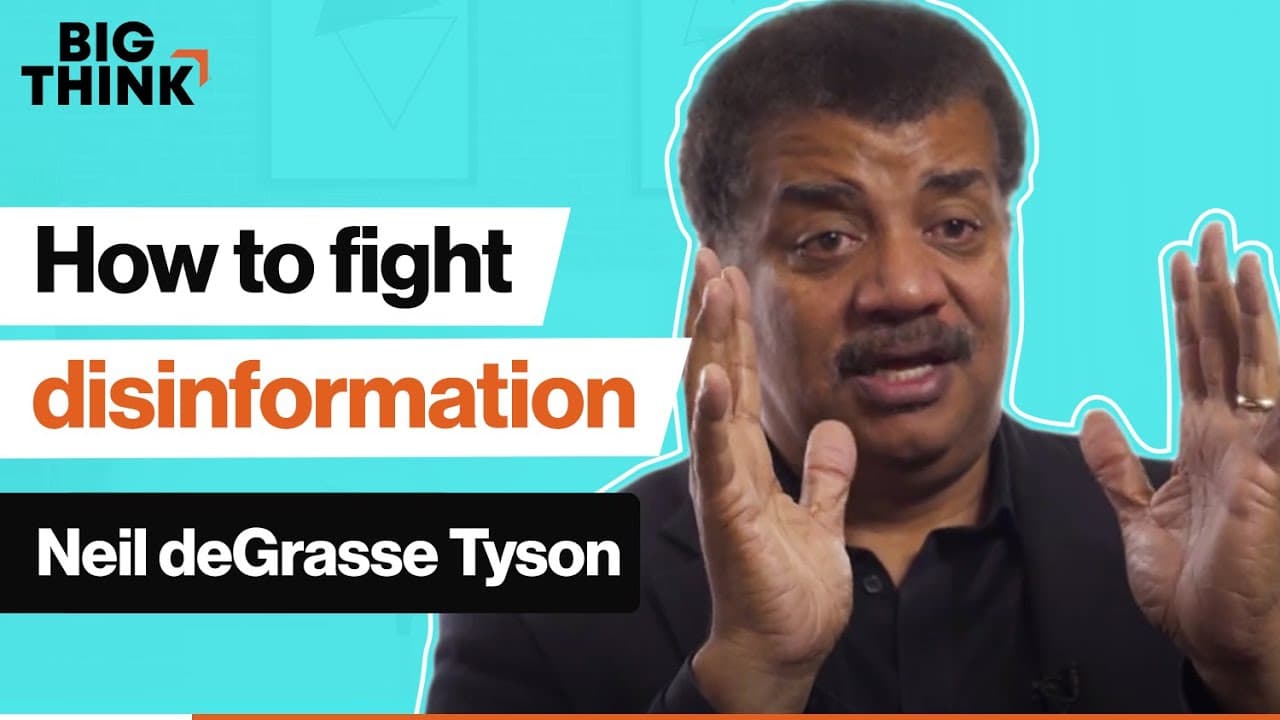
Neil deGrasse Tyson: How science literacy can save us from the internet | Big Think
TL;DR
The internet has transformed from a fun and informative platform to a divisive one, emphasizing the need for science literacy to discern reliable information.
Transcript
I think no one would give up the internet today in spite of the problems that it has presented us. It started out oh, this is kind of fun. We can watch cat videos all day or that’s most of the information that came across was instructive or humorous or enlightening. It didn’t start turning mean until a few years in, maybe five or ten years ago. Cer... Read More
Key Insights
- 🍄 The internet has transitioned from a fun and informative platform to one that fosters tribalism and argumentation.
- 💁 Access to vast amounts of information is beneficial, but without proper training, it contributes to confusion and misinformation.
- ℹ️ School curricula should incorporate training in determining reliable sources and discerning false information.
- 💁 Science literacy is crucial, as it enables individuals to understand and question claims about nature, promoting a more critical approach to information consumption.
- 🍂 Empowering individuals with science literacy inoculates them against falling victim to charlatans or pseudoscientific claims.
- 💁 The internet's potential can be harnessed by guiding individuals in understanding and questioning information, rather than accepting it blindly.
- 💁 Developing basic knowledge in fields such as physiology, chemistry, physics, and engineering helps individuals navigate the influx of information online.
Install to Summarize YouTube Videos and Get Transcripts
Explore YouTube Video Summarizer or Get YouTube Transcript Extractor
Questions & Answers
Q: How has the perception of the internet changed over the years?
Initially, the internet was seen as a source of fun and informative content, but it has evolved into a platform that often encourages tribalism and argumentation.
Q: Is access to vast information a positive aspect of the internet?
Yes, the internet provides access to a wealth of information, which can be beneficial if individuals are equipped with the necessary skills to discern its reliability.
Q: Are people trained to differentiate between reliable and false information?
Unfortunately, current school curricula do not place enough emphasis on training individuals to determine reliable sources or identify false information.
Q: What is the solution to navigate the pitfalls of online information?
Developing science literacy is key. Science literacy empowers individuals to understand the workings of various systems and enables them to recognize misinformation and charlatans.
Summary & Key Takeaways
-
The internet initially provided entertainment and enlightenment, but it has now become a platform for tribalism and argumentation.
-
While internet access offers vast amounts of information, individuals lack the training to determine its reliability.
-
The lack of science literacy in school curricula contributes to the challenges faced in navigating the internet and distinguishing between factual and false information.
Read in Other Languages (beta)
Share This Summary 📚
Summarize YouTube Videos and Get Video Transcripts with 1-Click
Try YouTube Summary with ChatGPT & Claude or YouTube Transcript Generator
Explore More Summaries from Big Think 📚




Summarize YouTube Videos and Get Video Transcripts with 1-Click
Try YouTube Summary with ChatGPT & Claude or YouTube Transcript Generator