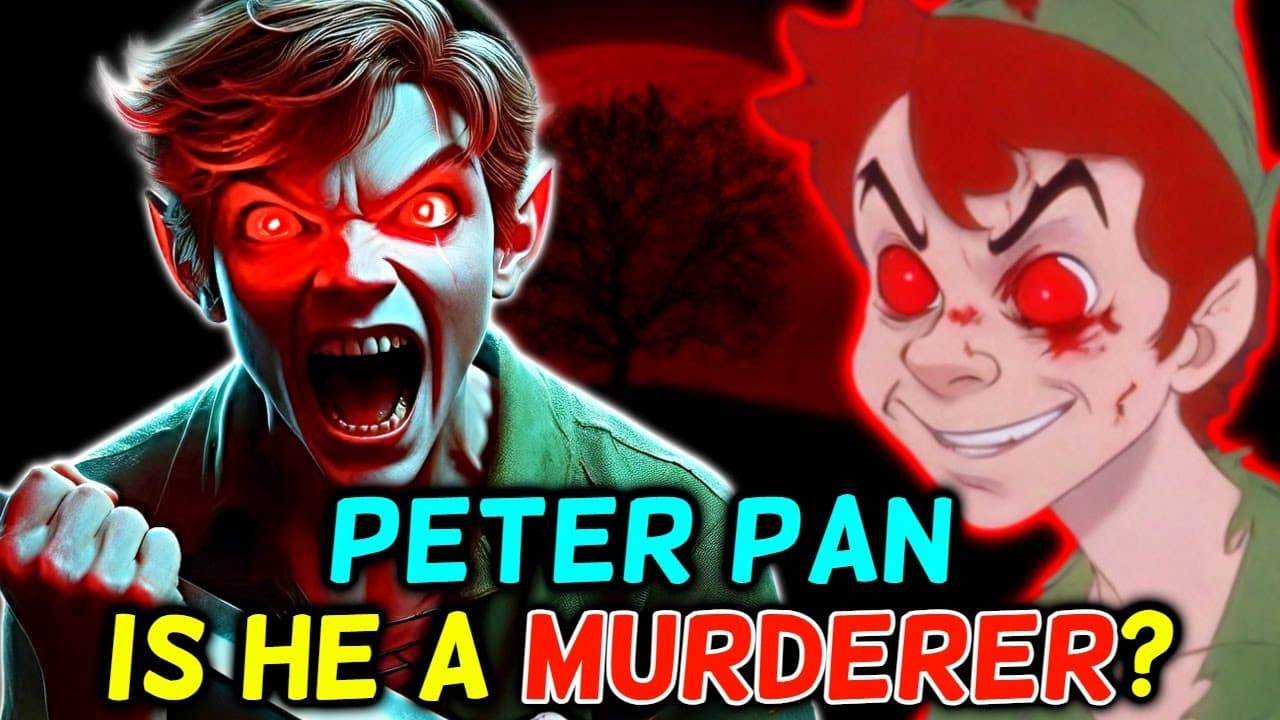
Dark And Disturbing Theories About Peter Pan That Will Terrify You - Is He A Murderer?
TL;DR
Peter Pan has unsettling interpretations reflecting themes of control, childhood, and dark motives behind the beloved character.
Transcript
1 2 3 we can fly we can fly we can fly the boy who shaped our childhoods made us fall in love with the idea of being stuck forever as children of life being nothing but fun and games is not only that the author JM Barry may have left hints here and there about the true dark nature behind his adaptation of the character Peter Pan the fun elements of... Read More
Key Insights
- 🇵🇦 Peter Pan's character offers a lens through which complex themes of childhood and adulthood are explored, revealing contradictions in the pursuit of eternal youth.
- 🕶️ Adaptations of Peter Pan illustrate shifting perceptions of innocence, whimsy, and the darker aspects of childhood, influencing cultural understanding.
- 🛟 J.M. Barrie’s relationships and motivations remain a topic of debate, with critics examining how his life experiences shaped the narrative of Peter Pan.
- 😨 The character's interactions with other figures, like Wendy and Captain Hook, highlight themes of manipulation, control, and the fear of growing up.
- 🤨 Early production safety concerns reflect implications of childhood fantasy impacting real-world behavior, raising questions about the influence of storytelling.
- 🤠 The theory that Captain Hook was once a Lost Boy presents a fascinating twist in the dynamic between authority and rebellion within thematic storytelling.
- 🧑 Engaging with Peter Pan as adults often reveals overlooked nuances, prompting deeper reflection on childhood narratives intended for younger audiences.
Install to Summarize YouTube Videos and Get Transcripts
Explore YouTube Video Summarizer or Get YouTube Transcript Extractor
Questions & Answers
Q: What are some of the darker interpretations of Peter Pan's character?
Peter Pan is often viewed as possessing a sinister side, characterized as a control freak who refuses to let children grow up. This perspective stems from his need to maintain a fantasy world where responsibility is absent, ultimately leading to potential violence against those who threaten this ideal, such as Wendy Darling as she approaches adulthood.
Q: How has J.M. Barrie's personal life influenced the portrayal of Peter Pan?
J.M. Barrie's personal background and experiences, specifically his close connections with young boys, have fueled speculation about his intentions with Peter Pan. Some theorists suggest that Barrie's encounters with children inspired elements of Peter's character, leading to interpretations that blur lines between innocence and manipulation, prompting critical discussions about his motivations.
Q: Why were early productions of Peter Pan seen as unsafe for children?
Early productions faced scrutiny as children reportedly attempted to imitate Peter's ability to fly, risking injury. In response, Barrie added the element of fairy dust to mitigate children's dangerous actions, an approach praised by concerned parents while also highlighting the complexities surrounding the portrayal of childhood adventures in the narrative.
Q: Discuss the theory that Captain Hook was once a Lost Boy.
One intriguing theory posits that Captain Hook was originally a Lost Boy before escaping Peter Pan's influence. This interpretation suggests that Hook’s crew comprises former Lost Boys who became outlaws, creating a complex dynamic between him and Peter, reflecting themes of abandonment and growing up in a fantasy-driven narrative.
Q: How do various adaptations of Peter Pan differ in their portrayal of themes?
Adaptations of Peter Pan, from Disney's animated classics to darker live-action versions, showcase a spectrum of interpretations. While some emphasize whimsical adventure and childlike innocence, others delve into more serious themes of aging, control, and the psychological ramifications of eternal youth, highlighting diverse audience receptions over time.
Q: What is the significance of Peter Pan’s relationship with Wendy Darling?
Wendy Darling symbolizes the transitional phase between childhood and adulthood. Her interactions with Peter represent the tension between the desire for maturity and the allure of perpetual youth. Peter's manipulative tendencies towards Wendy underscore his fear of adult influences, making her presence both comforting and threatening in Neverland.
Q: How do conspiracy theories surrounding Peter Pan reflect societal views on childhood?
Conspiracy theories regarding Peter Pan often mirror societal anxieties about childhood innocence. They challenge traditional narratives by introducing darker themes, suggesting that the longing for eternal youth can lead to harmful consequences, thus prompting audiences to reconsider the implications of childhood and the complexities of growing up.
Summary & Key Takeaways
-
The character of Peter Pan, originally by J.M. Barrie, is analyzed through theories suggesting a darker nature beneath his playful façade, including potential manipulation and violence towards children.
-
Key adaptations of Peter Pan demonstrate varying interpretations, from innocence to darkness, altering perceptions of the character and its impact on childhood narratives.
-
J.M. Barrie himself is scrutinized through his relationships and writings, revealing complex motivations and controversial aspects related to children and childhood innocence.
Read in Other Languages (beta)
Share This Summary 📚
Summarize YouTube Videos and Get Video Transcripts with 1-Click
Try YouTube Summary with ChatGPT & Claude or YouTube Transcript Generator
Explore More Summaries from Marvelous Videos 📚




Summarize YouTube Videos and Get Video Transcripts with 1-Click
Try YouTube Summary with ChatGPT & Claude or YouTube Transcript Generator