Dystopia Triptych Interview with Tobias Buckell
TL;DR
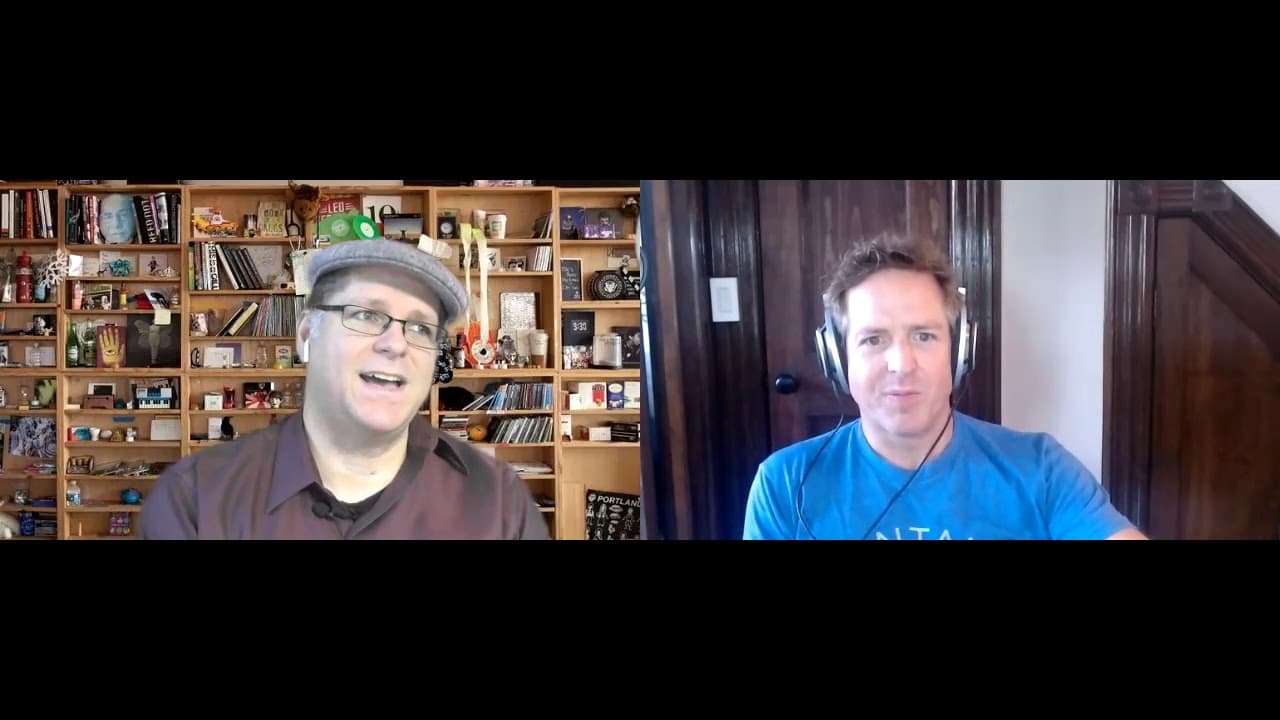
Discussion with Tobias Buckell about his stories in Dystopia Triptych.
Transcript
hello Tobias good to see you man yeah I'm all right I'm right cool so what we've been doing is a series of interviews with all the authors of the new dystopia triptych and I have not had the books in hand so I've been pulling up my iPad and showing off this amazing artwork and then doing interviews like back to back after the last one and before yo... Read More
Key Insights
- Tobias Buckell discusses the inspiration and themes behind his stories in the Dystopia Triptych, highlighting the exploration of robot consciousness and societal issues.
- Buckell reflects on the challenges and rewards of self-publishing through platforms like Kickstarter, emphasizing the creative freedom it offers.
- The conversation delves into the importance of context in writing advice, illustrating how decontextualized rules can mislead new writers.
- Buckell shares his perspective on the evolution of language and the need to adapt to more inclusive and accurate expressions.
- The author explores the concept of revolution and progress, emphasizing that real change requires ongoing effort and collaboration.
- Buckell's stories often interrogate societal norms and the treatment of marginalized groups, using science fiction as a mirror to reflect on contemporary issues.
- The discussion touches on the emotional connections humans form with technology, as seen in the empathy towards robots and AI.
- Buckell highlights the significance of short fiction as a medium to experiment with ideas and the satisfaction of completing shorter projects.
Install to Summarize YouTube Videos and Get Transcripts
Explore YouTube Video Summarizer or Get YouTube Transcript Extractor
Questions & Answers
Q: What themes does Tobias Buckell explore in his stories within the Dystopia Triptych?
Tobias Buckell's stories in the Dystopia Triptych explore themes of robot consciousness, societal issues, and the treatment of marginalized groups. He uses science fiction as a lens to reflect on contemporary issues, examining the problematic aspects of how robots are portrayed and treated in Western culture. His stories challenge readers to consider the ethical implications of creating conscious beings for labor and the potential for collaboration between humans and robots.
Q: How does Buckell view the role of Kickstarter in publishing?
Tobias Buckell views Kickstarter as a valuable platform for self-publishing, particularly for niche projects that may not attract traditional publishers. He appreciates the creative freedom it offers, allowing him to compile and share his writing advice and experiences without the constraints of corporate restructuring. The success of his Kickstarter campaign demonstrates the potential for authors to reach audiences directly and gain financial support for their work.
Q: What is Buckell's perspective on writing advice and its context?
Buckell emphasizes the importance of context in writing advice, noting that decontextualized rules can mislead new writers. He argues that while certain guidelines, like 'show, don't tell,' are useful, they are not absolute. Understanding the context in which advice is given helps writers apply it more effectively and avoid rigid adherence to rules that may not suit their specific writing goals or situations.
Q: How does Buckell approach the evolution of language and inclusivity?
Buckell recognizes the need for language to evolve towards inclusivity and accuracy. He shares personal experiences of deprogramming harmful language from his vocabulary, acknowledging the challenges of changing ingrained habits. He stresses the importance of being open to learning and adapting, especially as a writer, to ensure language reflects respect and understanding for all individuals.
Q: What insights does Buckell offer on revolution and progress?
Buckell highlights that real change requires ongoing effort and collaboration, rather than expecting a revolution to instantly solve all problems. He illustrates that progress is about expanding access and collaboration, and that significant work remains after a revolution. His stories reflect this understanding, showing that societal change is a continuous process that demands commitment and perseverance.
Q: How does Buckell's background influence his writing?
Buckell's background, growing up in a bifurcated world between expat and local cultures in the Caribbean, influences his writing by providing a diverse perspective on societal norms and interactions. His experiences navigating different cultural expectations inform his exploration of themes like empathy, identity, and societal change, allowing him to create nuanced narratives that challenge conventional viewpoints.
Q: What role does empathy play in Buckell's stories about robots?
Empathy is a central theme in Buckell's stories about robots, as he explores how humans form emotional connections with technology. He questions the ethical implications of creating conscious beings for labor and envisions a future where robots are seen as collaborators rather than tools. By examining the potential for empathy towards robots, Buckell's stories encourage readers to consider the broader implications of technological advancement on society.
Q: Why does Buckell value short fiction as a medium?
Buckell values short fiction for its ability to allow experimentation with ideas and the satisfaction of completing projects more frequently than with novels. Short stories provide a platform to quickly explore diverse concepts and receive feedback, making them an ideal medium for testing creative impulses and refining storytelling techniques. This approach enables Buckell to maintain a prolific output while continuously honing his craft.
Summary & Key Takeaways
-
Tobias Buckell discusses his contributions to the Dystopia Triptych, focusing on themes of robot consciousness and societal issues. He highlights the creative freedom of self-publishing through Kickstarter, allowing niche projects to reach audiences.
-
The interview explores the importance of context in writing advice, with Buckell emphasizing how rigid rules can mislead new writers. He also reflects on the evolution of language and the need for inclusivity.
-
Buckell's stories often challenge societal norms, using science fiction to mirror contemporary issues. The conversation also touches on the emotional connections humans form with technology, exemplified by empathy towards robots and AI.
Read in Other Languages (beta)
Share This Summary 📚
Summarize YouTube Videos and Get Video Transcripts with 1-Click
Try YouTube Summary with ChatGPT & Claude or YouTube Transcript Generator
Explore More Summaries from Hugh Howey 📚




Summarize YouTube Videos and Get Video Transcripts with 1-Click
Try YouTube Summary with ChatGPT & Claude or YouTube Transcript Generator