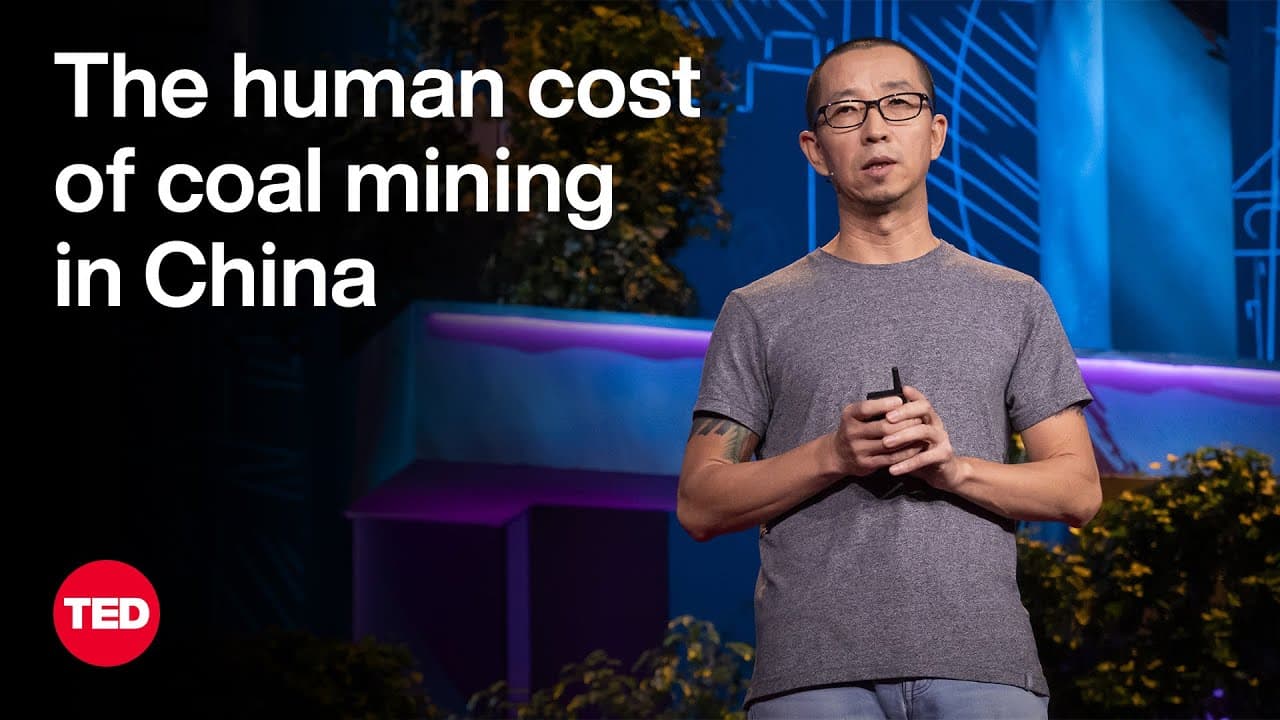
The Human Cost of Coal Mining in China | Xiaojun "Tom" Wang | TED
TL;DR
Coal mining in Shanxi Province, China, has led to environmental destruction, landslides, and health issues. The province is heavily reliant on coal but is now facing pressure to transition to cleaner energy sources.
Transcript
So in early April this year, I went back to my hometown, Lüliang in central China’s Shanxi Province, for the tomb-sweeping day. The tomb-sweeping day, literally, it is a day when we go and clean the tombs of our deceased beloved ones. It is also a day when we go and ask for blessings from our ancestors. And this year, my sister became a new grandmo... Read More
Key Insights
- 🥺 Coal mining in Shanxi Province has led to environmental destruction, including landslides and pollution.
- 🏙️ The province heavily relies on coal mining to support the economies of other provinces and cities.
- 🌐 The Chinese government's pressure to increase coal production contradicts global commitments to reduce reliance on coal.
- 🥶 Shanxi Province needs support from other regions in transitioning to cleaner energy sources and breaking free from coal addiction.
- 🤑 The province's rich cultural heritage is often overshadowed by its association with coal, and efforts are needed to promote its historical and cultural significance.
- 🛟 A clean transition from coal mining is necessary to ensure a safe and healthy future for the community and preserve ancestral graves.
- 🥅 The coordination between Beijing and other sibling provinces is crucial to achieving China's carbon emission reduction goals.
Install to Summarize YouTube Videos and Get Transcripts
Explore YouTube Video Summarizer or Get YouTube Transcript Extractor
Questions & Answers
Q: How has coal mining affected Xiaojun's hometown in Shanxi Province?
Coal mining has caused landslides and environmental degradation in Xiaojun's hometown, risking the safety of ancestral graves and the well-being of the community.
Q: What is the significance of coal mining in Shanxi Province?
Shanxi Province is a major producer of coal, supplying other provinces and cities in China. The economy heavily relies on coal mining and burning, resulting in significant pollution and environmental consequences.
Q: How has coal mining impacted Xiaojun's family?
Xiaojun's cousin worked as a coal miner and tragically died from an accident. The family is now being forced to relocate their ancestral graveyard due to the impact of coal mining.
Q: What is the current stance of the Chinese government on coal mining?
While there are global commitments to reduce coal consumption, the Chinese government, particularly Beijing, is pressuring Shanxi Province to continue coal mining to prevent potential energy crises.
Summary & Key Takeaways
-
The speaker, Xiaojun Wang, describes how coal mining has devastated his hometown in central China's Shanxi Province, leading to landslides and threatening ancestral graves.
-
Shanxi Province produces over one billion tons of coal annually and supports other provinces and cities in China with their coal supply.
-
Despite global commitments to phase out coal, Shanxi Province is still being pressured to increase coal production by Beijing to prevent future energy crises.
Read in Other Languages (beta)
Share This Summary 📚
Summarize YouTube Videos and Get Video Transcripts with 1-Click
Try YouTube Summary with ChatGPT & Claude or YouTube Transcript Generator
Explore More Summaries from TED 📚





Summarize YouTube Videos and Get Video Transcripts with 1-Click
Try YouTube Summary with ChatGPT & Claude or YouTube Transcript Generator