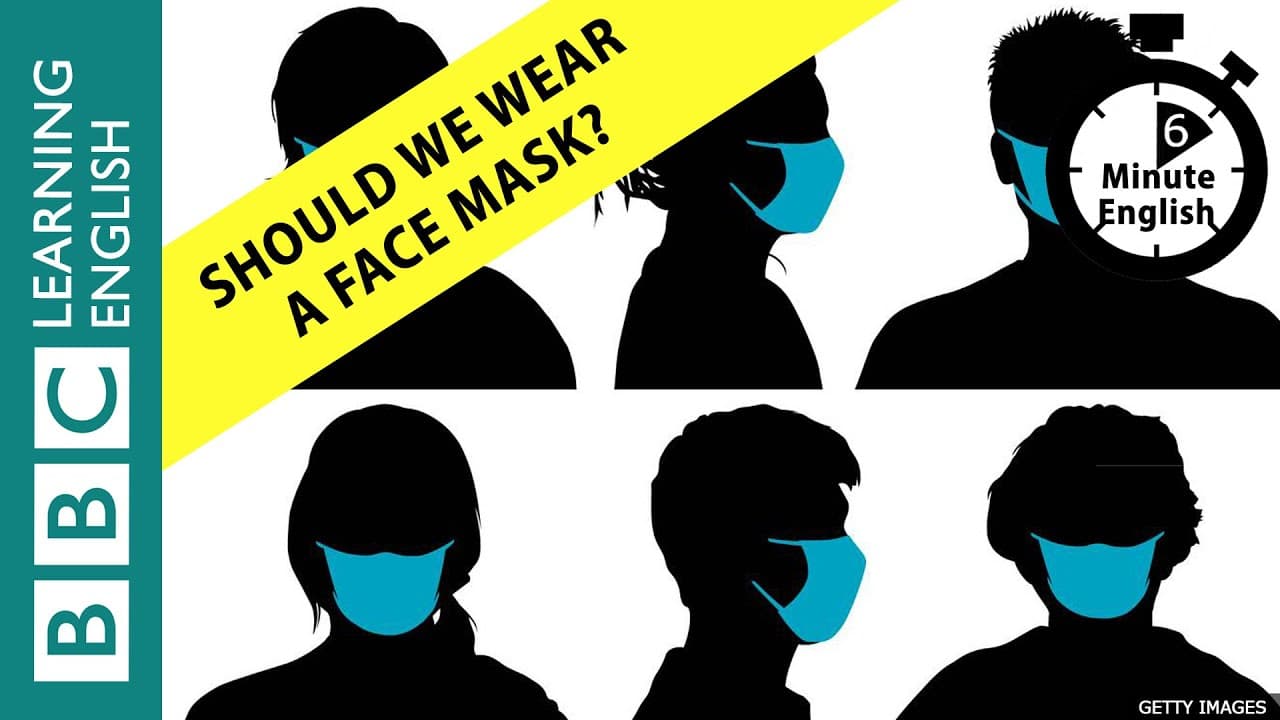
Should we wear a face mask? 6 Minute English
TL;DR
Discussion on the effectiveness of face masks in preventing COVID-19 spread.
Transcript
Hello. This is 6 Minute English from BBC Learning English. I’m Rob. And I’m Sam. With the outbreak of the coronavirus epidemic, people in many countries around the world have started wearing face masks to protect both themselves and others they come into contact with. In this programme we’ll be asking whether wearing masks in public can help preven... Read More
Key Insights
- Face masks have been widely used in some Asian countries and are now more common globally due to COVID-19.
- The evidence on the effectiveness of face masks in preventing virus spread is equivocal, with studies showing conflicting results.
- Professor Robert West highlights the lack of clear evidence, leading to public reliance on opinions rather than facts.
- The World Health Organization initially recommended masks for symptomatic individuals and caregivers, later advising public use where distancing isn't possible.
- Mask shaming, or criticizing non-mask wearers, has emerged as a social issue, potentially leading to harmful social pressure.
- Wearing masks might create a false sense of security, making individuals feel safer than they actually are.
- The historical use of masks dates back to 1905 in Chicago, where masks protected carers from scarlet fever.
- The debate over mask effectiveness has sparked heated discussions, reflecting the broader public health communication challenges.
Install to Summarize YouTube Videos and Get Transcripts
Explore YouTube Video Summarizer or Get YouTube Transcript Extractor
Questions & Answers
Q: What is the historical significance of face masks?
Face masks have a long history of use in disease prevention, dating back to 1905 in Chicago. Dr. Alice Hamilton observed that carers wearing masks while treating scarlet fever patients did not get sick, marking the first widespread use of masks in medical settings. This historical context underscores their role in public health.
Q: Why is the evidence on mask effectiveness described as equivocal?
The evidence on mask effectiveness is described as equivocal because studies show conflicting results. Some suggest masks prevent virus spread, while others indicate the opposite. This lack of clear evidence leads to reliance on personal opinions and contributes to the heated debate over mask usage in public health discussions.
Q: What are the potential negative consequences of wearing masks?
Potential negative consequences of wearing masks include mask shaming and the creation of a false sense of security. Mask shaming involves criticizing non-mask wearers, leading to social pressure. Additionally, masks can give individuals a false sense of safety, making them feel protected when they might not be, potentially undermining other preventive measures.
Q: How has the World Health Organization's advice on masks changed?
The World Health Organization initially recommended masks for symptomatic individuals and their caregivers. However, their advice evolved to recommend mask use in public settings where social distancing measures are not feasible. This change reflects the ongoing assessment of mask effectiveness and the need to adapt public health guidelines to emerging evidence.
Q: What role do opinions play in the mask-wearing debate?
Opinions play a significant role in the mask-wearing debate due to the equivocal evidence on their effectiveness. Without clear scientific consensus, people rely on personal beliefs and experiences, leading to polarized views and heated discussions. This reliance on opinion rather than evidence complicates public health messaging and compliance.
Q: What is mask shaming, and why is it a concern?
Mask shaming involves criticizing or humiliating individuals who do not wear masks. It is a concern because it can lead to social pressure and judgment, compelling people to wear masks even when unnecessary or potentially harmful. This social phenomenon underscores the complex interplay between public health recommendations and societal behavior.
Q: How might masks create a false sense of security?
Masks might create a false sense of security by making wearers feel safer than they truly are, potentially leading them to neglect other preventive measures like hand hygiene and social distancing. This misplaced confidence can undermine comprehensive public health strategies and increase the risk of virus transmission despite mask usage.
Q: What historical event marked the first widespread use of face masks?
The first widespread use of face masks occurred in 1905 in Chicago. Dr. Alice Hamilton observed that caregivers wearing masks while treating scarlet fever patients did not contract the illness. This marked a significant milestone in the use of masks for disease prevention, highlighting their historical importance in public health efforts.
Summary & Key Takeaways
-
Rob and Sam discuss the global increase in face mask usage due to the coronavirus pandemic, exploring its historical context and current debates. They highlight the equivocal evidence on mask effectiveness and the resulting public reliance on opinions. The program also addresses social issues like mask shaming and false security.
-
The World Health Organization's evolving guidelines on mask usage are examined, emphasizing the importance of masks where social distancing is challenging. Despite conflicting evidence, the program acknowledges the role of masks in public health strategy and the heated debates surrounding their use.
-
The historical use of masks is traced back to 1905 in Chicago, illustrating their long-standing role in disease prevention. The program concludes by discussing the social implications of mask-wearing, including mask shaming and the potential for false security, highlighting the ongoing public health communication challenges.
Read in Other Languages (beta)
Share This Summary 📚
Summarize YouTube Videos and Get Video Transcripts with 1-Click
Try YouTube Summary with ChatGPT & Claude or YouTube Transcript Generator
Explore More Summaries from BBC Learning English 📚
Summarize YouTube Videos and Get Video Transcripts with 1-Click
Try YouTube Summary with ChatGPT & Claude or YouTube Transcript Generator