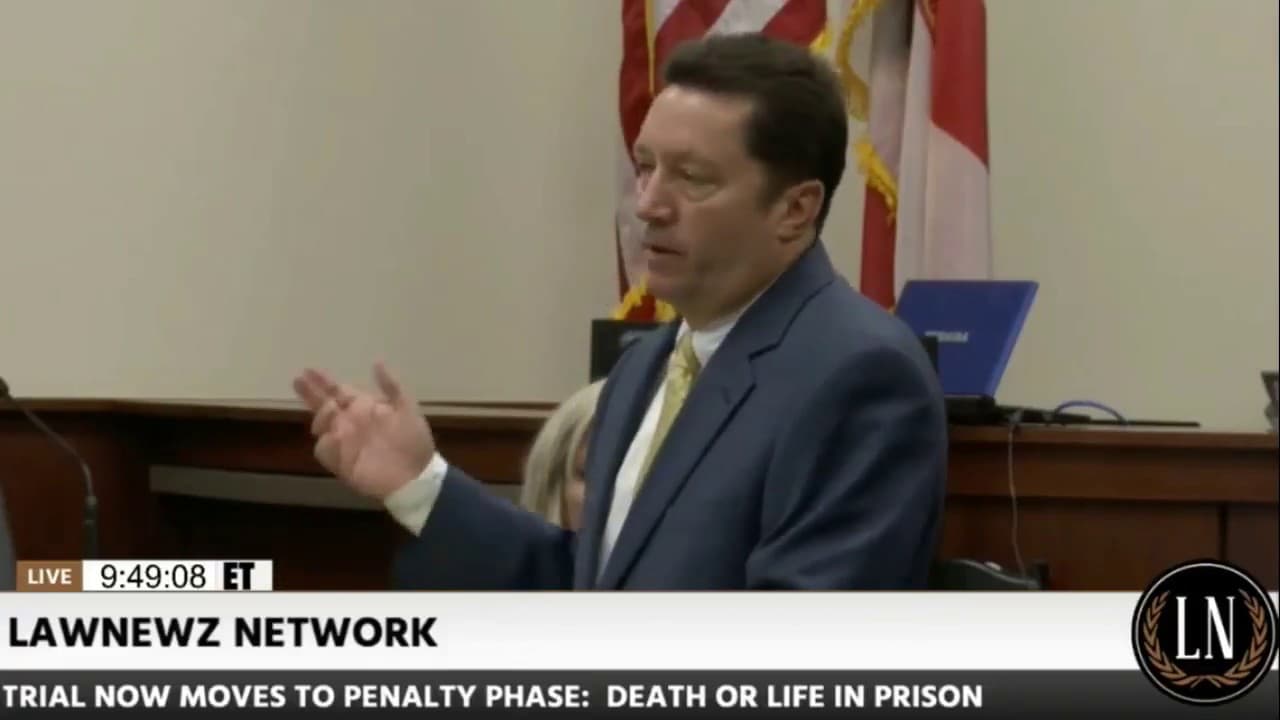
Luis Toledo Trial Penalty Phase Defense Opening Statement
TL;DR
The defense team requests the jury to consider mitigating factors and spare the defendant, arguing that the information presented is not an excuse but provides a path forward for a life sentence.
Transcript
forty ladies and gentlemen thank you for coming back this week participating again in the trial I know it's been a long road for everyone it close to the end here and what I wanted to say just start this way is that everyone on the panel spoke during jury selection and when we were talking about the death penalty one of the things I asked how to fo... Read More
Key Insights
- 😷 The defense asks the jury to remember their commitment to giving a fair shake and affording the defense a chance to present its case.
- 🤕 Mitigating evidence, such as the defendant's history of hospitalizations, mental health issues, and head injuries, is presented to establish reasons for a life sentence.
- 🙏 The defense emphasizes that the evidence provided is not an excuse but aims to provide a pathway for jurors who wish to vote for life.
Install to Summarize YouTube Videos and Get Transcripts
Explore YouTube Video Summarizer or Get YouTube Transcript Extractor
Questions & Answers
Q: What is the defense asking the jury to do in the penalty phase of the trial?
The defense is asking the jury to consider the presented mitigating evidence and spare the defendant from the death penalty. They ask for the chance to present their arguments and provide a path forward for a life sentence.
Q: How does the defense address the fact that the evidence presented is not an excuse for the crimes, but rather aims to explain how the defendant got to this point?
The defense acknowledges that the evidence does not excuse the crimes committed but asserts that it can provide a reason for a juror who wants to vote for life. They emphasize that it is ultimately a jury decision, not a time for the defense to make excuses.
Q: What medical evidence is presented to support the defense's case?
The defense presents evidence of the defendant's history of seizures, psychiatric problems, and head injuries. They mention neurological tests, including a PET scan that showed abnormalities in the defendant's brain. Testimony from psychologists and specialists supports these medical findings.
Q: How does the defense address the aggravating factors presented by the state?
The defense does not discuss the aggravating factors in detail but suggests that some may carry more weight than others. They state that certain factors may not add much to the conviction of premeditated murder since the defendant has already been found guilty on that count.
Summary & Key Takeaways
-
The defense reminds the jury of their commitment to giving a fair shake and asks them to consider the mitigating evidence presented.
-
They emphasize that the defense respects the jury's verdict, even though it may not be what they desired.
-
The defense highlights the defendant's history of hospitalizations, mental health issues, and head injuries to establish mitigating circumstances.
Read in Other Languages (beta)
Share This Summary 📚
Summarize YouTube Videos and Get Video Transcripts with 1-Click
Try YouTube Summary with ChatGPT & Claude or YouTube Transcript Generator
Explore More Summaries from Law&Crime Network 📚






Summarize YouTube Videos and Get Video Transcripts with 1-Click
Try YouTube Summary with ChatGPT & Claude or YouTube Transcript Generator