Why Isn't Your Content Marketing Effective?
TL;DR
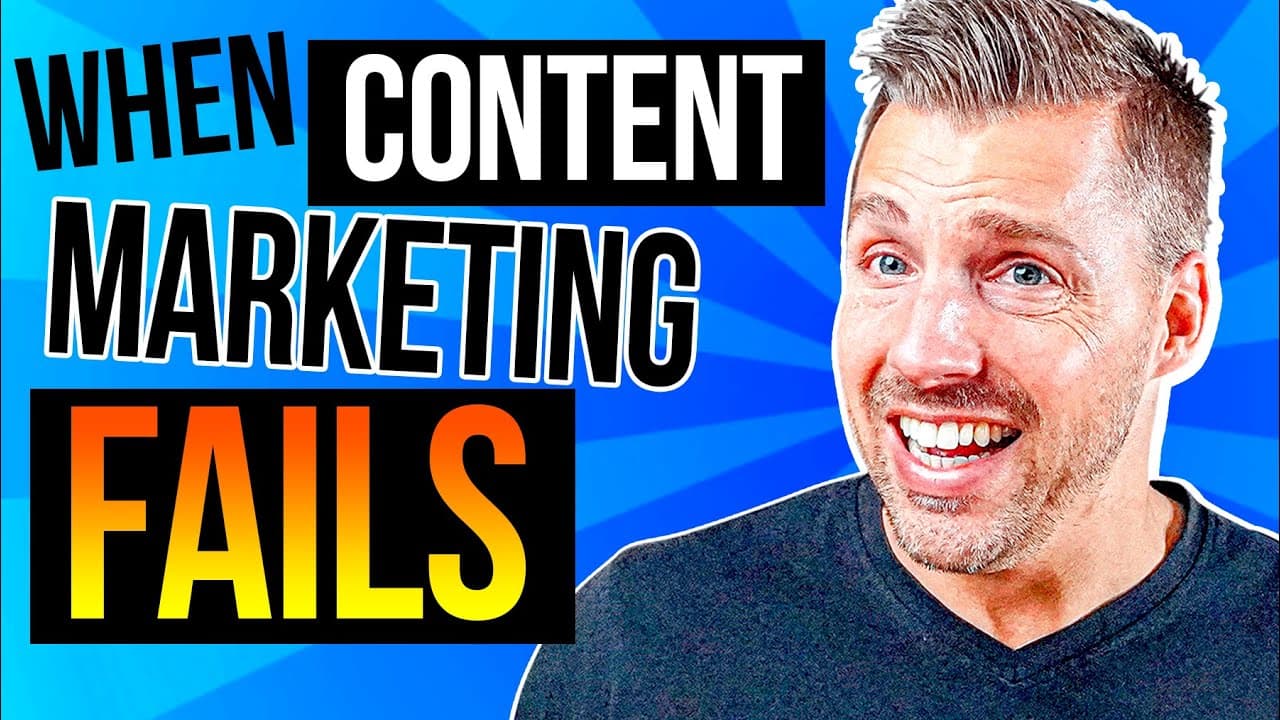
Content marketing fails due to lack of consistency, selfish content, and insufficient promotion. To succeed, create content frequently, focus on audience needs, and promote extensively. Avoid broad topics and ensure your content is aligned with your target audience's specific needs, leveraging long-tail keywords for better engagement.
Transcript
if you're not getting the results you were hoping for from your content marketing strategy you're going to want to pay careful attention here because content marketing is one of the most effective marketing strategies available to you today but it also comes with some challenges as well as a set of unspoken rules that few people know about and will... Read More
Key Insights
- Consistency in content creation is crucial for success in today's competitive market.
- Selfish content that focuses on creator's interests over audience needs often fails.
- Content should address the audience's specific problems and desires for better engagement.
- Promoting content is essential; simply creating it is not enough for success.
- Content should be strategic, with clear goals and alignment with audience needs.
- Identifying and targeting the ideal market is crucial for effective content marketing.
- Using long-tail keywords helps capture niche audiences and improve content reach.
- Avoiding the myth of needing to be everywhere can save time and resources.
Install to Summarize YouTube Videos and Get Transcripts
Explore YouTube Video Summarizer or Get YouTube Transcript Extractor
Questions & Answers
Q: How to make content marketing more effective?
To make content marketing more effective, focus on consistency by increasing the frequency of content production. Ensure content aligns with audience needs by addressing their specific problems and interests. Promote content actively to reach a broader audience, and utilize long-tail keywords for better targeting.
Q: Why does content marketing fail?
Content marketing often fails due to inconsistent production, creating content that focuses on the creator's interests rather than the audience's needs, and insufficient promotion. Additionally, broad topics that fail to target specific audience problems can lead to disengagement and lack of impact.
Q: What is selfish content in marketing?
Selfish content in marketing refers to content that is created based on the creator's personal interests and preferences rather than the needs and desires of the target audience. This type of content often misses the mark in terms of relevance and fails to engage or resonate with the audience.
Q: How important is content promotion?
Content promotion is crucial for the success of any content marketing strategy. Creating content is not enough; it must be actively marketed to reach a wider audience. Effective promotion ensures that valuable content is seen by those who can benefit from it, increasing engagement and impact.
Q: What are long-tail keywords?
Long-tail keywords are specific and targeted keyword phrases that capture niche audience searches. They typically consist of three or more words and focus on a particular aspect of a broader topic. Using long-tail keywords helps content creators reach more specific audiences and improve search engine visibility.
Q: Why is targeting the right audience important?
Targeting the right audience is essential because it ensures that content resonates with those who are most likely to engage with it and benefit from it. Understanding audience demographics, needs, and preferences allows for more effective content creation and marketing, leading to higher engagement and conversion rates.
Q: How can content be strategic?
Content can be strategic by having clear goals, understanding the target audience, and aligning content with their needs and preferences. This involves researching audience demographics and psychographics, setting measurable objectives, and choosing the right platforms and formats to deliver content effectively.
Q: What is content alignment?
Content alignment refers to ensuring that content is created with the right message for the right audience on the right platform. It involves understanding the target market's needs and preferences, crafting messages that resonate with them, and choosing the appropriate media channels to reach them effectively.
Summary & Key Takeaways
-
Content marketing requires consistent production to thrive in a competitive landscape. Increasing frequency, whether through videos, emails, or social media posts, can enhance visibility and engagement. Tailor content to audience needs rather than personal interests to ensure relevance and effectiveness.
-
Promotion is key to content success; relying solely on organic reach is insufficient. Actively market your content to reach a wider audience and fulfill its potential. Avoid broad topics and focus on specific, niche subjects to engage more effectively with your target market.
-
Strategic content alignment involves understanding your target audience's demographics, needs, and preferred platforms. Craft content that addresses their specific problems and desires. Employ long-tail keywords to capture niche searches and enhance your content's discoverability and impact.
Read in Other Languages (beta)
Share This Summary 📚
Summarize YouTube Videos and Get Video Transcripts with 1-Click
Try YouTube Summary with ChatGPT & Claude or YouTube Transcript Generator
Explore More Summaries from Adam Erhart 📚





Summarize YouTube Videos and Get Video Transcripts with 1-Click
Try YouTube Summary with ChatGPT & Claude or YouTube Transcript Generator