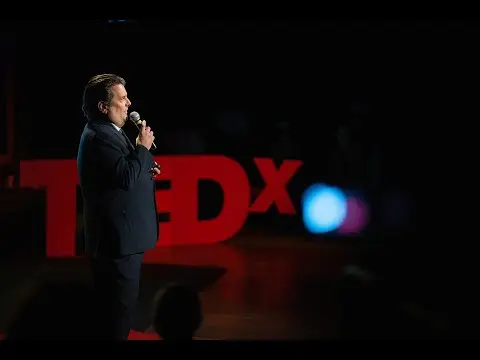
Navigating Emotional Rollercoaster of Authentic Leadership | Dr. Justin Varney | TEDxAstonUniversity

TL;DR
Emotional well-being is crucial for effective leadership, and understanding and embracing emotions can lead to higher productivity and meaningful change.
Transcript
I ask you just to start by sitting with yourself and think about what emotion do you feel at the moment can you name it emotional well-being is something that we write on Post-it notes and we stick on motivational posters but it's rarely something that we actually think about and particularly when we think about leadership training uh having recent... Read More
Key Insights
- ❓ Emotional well-being is often neglected in leadership training, despite its vital role in effective leadership.
- 🎁 The COVID-19 pandemic presented unique emotional challenges for leaders, forcing them to adapt and navigate difficult decisions.
- ❓ Emotions are a fundamental part of being human, and leaders should embrace and understand them for better connection and productivity.
- 🥺 Ignoring emotions can lead to burnout and negatively impact organizational performance.
- 😫 Leaders should prioritize knowing themselves, exploring their emotions, and setting boundaries to navigate the emotional challenges of leadership effectively.
- 🪛 Authentic and emotionally intelligent leadership can drive meaningful change and create a better future for everyone.
- 💦 Organizations should prioritize emotional resilience and well-being among their leaders to create a supportive and productive work environment.
Install to Summarize YouTube Videos and Get Transcripts
Explore YouTube Video Summarizer or Get YouTube Transcript Extractor
Questions & Answers
Q: Why is emotional well-being important for effective leadership?
Emotional well-being allows leaders to connect with their teams on a deeper level, leading to increased productivity and better outcomes. Understanding and managing emotions can also help leaders navigate difficult situations and make tough decisions with empathy and compassion.
Q: How did the COVID-19 pandemic impact the speaker's leadership?
The speaker experienced a shift in their leadership approach during the pandemic. They had to transition from trying to save everyone to making sacrifices, which was emotionally challenging. This realization led to a change in their leadership style and a greater emphasis on emotional resilience.
Q: How can leaders navigate their emotions effectively?
Leaders should start by knowing themselves and being honest about their emotions. They can explore their emotions through introspection and self-reflection. Talking about emotions with colleagues, friends, or through writing can also help. Additionally, setting boundaries is crucial to prevent being overwhelmed by the emotional rollercoaster of leadership.
Q: What is the impact of ignoring emotions in leadership?
Ignoring emotions can lead to burnout and decreased performance. It can also create a disconnect between leaders and their teams, hindering collaboration and trust. Emotions are an essential part of being human, and leaders must acknowledge and embrace them to foster a positive work environment.
Summary & Key Takeaways
-
Emotional well-being is often overlooked in leadership training, but it is essential for connecting with teams and driving high performance.
-
The speaker shares their experience as a director of public health during the COVID-19 pandemic, highlighting the emotional challenges and the need for leaders to adapt.
-
Ignoring or denying emotions can lead to burnout, and organizations must prioritize emotional resilience and well-being among their leaders.
Read in Other Languages (beta)
Share This Summary 📚
Summarize YouTube Videos and Get Video Transcripts with 1-Click
Try YouTube Summary with ChatGPT & Claude or YouTube Transcript Generator
Explore More Summaries from TEDx Talks 📚




Summarize YouTube Videos and Get Video Transcripts with 1-Click
Try YouTube Summary with ChatGPT & Claude or YouTube Transcript Generator