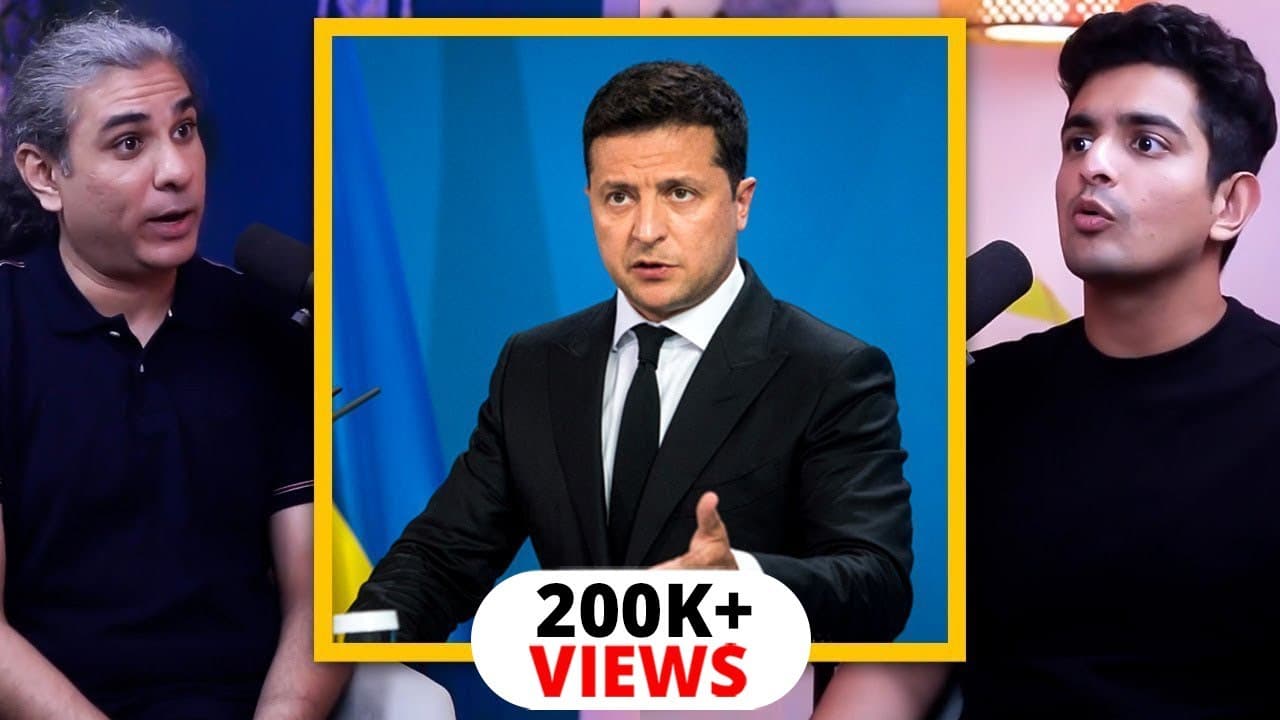
Zelenskyy Conspiracy Theory is TRUE - Abhijit Chavda
TL;DR
Media control shapes public perceptions, including Zelensky's portrayal amidst the Ukraine conflict.
Transcript
trs clips the place you arrive at if you just want the best bits of india's smartest podcast the runway show subscribe hit that bell icon media is extraordinarily powerful it is what helps whoever is in power control the thoughts feelings and ideas and emotions of people and the perceptions and the worldview of people so if you control the media yo... Read More
Key Insights
- 🔉 Media shapes public narratives, influencing perceptions of leaders and events.
- 🍝 Zelensky's Jewish descent in a country with a Nazi past creates a complex political context.
- 🥺 The portrayal of political leaders often sanitizes historical actions, leading to skewed public views.
- 🦹 Hero-villain narratives oversimplify complex geopolitical issues, affecting public engagement.
- 🌍 Russian narratives in the media are heavily controlled, limiting the scope of international opinions.
- 🌐 Branding figures like Zelensky repositions countries and their allies in global perceptions.
- 🎁 Disinformation campaigns complicate understanding of conflicts and narratives presented to the public.
Install to Summarize YouTube Videos and Get Transcripts
Explore YouTube Video Summarizer or Get YouTube Transcript Extractor
Questions & Answers
Q: How does media control influence public opinion about leaders like Zelensky?
Media serves as a powerful tool to shape perceptions and opinions about political leaders. By controlling the narrative presented to the public, those in power can emphasize certain traits while downplaying or omitting darker aspects of their leadership. In Zelensky's case, a largely positive portrayal overlooks historical complexities and the involvement of neo-Nazi factions in Ukraine.
Q: What is the significance of Zelensky's Jewish background in the context of Ukraine's history with Nazis?
Zelensky's identity as a Jewish leader in a country associated with neo-Nazi movements poses a complex narrative. Historically, Ukraine's involvement in atrocities against Jews during World War II raises questions about the current political dynamics. His support of certain military factions linked to this troubling past adds layers to the public's understanding of his leadership.
Q: How do narratives around Zelensky compare to those around Putin?
While Putin's reputation is often characterized by overt recognition of his authoritarian tendencies, Zelensky’s representation in media is markedly more sanitized. The stark contrast illustrates a branding exercise, where one leader's flaws are widely acknowledged while the other's are concealed, leading to an imbalanced public narrative that simplifies complex geopolitical situations.
Q: What role does storytelling play in shaping perceptions of the Ukraine conflict?
Storytelling is crucial in framing the Ukraine conflict, often portraying Ukraine as the underdog fighting against oppression. This narrative construction not only influences public opinion but also positions the U.S. as the benevolent supporter. Such storytelling creates a simplified hero-villain dichotomy, making it easier for audiences to engage with the complexities of the situation.
Q: Why is there skepticism regarding the portrayal of Zelensky as a hero?
The skepticism stems from the observation that every political leader has a multifaceted nature, including controversial actions and decisions. The idealized portrayal of Zelensky often ignores potential missteps and complexities, suggesting an orchestrated branding effort that aims to present him as a flawless figure amidst adversity.
Q: How do branding efforts affect international perceptions of the U.S. in the conflict?
The branding of key figures like Zelensky serves to restore the U.S. image globally, positioning America as a defender of democracy against perceived tyranny. This rebranding effort seeks to counter negative sentiments that arose from previous U.S. foreign policy decisions, illustrating how narratives are crafted to garner support and goodwill on the world stage.
Summary & Key Takeaways
-
The content discusses the influence of media on public perception, particularly regarding leaders like Ukraine's Zelensky, emphasizing the importance of questioning sanitized narratives.
-
It highlights the paradox of Zelensky, a Jewish leader in a nation with a Nazi history, raising questions about the portrayal of figures in conflict.
-
Branding and storytelling play significant roles in shaping international perceptions of Ukraine and its leaders, often obscuring the complexities of global narratives.
Read in Other Languages (beta)
Share This Summary 📚
Summarize YouTube Videos and Get Video Transcripts with 1-Click
Try YouTube Summary with ChatGPT & Claude or YouTube Transcript Generator
Explore More Summaries from TRS Clips 📚


Summarize YouTube Videos and Get Video Transcripts with 1-Click
Try YouTube Summary with ChatGPT & Claude or YouTube Transcript Generator