New Theory: Dark Energy Might Be Black Holes
TL;DR
Black holes might be the source of dark energy.
Transcript
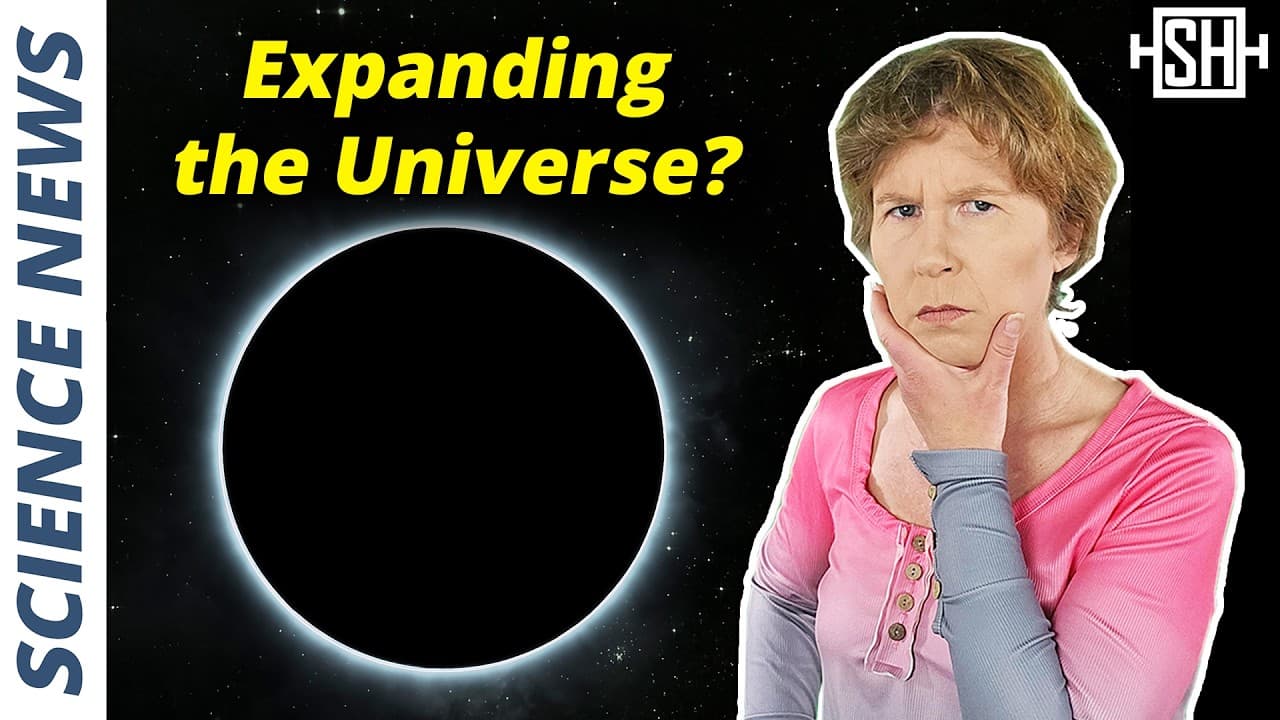
this video is about an interesting development in astrophysics that I followed for some years now it's the idea that black holes are the source of dark energy this recently made headlines because there are tentative results suggesting that dark energy might change in time this fits with the idea that it might be made of black holes and it i... Read More
Key Insights
- Recent studies propose that black holes might be responsible for dark energy, which influences the universe's expansion.
- The theory suggests dark energy might not be constant and could be weakening, affecting the universe's ultimate fate.
- Black holes, according to this theory, expand with the universe, increasing in mass, potentially mimicking dark energy.
- Energy conservation in an expanding universe is not straightforward, allowing for the possibility of black holes contributing to dark energy.
- The hypothesis challenges traditional views of black holes, suggesting they lack singularities and possess internal pressure.
- Observations from the Dark Energy Survey Instrument suggest dark energy is decreasing, aligning with the black hole theory.
- Skepticism exists regarding the theory's validity due to its reliance on assumptions not supported by current mathematics or observations.
- The theory, if true, implies a future 'big crunch' where the universe could collapse as black holes evaporate and dark energy dissipates.
Install to Summarize YouTube Videos and Get Transcripts
Explore YouTube Video Summarizer or Get YouTube Transcript Extractor
Questions & Answers
Q: What recent development in astrophysics is discussed in the video?
The video discusses a recent development in astrophysics where some scientists propose that black holes might be the source of dark energy. This theory suggests that the mass of black holes increases with the universe's expansion, potentially mimicking the effects of dark energy and influencing the universe's fate.
Q: How does the theory suggest black holes contribute to dark energy?
The theory suggests that black holes expand with the universe, increasing their mass over time. This expansion and mass increase could mimic the effects of dark energy, which is responsible for the accelerated expansion of the universe. By doing so, black holes might contribute to the universe's expansion in a way similar to dark energy.
Q: What observations support the theory that dark energy might be weakening?
Observations from the Dark Energy Survey Instrument (DESI) provide tentative evidence that dark energy might be weakening. DESI measures patterns in distant galaxies, and recent data suggest that dark energy is not constant but getting slightly weaker, supporting the theory that black holes could be influencing dark energy.
Q: Why is there skepticism about the theory's validity?
Skepticism about the theory arises because it relies on assumptions that are not supported by current mathematics or observations. For instance, the theory requires black holes to lack singularities and possess internal pressure, which deviates from traditional understandings of black holes. Additionally, the theory's predictions have not been directly observed.
Q: What implications does the theory have for the universe's future?
If the theory is correct, it implies that dark energy might eventually disappear as black holes evaporate, leading to a 'big crunch' where the universe could collapse in on itself. This challenges the current understanding of an ever-expanding universe and suggests a cyclical model where the universe could potentially restart.
Q: What are the challenges in proving this theory about black holes and dark energy?
Proving this theory is challenging due to the need for assumptions that deviate from established physics, such as black holes without singularities and with internal pressure. Additionally, the observational evidence supporting the theory is currently weak, with a significance level of only 2.6 sigma, indicating that further data is necessary for validation.
Q: How does the video presenter view the theory about black holes and dark energy?
The video presenter expresses skepticism about the theory, citing the lack of mathematical and observational support for the assumptions it relies on. Despite this skepticism, the presenter acknowledges the importance of exploring such theories as they contribute to scientific discourse and understanding, even if they may not be correct.
Q: What educational resources are promoted in the video?
The video promotes the educational platform Brilliant, which offers interactive courses on various scientific topics, including quantum mechanics. The presenter has an introductory course on quantum mechanics available on Brilliant. The platform is recommended for its engaging and effective learning approach, with a free trial and discount available for new users.
Summary & Key Takeaways
-
Astrophysicists propose black holes as a potential source of dark energy, influencing the universe's expansion. This theory aligns with observations suggesting dark energy might be weakening, which could alter the universe's fate.
-
The hypothesis challenges traditional views of black holes, suggesting they expand with the universe and lack singularities. This expansion could increase their mass, mimicking dark energy and affecting the universe's expansion.
-
Skepticism surrounds the theory due to its reliance on unsupported assumptions. However, if proven true, it suggests a future 'big crunch' where the universe collapses as dark energy dissipates.
Read in Other Languages (beta)
Share This Summary 📚
Summarize YouTube Videos and Get Video Transcripts with 1-Click
Try YouTube Summary with ChatGPT & Claude or YouTube Transcript Generator
Explore More Summaries from Sabine Hossenfelder 📚


Summarize YouTube Videos and Get Video Transcripts with 1-Click
Try YouTube Summary with ChatGPT & Claude or YouTube Transcript Generator