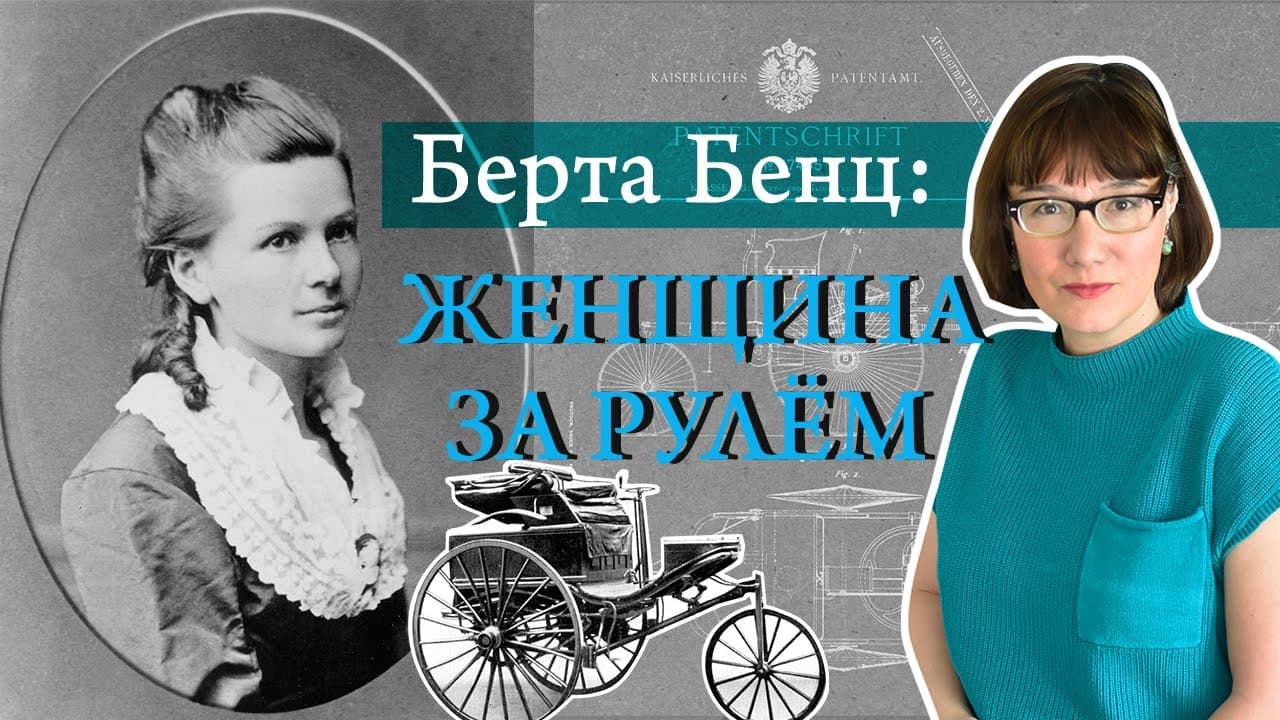
Берта Бенц испытывает первый автомобиль
TL;DR
Bertha Benz proved automobiles' practicality with a daring journey.
Transcript
On August 5, 1888, Bertha Benz, the 39-year-old wife of engineer and inventor Karl Benz, got behind the wheel of a Benz Patent Motorwagen, model number 3, and set off to visit her mother. Taking her two sons, thirteen-year-old Richard and fifteen-year-old Eugen, Bertha embarked on a 105-kilometer journey from Mannheim to Pforzheim without informi... Read More
Key Insights
- Bertha Benz's journey in 1888 demonstrated the practical potential of automobiles, countering the perception of them as mere novelties.
- Karl Benz, despite inventing the first patented car, initially viewed automobiles as impractical for everyday use.
- Steam engines, prevalent before internal combustion engines, were heavy, bulky, and had significant limitations for personal transportation.
- The transition from steam to internal combustion engines marked a significant technological shift, driven by the need for more efficient and practical solutions.
- Bertha Benz's journey involved overcoming numerous challenges, including sourcing fuel and making mechanical repairs, highlighting the vehicle's potential for long-distance travel.
- The journey attracted significant public attention, proving the car's viability and boosting the Benz company's reputation.
- Bertha Benz played a crucial role in her husband's success, both as an investor and a partner, despite societal constraints on women's roles.
- The Benz Patent Motorwagen model 3, used by Bertha, was a pioneering vehicle that laid the foundation for modern automobiles.
Install to Summarize YouTube Videos and Get Transcripts
Explore YouTube Video Summarizer or Get YouTube Transcript Extractor
Questions & Answers
Q: What was the significance of Bertha Benz's journey?
Bertha Benz's journey was significant because it demonstrated the practicality and potential of automobiles for long-distance travel. Her trip helped change public perception, proving that cars were not just novelties but viable means of transportation. This journey also boosted the reputation of the Benz company, leading to increased interest and sales.
Q: How did steam engines compare to internal combustion engines in the 19th century?
Steam engines were prevalent in the 19th century, used widely for transportation and industrial purposes. However, they were heavy, bulky, and required constant refueling, making them less suitable for personal vehicles. Internal combustion engines, on the other hand, were more compact, efficient, and better suited for smaller, more mobile applications, paving the way for the development of automobiles.
Q: What challenges did Bertha Benz face during her journey?
Bertha Benz faced numerous challenges during her journey, including sourcing fuel, as there were no gas stations at the time. She had to stop at pharmacies to buy ligroin, a type of petroleum. Additionally, she encountered mechanical issues, such as a broken chain and worn brakes, which she ingeniously repaired along the way, showcasing her resourcefulness.
Q: What role did Bertha Benz play in Karl Benz's success?
Bertha Benz was instrumental in Karl Benz's success. As his wife, investor, and partner, she provided financial support and encouragement. Her belief in the potential of automobiles led her to undertake the historic journey that demonstrated the car's practicality. Despite societal constraints on women, her contributions were pivotal in the Benz company's achievements.
Q: How did the public perceive automobiles before Bertha Benz's journey?
Before Bertha Benz's journey, automobiles were largely seen as noisy, unreliable, and impractical novelties. They were often viewed as toys for the wealthy rather than viable transportation options. Bertha's successful trip helped change this perception, proving that cars could be useful for everyday travel and not just for short demonstrations.
Q: What innovations did Karl Benz contribute to the development of automobiles?
Karl Benz contributed several innovations to the development of automobiles, including the design of a reliable two-stroke gasoline engine. He also patented various components such as the throttle, carburetor, gearbox, and water radiator. These advancements were crucial in making the internal combustion engine more practical and efficient for use in vehicles like the Benz Patent Motorwagen.
Q: Why was the transition from steam to internal combustion engines significant?
The transition from steam to internal combustion engines was significant because it represented a major technological advancement. Internal combustion engines were more efficient, compact, and suitable for personal transportation. This shift enabled the development of practical automobiles, which revolutionized transportation by providing a more accessible and versatile means of travel for individuals.
Q: What impact did Bertha Benz's journey have on the Benz company?
Bertha Benz's journey had a profound impact on the Benz company. It generated significant publicity and demonstrated the car's practical potential, leading to increased interest and sales. Her trip helped establish the Benz company as a leading automobile manufacturer, setting the stage for its growth and success in the burgeoning automotive industry.
Summary & Key Takeaways
-
In 1888, Bertha Benz undertook a groundbreaking journey to prove the practicality of automobiles, challenging societal norms and technological limitations. Her trip from Mannheim to Pforzheim demonstrated the potential of Karl Benz's invention, overcoming numerous challenges and garnering public attention.
-
Karl Benz, initially skeptical about the commercial viability of automobiles, was proven wrong by his wife Bertha's daring journey. Her successful trip highlighted the car's potential as a practical means of transportation, leading to increased interest and eventual success for the Benz company.
-
The early history of automobiles is marked by the transition from steam to internal combustion engines. Bertha Benz's journey played a pivotal role in this shift, showcasing the car's capabilities and paving the way for future developments in the automotive industry.
Read in Other Languages (beta)
Share This Summary 📚
Summarize YouTube Videos and Get Video Transcripts with 1-Click
Try YouTube Summary with ChatGPT & Claude or YouTube Transcript Generator
Explore More Summaries from Julia Bolchakova 📚

Summarize YouTube Videos and Get Video Transcripts with 1-Click
Try YouTube Summary with ChatGPT & Claude or YouTube Transcript Generator