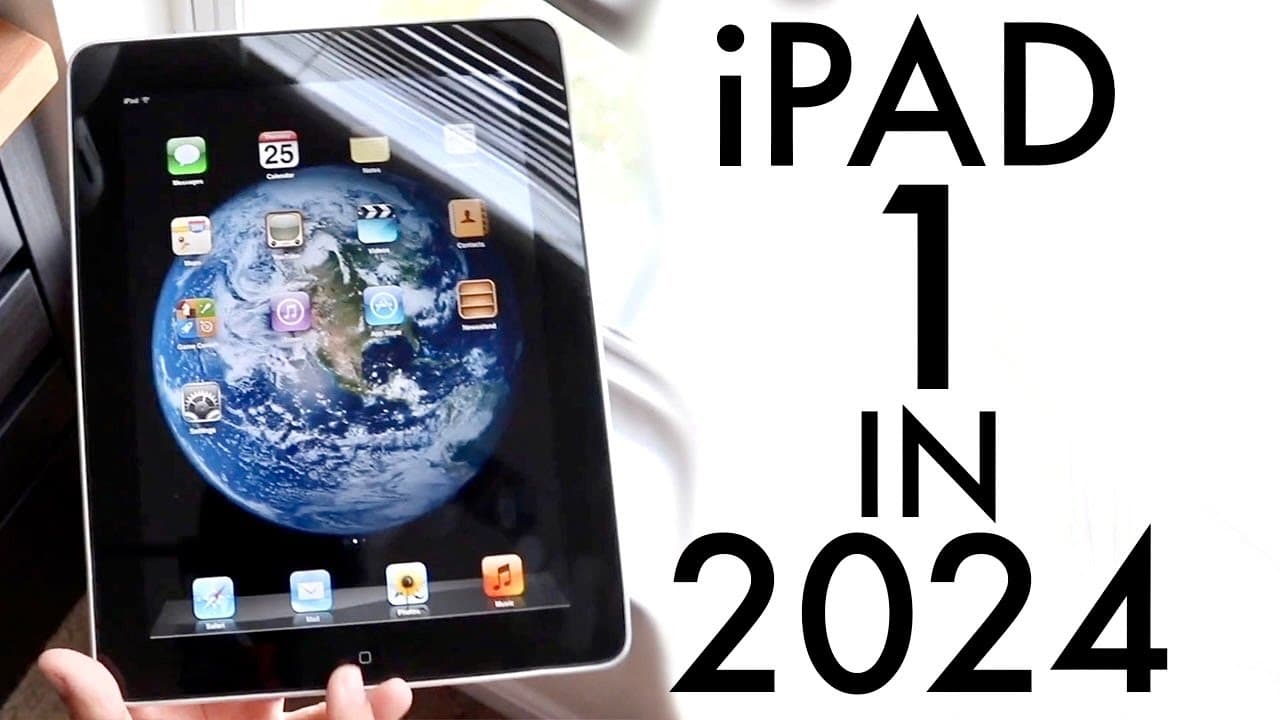
iPad 1 In 2024! (Still Worth Buying?) (Review)
TL;DR
The first-generation iPad remains interesting but is not worth buying in 2024.
Transcript
well everyone it's time for us to go and take a look at the first generation iPad and see if this iPad is still worth buying in 2024 Now spoiler alert I don't think this iPad is worth buying anymore I honestly don't think this iPad was worth buying probably for the last like 10 years to be completely honest but it's still kind of interesting to tak... Read More
Key Insights
- 🚀 The first-generation iPad launched in 2010, representing Apple's entry into the tablet market with innovative concepts that influenced future devices.
- 😒 Despite its historical significance, the first-generation iPad is no longer suitable for everyday use due to limited software updates and aging specifications.
- 🫥 The iPad was initially perceived as just a larger iPhone but subsequently established itself as a distinct product line by showcasing unique capabilities.
- 🛀 The premium build quality of the first-generation iPad is still appreciated today, showing Apple's commitment to design and user experience.
- 🖤 Lack of camera functionality in the first-generation iPad highlights the evolution of consumer expectations toward multi-functional devices.
- 😀 The A4 chip's performance was competitive at launch but has become a significant limitation with current app requirements, showcasing rapid technological advancements.
- 👤 The historical perspective of the iPad tells a story of how mobile technology has transformed with user needs and market trends over the past decade.
Install to Summarize YouTube Videos and Get Transcripts
Explore YouTube Video Summarizer or Get YouTube Transcript Extractor
Questions & Answers
Q: Why is the first-generation iPad considered no longer worth buying?
The first-generation iPad is deemed not worth buying primarily due to its outdated software support and hardware limitations. Since it stops receiving updates, the device can't run many modern applications or benefit from improvements that come with newer versions of iOS, limiting its usability in a 2024 context.
Q: What was groundbreaking about the first-generation iPad?
The first-generation iPad was groundbreaking for its time as it introduced a new category of devices bridging the gap between smartphones and laptops. With a large 9.7-inch display, it offered users a unique experience and enhanced usability for media consumption, productivity, and casual browsing.
Q: How does the build quality of the first-generation iPad hold up compared to modern tablets?
Surprisingly, the build quality of the first-generation iPad remains impressive even today. Its aluminum back and substantial heft give it a premium feel that many more recent tablets fail to replicate, showcasing Apple's craftsmanship and attention to detail, making it still intriguing to hold.
Q: What limitations does the first-generation iPad have regarding software?
The first-generation iPad is limited in software capabilities, as it runs only up to iOS 5.1.1 and lacks support for the latest applications and features introduced in subsequent iOS updates. This lack of software updates renders it almost obsolete for practical use in 2024.
Q: What hardware specifications are notable for the first-generation iPad?
The first-generation iPad is powered by the Apple A4 chip and contains just 256MB of RAM, which were adequate for its time but are now significantly below the requirements for modern applications and multitasking, contributing to its inability to perform well with current technology demands.
Q: Did the first-generation iPad have a camera?
No, the first-generation iPad was one of the few iPads that did not come equipped with a camera, a notable omission considering that nearly all subsequent models have included at least front-facing cameras, limiting its utility for video calls and photography.
Q: What can be learned from the release of the first-generation iPad today?
The release of the first-generation iPad teaches us about the evolution of consumer technology and how user expectations have changed over time. It illustrates the importance of software support and continuous improvement in hardware to meet the demands of increasingly sophisticated users.
Q: In what ways did Apple successfully differentiate the iPad from the iPhone?
Apple successfully differentiated the iPad from the iPhone by focusing on its larger display for media consumption, enhanced productivity capabilities, and creating a distinct marketing narrative that highlighted the tablet’s unique functionalities, carving out a new market category separate from smartphones.
Summary & Key Takeaways
-
The first-generation iPad, released in 2010, represented a significant advancement for Apple, showcasing a large 9.7-inch display and solid build quality, although lacking in modern features.
-
Despite feeling premium for its age, the iPad suffers from outdated hardware, including the Apple A4 chip and limited RAM, affecting performance with current applications and software.
-
As the first device of its kind, the iPad paved the way for future tablets and demonstrated Apple's ability to differentiate its tablet products from smartphones, yet lacks ongoing software support, rendering it less viable today.
Read in Other Languages (beta)
Share This Summary 📚
Summarize YouTube Videos and Get Video Transcripts with 1-Click
Try YouTube Summary with ChatGPT & Claude or YouTube Transcript Generator
Explore More Summaries from Simple Alpaca 📚
Summarize YouTube Videos and Get Video Transcripts with 1-Click
Try YouTube Summary with ChatGPT & Claude or YouTube Transcript Generator