Parker Solar Probe Countdown to T-Zero in 4K: Flying Faster, Hotter and Closer Than Ever to the Sun
TL;DR
NASA's Parker Solar Probe aims to revolutionize our understanding of the Sun's corona and its effects on our daily lives.
Transcript
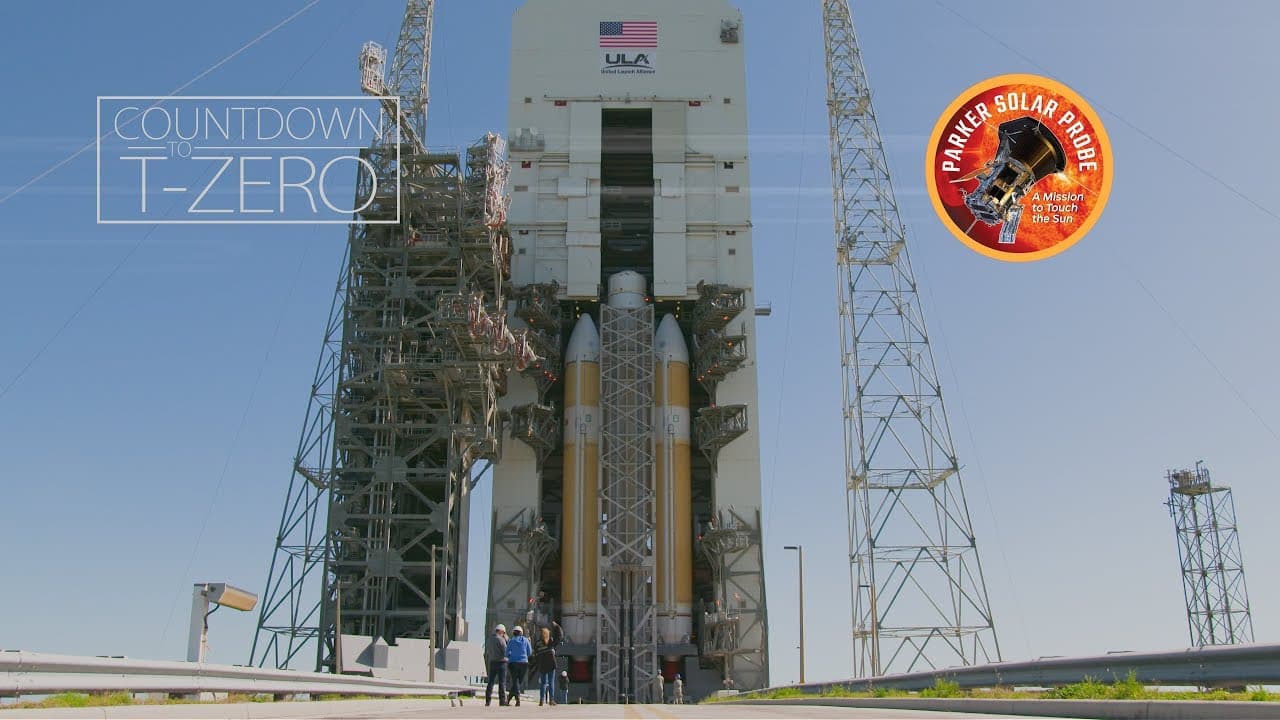
The Sun -- the heart of our solar system. It's as familiar as anything we know. Although the Sun has been studied for millennia, it still holds unsolved mysteries about its effects on our daily lives. To better understand the Sun, NASA is preparing to launch a spacecraft called the Parker Solar Probe. It will lift off from Cape Canaveral Air Force ... Read More
Key Insights
- 🤩 The Parker Solar Probe will provide unprecedented opportunities to study the Sun's corona and potentially revolutionize our understanding of the star.
- 😚 The spacecraft's protective heat shield is crucial in allowing it to get closer to the Sun's corona and withstand extreme temperatures.
- 😀 The mission will require the Parker Solar Probe to become the fastest human-made object ever, traveling at a staggering speed of 430,000 miles per hour.
- 🚀 NASA's selection of the Delta IV Heavy rocket emphasizes the need for extreme velocity to meet the mission objectives.
Install to Summarize YouTube Videos and Get Transcripts
Explore YouTube Video Summarizer or Get YouTube Transcript Extractor
Questions & Answers
Q: What mysteries does NASA hope to solve with the Parker Solar Probe?
NASA aims to understand why the Sun's corona is hotter than its surface and why it generates a solar wind, as well as the processes that cause the corona to move away from the Sun at super-sonic speeds.
Q: How will the Parker Solar Probe withstand the extreme temperatures of the Sun's corona?
The spacecraft is equipped with a protective heat shield that can withstand temperatures of up to 2,500 degrees Fahrenheit. This shield enables the probe to get as close as possible to the Sun.
Q: Why did NASA choose the United Launch Alliance Delta IV Heavy rocket for this mission?
The Delta IV Heavy rocket was selected because it can provide the extreme velocity required for the Parker Solar Probe to reach its intended orbit around the Sun.
Q: How does the Parker Solar Probe differ from previous solar missions?
Unlike previous missions that studied the Sun from afar, the Parker Solar Probe will physically touch the Sun's corona, allowing scientists to gather more detailed and accurate data.
Summary & Key Takeaways
-
NASA is launching the Parker Solar Probe, a spacecraft that will travel through the Sun's corona, to unravel mysteries about the Sun's atmosphere.
-
The probe will reach temperatures up to 2,500 degrees Fahrenheit, made possible by its protective heat shield.
-
The mission will make history by becoming the fastest human-made object, traveling at 430,000 miles per hour.
Read in Other Languages (beta)
Share This Summary 📚
Summarize YouTube Videos and Get Video Transcripts with 1-Click
Try YouTube Summary with ChatGPT & Claude or YouTube Transcript Generator
Explore More Summaries from NASA 📚

Summarize YouTube Videos and Get Video Transcripts with 1-Click
Try YouTube Summary with ChatGPT & Claude or YouTube Transcript Generator