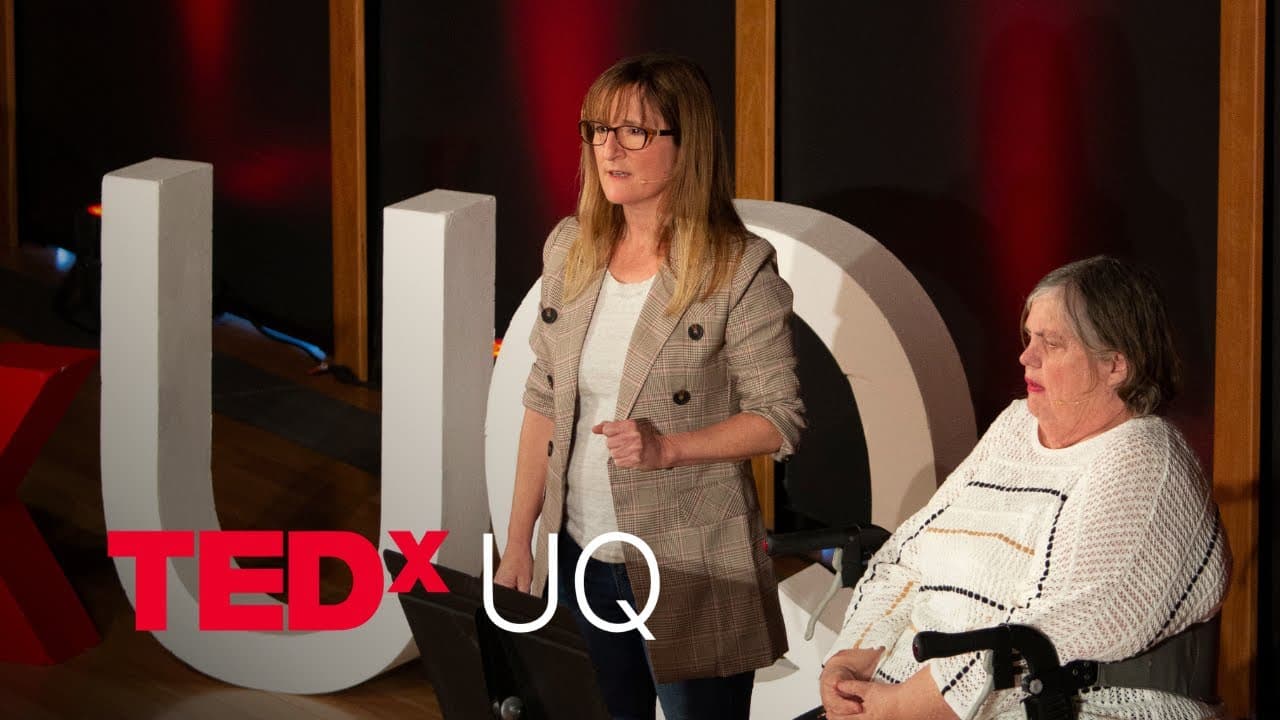
Self advocacy and why we need it (with Auslan) | Kathy Ellem & Donna Best | TEDxUQ
TL;DR
People with intellectual disabilities faced institutionalization and mistreatment at places like the Challinor Center, but through self-advocacy, they have fought for their rights and made progress towards inclusion and recognition as valued citizens.
Transcript
[Applause] if you ever get a chance to go to ipswitch to visit the University of Southern Queensland you'll see the grounds of what was once the challal center a place where people with intellectual disability were institutionalized from 1968 onwards the chalenor center was the so-called home of up to 530 people with intellectual disability it was ... Read More
Key Insights
- 👯 The Challinor Center and similar institutions reflected society's ignorance, disrespect, and intolerance towards people with intellectual disabilities.
- 🗯️ Self-advocacy played a crucial role in fighting for the rights of individuals with intellectual disabilities and challenging assumptions about their contributions to society.
- 🗯️ Progress has been made, but there are still challenges, including access to services and recognition of human rights.
- 🤳 Self-advocacy provides individuals with intellectual disabilities a platform to share their stories and talents, fostering connection and empowerment.
- 👂 People with intellectual disabilities are starting to be recognized as valued citizens who deserve to be listened to and included in decision-making processes.
- 🐕🦺 The future goal is to make the road easier for individuals with intellectual disabilities by addressing challenges such as limited access to services and support.
- 💉 Advocacy has led to the closure of hospital wards, but there is still further progress needed.
Install to Summarize YouTube Videos and Get Transcripts
Explore YouTube Video Summarizer or Get YouTube Transcript Extractor
Questions & Answers
Q: What was the experience like for individuals with intellectual disabilities at the Challinor Center?
The Challinor Center was a place where people with intellectual disabilities were institutionalized, often treated as subhuman, and denied the opportunity to live meaningful lives in their communities. Some residents were heavily sedated or locked up in cages.
Q: How did the self-advocacy movement begin for people with intellectual disabilities in Queensland?
In the early 1980s, a group of residents from the Challinor Center attended a conference in Wagga Wagga. From this event, a group of self-advocates was formed, including Donna Best, who became the president of "GUP" (Greater Achievement for Disadvantaged People). They engaged in street marches, letter-writing campaigns, and fundraising to bring about change.
Q: What is the current situation for people with intellectual disabilities in Queensland?
While the Challinor Center was closed in 1998, people with intellectual disabilities still face issues such as violence, abuse, poverty, and social isolation. There is a need for governments to recognize their human rights and ensure their inclusion as valued citizens.
Q: How has self-advocacy contributed to progress for individuals with intellectual disabilities?
Self-advocacy has given individuals with intellectual disabilities a voice and the ability to speak up for their rights. Through advocacy groups like Hot Topics, they have made achievements such as participating in government submissions and having a presence at Parliament House.
Summary & Key Takeaways
-
The Challinor Center in Ipswich, Queensland, was a place of institutionalization and mistreatment for people with intellectual disabilities.
-
Donna Best, a self-advocate with intellectual disability, played a crucial role in the early days of self-advocacy, fighting for the rights of individuals with disabilities.
-
While progress has been made, there are still challenges facing people with intellectual disabilities, including access to services and recognition of their human rights.
Read in Other Languages (beta)
Share This Summary 📚
Summarize YouTube Videos and Get Video Transcripts with 1-Click
Try YouTube Summary with ChatGPT & Claude or YouTube Transcript Generator
Explore More Summaries from TEDx Talks 📚

Summarize YouTube Videos and Get Video Transcripts with 1-Click
Try YouTube Summary with ChatGPT & Claude or YouTube Transcript Generator