Has Global Market Fear Peaked and Is Sentiment Improving?
TL;DR
Global market fear has peaked and is slowly declining, indicating a potential short-term bottom in sentiment. Progress in treatments, vaccines, and government stimulus measures is helping restore confidence, particularly in Japan, Korea, and the U.S. Although fear often leads to a temporary market bounce, overall sentiment remains crucial for long-term stability.
Transcript
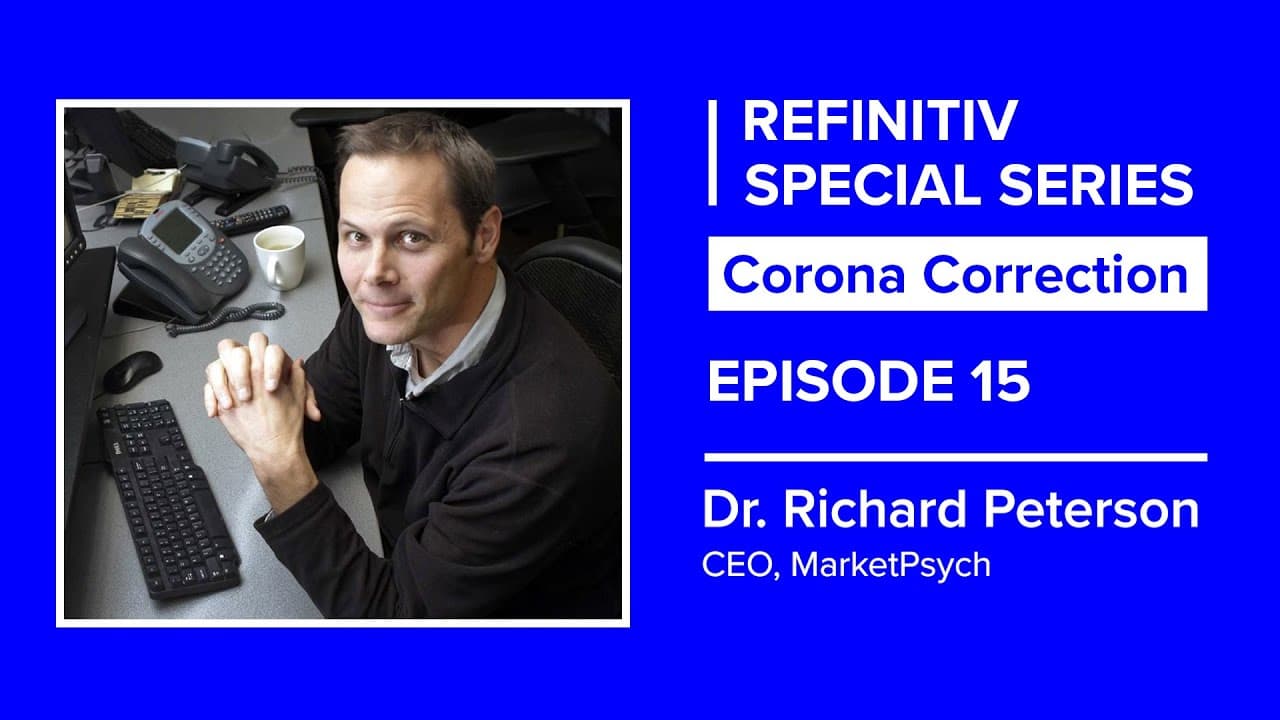
Welcome to the Corona Correction series in association with Refinitiv, I'm your host, Roger Hirst. Richard Peterson of Market Psych Refinitiv analyzes trends in global media, including trends in sentiment. We first heard from Richard on March the 11th when he noted that the US was still some way from peak fear and a low in sentiment, and that he ex... Read More
Key Insights
- 😨 Fear levels in global markets have peaked and are slowly declining, indicating a potential short-term bottom.
- 🥺 Historical data reveals that fear often leads to a short-term market bounce, but sentiment remains a crucial factor in determining market behavior.
- ☠️ Media sentiment reflects discussions around treatments, vaccines, and the rate of infection, which are contributing to improved sentiment.
- 👨💼 Stimulus measures and support for affected businesses are restoring confidence in the markets.
- 👶 The ongoing spread of the epidemic is a challenge, but the focus is on flattening the curve and adapting to a new normal.
- 🧑🏭 The US market is a significant factor in global sentiment trends.
- 🫥 The pandemic has exposed underlying fault-lines in the global economy, creating uncertainty about long-term prospects.
Install to Summarize YouTube Videos and Get Transcripts
Explore YouTube Video Summarizer or Get YouTube Transcript Extractor
Questions & Answers
Q: How has fear and sentiment changed in global markets since the COVID-19 outbreak?
Fear peaked in China and Hong Kong, then spread to other countries. However, fear is now declining in Korea, Japan, Europe, and the United States. Overall sentiment seems to have bottomed out and might be rising slightly.
Q: What impact do fear and sentiment have on market behavior?
Fear usually leads to short-term market bounces, but if overall sentiment remains negative, markets can roll over. It's important to consider other factors like the economic climate and any ongoing developments that may affect sentiment.
Q: What are some data points indicating a potential turn in sentiment?
Media discussions surrounding treatments, vaccines, and the rate of infection are contributing to improved sentiment. The FDA's approval of chloroquine and the anticipation of a flattening curve are also restoring confidence. Stimulus measures and support for affected businesses are further boosting sentiment.
Q: How does the global nature of this pandemic affect equity markets?
Unlike previous outbreaks like SARS and swine flu, this pandemic is truly global. As the virus spreads, equity markets that initially bounced after reaching peak fear are now being impacted by lockdown measures in countries that consume their goods.
Summary & Key Takeaways
-
Fear peaked in China and Hong Kong in February and has been gradually decreasing since. Other countries like Korea, Japan, Europe, and the United States are also experiencing a decline in fear.
-
Historical data shows that fear is a short-term emotion, often followed by a bounce and then a possible market roll-over if sentiment remains negative.
-
The current sentiment appears to have bottomed out, particularly in Japan, Korea, and possibly the United States. Progress in treatments, vaccines, and government stimulus measures is contributing to a turn in sentiment.
Read in Other Languages (beta)
Share This Summary 📚
Summarize YouTube Videos and Get Video Transcripts with 1-Click
Try YouTube Summary with ChatGPT & Claude or YouTube Transcript Generator
Explore More Summaries from Real Vision 📚


Summarize YouTube Videos and Get Video Transcripts with 1-Click
Try YouTube Summary with ChatGPT & Claude or YouTube Transcript Generator