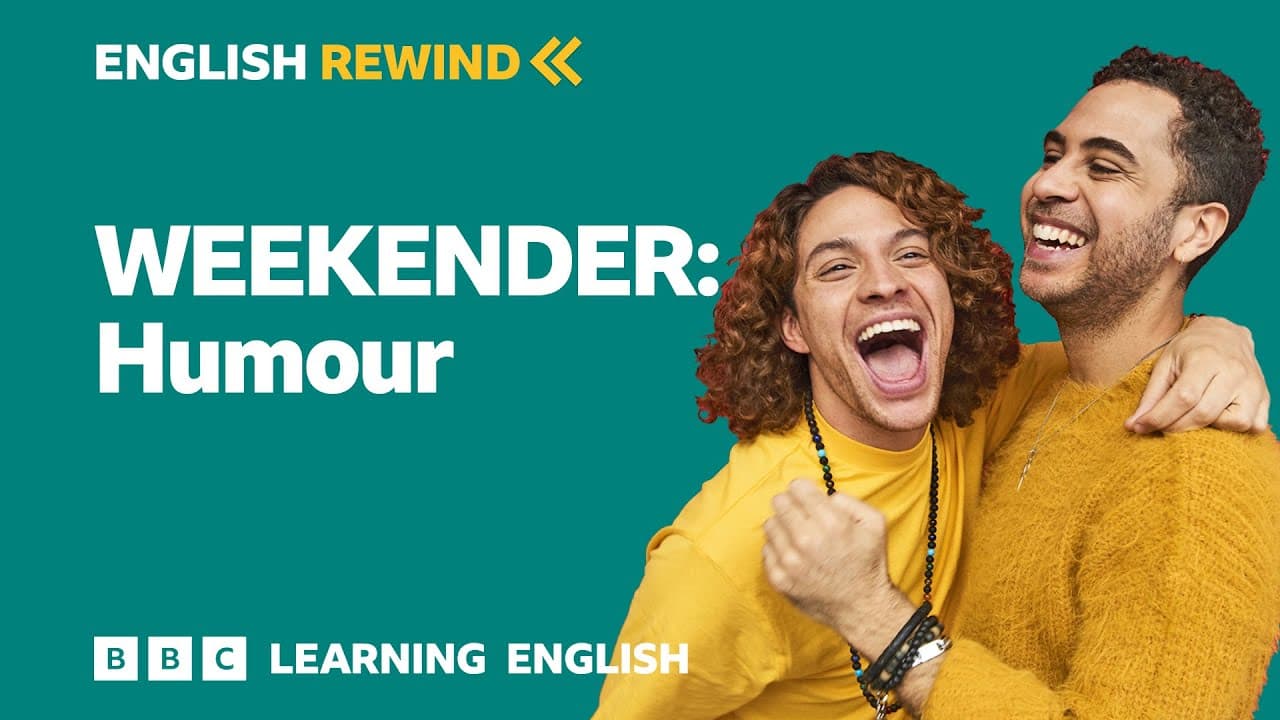
English Rewind - Weekender: humour
TL;DR
Humour serves dominance, self-protection, and building solidarity.
Transcript
Hello! Catherine here from BBC Learning English. Just so you know, this programme is from the BBC Learning English archive. It was originally broadcast in July 2006 on our website. Enjoy! BBC Learning English dot com. Hello, I'm Jackie Dalton, you're listening to BBC Learning English dot com. Today, what's the point of humour? We all know having a ... Read More
Key Insights
- Humour is multifunctional, serving purposes like achieving dominance, self-protection, and constructing solidarity.
- Jennifer Coates identifies humour as a tool for dominance, allowing individuals to control conversations and gain attention.
- Humour can be used for self-protection, helping individuals navigate embarrassing situations by laughing at themselves.
- Constructing solidarity through humour fosters a sense of togetherness and strengthens social bonds.
- Humour is also used to break the ice, easing tension and making social interactions more comfortable.
- Kaz highlights humour's role in making individuals more socially acceptable by allowing them to make fun of themselves.
- Carrie emphasizes humour's ability to relieve tension in uncomfortable or argumentative situations.
- The programme encourages self-reflection on personal humour usage, whether for self-protection, solidarity, or attention-seeking.
Install to Summarize YouTube Videos and Get Transcripts
Explore YouTube Video Summarizer or Get YouTube Transcript Extractor
Questions & Answers
Q: What are the main functions of humour according to Jennifer Coates?
Jennifer Coates identifies three main functions of humour: achieving dominance, self-protection, and constructing solidarity. Humour can be used to control conversations and gain attention, protect oneself in difficult situations, and bring people together to strengthen social bonds.
Q: How can humour be used to achieve dominance?
Humour achieves dominance by allowing individuals to interrupt conversations and redirect the focus. For example, telling a joke can make the speaker the center of attention, allowing them to control the conversation's direction. This use of humour is more about gaining power than fostering collaboration.
Q: What role does humour play in self-protection?
Humour serves as a tool for self-protection by allowing individuals to navigate embarrassing situations. By making a joke about themselves, they can deflect attention from their mistakes and make themselves feel better. This helps to alleviate discomfort and maintain social acceptance.
Q: How does humour help in constructing solidarity?
Humour constructs solidarity by fostering a sense of togetherness and strengthening social bonds. Sharing a laugh helps break down formal barriers and create a comfortable environment, encouraging collaboration and mutual understanding among individuals.
Q: What is meant by 'breaking the ice' with humour?
'Breaking the ice' with humour refers to using jokes or light-hearted comments to ease tension and make social interactions more comfortable. It helps individuals relax when meeting for the first time or after a long time, facilitating smoother communication and relationship building.
Q: How does humour make individuals more socially acceptable?
Humour makes individuals more socially acceptable by allowing them to laugh at themselves, which can endear them to others. By making fun of themselves, people can appear more approachable and relatable, thus improving their social interactions and acceptance within a group.
Q: What is the impact of humour on tension according to Carrie?
Carrie explains that humour can relieve tension in uncomfortable or argumentative situations. By introducing a joke, individuals can diffuse potential conflicts or nervousness, promoting a more relaxed atmosphere that facilitates better communication and resolution of disagreements.
Q: What does the programme encourage listeners to reflect on regarding humour?
The programme encourages listeners to reflect on how they use humour in their lives. It asks them to consider whether they use humour for self-protection, to construct solidarity, or to seek attention. This self-reflection can lead to a better understanding of one's social interactions and motivations.
Summary & Key Takeaways
-
The programme explores the various functions of humour, as explained by Jennifer Coates, a linguistics professor. Humour can be used to achieve dominance, protect oneself in difficult situations, and construct solidarity among people, making it a powerful social tool.
-
Jennifer Coates discusses how humour can be used to gain attention and control conversations, highlighting its role in achieving dominance. This type of humour is less collaborative and focuses on gaining power rather than sharing it.
-
Other contributors like Kaz and Carrie discuss humour's uses in breaking the ice, making individuals more socially acceptable, and relieving tension. These insights provide a comprehensive understanding of humour's social functions and implications.
Read in Other Languages (beta)
Share This Summary 📚
Summarize YouTube Videos and Get Video Transcripts with 1-Click
Try YouTube Summary with ChatGPT & Claude or YouTube Transcript Generator
Explore More Summaries from BBC Learning English 📚
Summarize YouTube Videos and Get Video Transcripts with 1-Click
Try YouTube Summary with ChatGPT & Claude or YouTube Transcript Generator