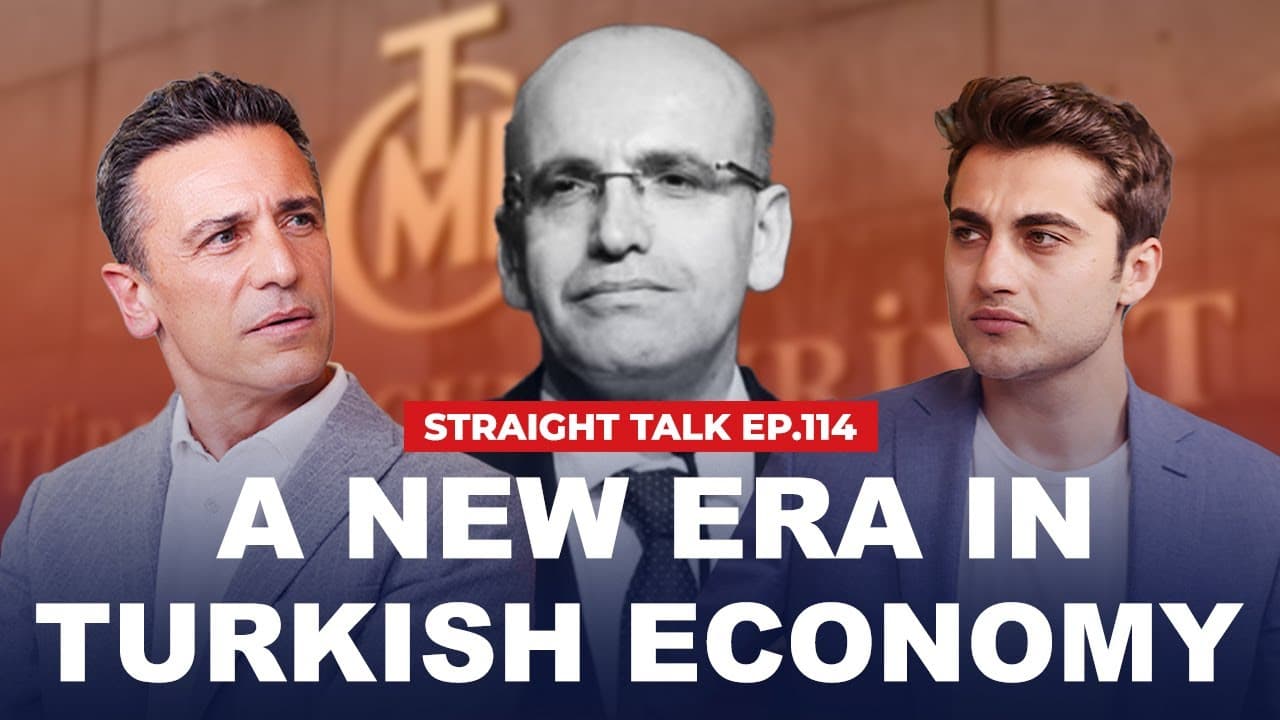
Stable Lira, Low Inflation: The New Economic Model | STRAIGHT TALK EP.114
TL;DR
The new Turkish Finance Minister is implementing orthodox policies, including increasing interest rates, to combat inflation and restore stability and confidence in the Turkish economy.
Transcript
thank you hey guys welcome back to another episode of Straight Talk we're here at our Istanbul office with Cameron Diggin Cameron it's lovely seeing you thank you it's been quite a while since we have last filmed an episode a couple of weeks really yes three weeks or something now you're back in with a lot of wisdom to share with us and hopefully w... Read More
Key Insights
- 🌍 Turkey's new Finance Minister, Mahmut Şimşek, is expected to adopt more orthodox economic policies, including increasing interest rates, to combat inflation and restore confidence in the Turkish lira and attract foreign direct investment.
- 🏦 Şimşek previously served as Finance Minister from 2009 to 2018 and implemented tax reforms, fiscal consolidation, and structural reforms that contributed to growth and stability in Turkey.
- 💼 The past five years have seen significant growth in employment, reduction in relative unemployment, and a surge in service exports and tourism income, contributing to an increase in GDP.
- 📉 However, the unorthodox economic policies pursued by the Turkish Central Bank under President Erdogan's management have led to a widening income gap and significant inflation.
- 💰 Turkey's decision to stimulate economic growth instead of applying brakes through interest rate increases has led to a devaluation of the Turkish lira but has also boosted exports.
- ⚖️ Turkey now aims to prioritize stability, restore credibility in its economic system, and attract more foreign investors by ensuring the independence of the Central Bank, pursuing fiscal controls, and playing a more active role in international organizations like NATO and the European Union.
- 🌟 Turkey's entrepreneurial spirit has driven recent economic growth, and the country's desirability and multiculturalism are increasing, making it an attractive investment destination.
- 📈 Overall, Turkey is at a tipping point in terms of economic development, with the potential for stable growth and a more predictable economic environment in the next decade.
Install to Summarize YouTube Videos and Get Transcripts
Explore YouTube Video Summarizer or Get YouTube Transcript Extractor
Questions & Answers
Q: Why is the new finance minister implementing orthodox policies in Turkey?
The new finance minister is implementing orthodox policies to restore stability, improve confidence, attract foreign investment, and align with international expectations of a stable, predictable economy. This will help Turkey in the long run by creating a more favorable environment for economic growth and development.
Q: What were some of the positive outcomes of Turkey's previous unorthodox economic model?
Under the previous unorthodox economic model, Turkey experienced an increase in employment, significant growth in service exports (such as tourism and consulting services), and a rise in GDP. These positive outcomes indicated some level of success in promoting economic growth and development.
Q: What were the negative consequences of the previous unorthodox economic model in Turkey?
One of the negative consequences of the previous unorthodox economic model was the widening income gap between different socio-economic groups in Turkey. Additionally, inflation rates significantly increased, which eroded the purchasing power of Turkish citizens. These consequences highlighted the need for a more stable and predictable economic approach.
Q: How does stability and predictability in the Turkish economy benefit foreign investors?
Stability and predictability in the Turkish economy are crucial for attracting foreign investors. Investors prefer economies with low levels of uncertainty and manageable risks, as it allows them to make long-term investment decisions with confidence. By implementing orthodox economic policies, Turkey aims to provide a stable environment that encourages foreign investment and supports economic growth.
Q: How does Turkey's demographic changes contribute to its economic growth potential?
Turkey's increasing multiculturalism and desirability as a place to live and work attracts foreign individuals and businesses. This influx of people, coupled with their investments, can boost economic growth. Demographic changes also drive demand for various services, products, and infrastructure development, contributing to the overall growth potential of the Turkish economy.
Q: What led to the shift in Turkey's approach to economic policies?
Turkey's shift in economic policies is driven by the desire to restore credibility and maintain stability in the global markets. The previous unorthodox policies led to concerns among international investors and institutions. To regain trust and attract investment, Turkey aims to align its policies with international norms and expectations, signaling a more responsible and reliable economic approach.
Q: How does the new finance minister's policies align with Turkey's aspirations for NATO and EU membership?
The new finance minister's policies aim to enhance Turkey's credibility and stability, which are critical factors for NATO and EU membership. By aligning with international norms and improving economic stability, Turkey seeks to strengthen its position as a desirable partner for these organizations. The willingness to open discussions on visa-free travel and facilitating NATO membership for Finland also showcases Turkey's commitment to international cooperation and integration.
Summary & Key Takeaways
-
The current Turkish Finance Minister is following orthodox economic policies by increasing interest rates to combat inflation and stabilize the Turkish lira.
-
The aim is to restore confidence, attract foreign direct investment, and bring more stability to the central bank's independence.
-
Turkey has experienced both positive and negative outcomes with its previous unorthodox economic model, including an increase in employment and service exports, but also a widening income gap and a loss of some foreign investment.
Read in Other Languages (beta)
Share This Summary 📚
Summarize YouTube Videos and Get Video Transcripts with 1-Click
Try YouTube Summary with ChatGPT & Claude or YouTube Transcript Generator
Explore More Summaries from Property Turkey 📚
Summarize YouTube Videos and Get Video Transcripts with 1-Click
Try YouTube Summary with ChatGPT & Claude or YouTube Transcript Generator