What brands can learn from the failure of Boaty McBoatface | Henry Timms | Big Think
TL;DR
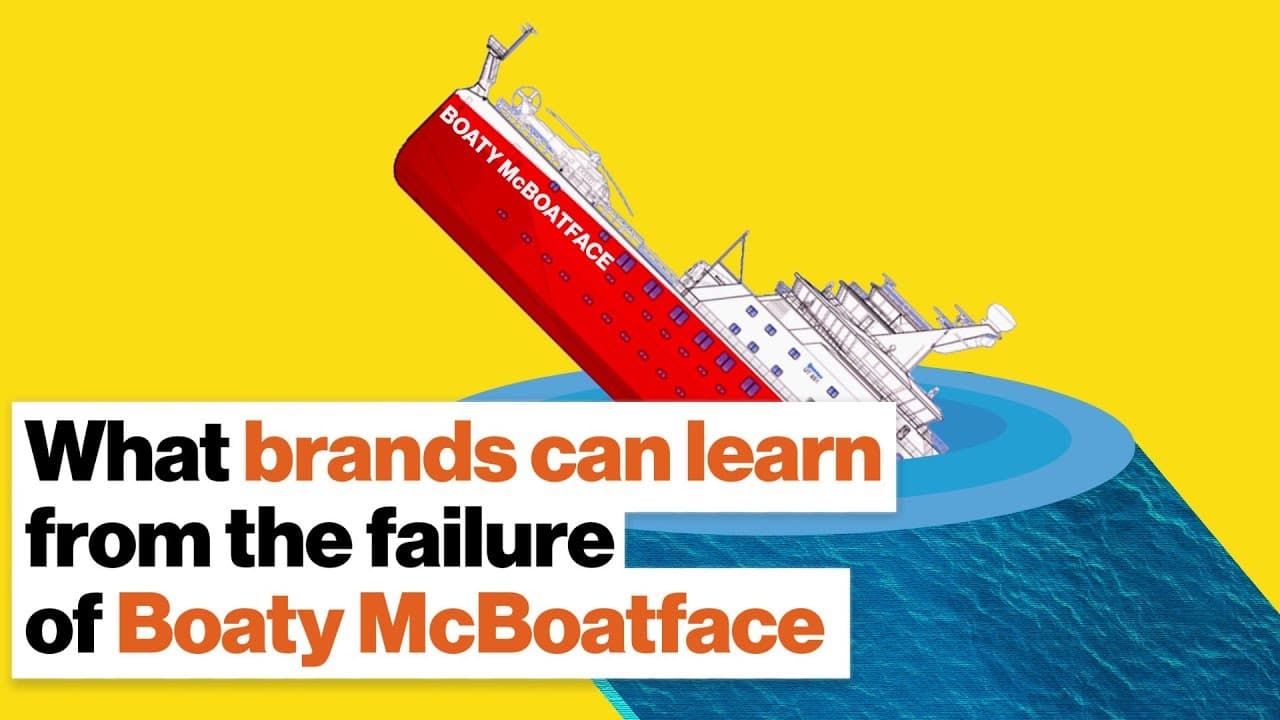
A British scientific agency's campaign to name its new arctic explorer vessel, resulting in the viral phenomenon Boaty McBoatface, highlights the need for organizations to effectively engage and harness the power of the crowd.
Transcript
So there’s this scientific agency in Britain called the Natural Environment Research Council. They’re a big government body and they’ve got a new ship coming. They’ve got a $300 million new arctic explorer vessel and they’re very excited about it, and they recognize that we’re living in this world of crowds where everyone wants to participate and w... Read More
Key Insights
- 😀 The Boaty McBoatface incident demonstrates the power of crowdsourcing, but also the challenges organizations face in managing crowd input effectively.
- 💍 Engaging the crowd requires strategic consideration, legitimacy, and a willingness to embrace unexpected outcomes.
- 🎮 Control over the process must be balanced with honoring the crowd's contributions and ideas.
- 🍉 Long-term commitment and consistent engagement are vital for successful crowd harnessing.
- ❓ Lego's success in involving the Adult Fans of Lego (AFOLs) and inviting their participation provides valuable lessons in structured crowd engagement and innovation.
- ✊ In order to harness the power of the crowd, organizations should focus on offering genuine opportunities for participation and creating value for the crowd.
- ❓ A shift in mindset from "What can they do for us?" to "What can we do for them?" is essential for effective crowd engagement.
Install to Summarize YouTube Videos and Get Transcripts
Explore YouTube Video Summarizer or Get YouTube Transcript Extractor
Questions & Answers
Q: Why did the #NameOurShip campaign gain so much attention?
The campaign went viral because the suggested name Boaty McBoatface was unique and humorous, capturing the public's imagination and leading to widespread media coverage.
Q: What challenges did the Natural Environment Research Council face in responding to the popularity of Boaty McBoatface?
The agency's dilemma arose from the conflict between the public's excitement over the name and the science minister's belief that it undermined the seriousness of scientific research.
Q: How could the agency have handled the situation differently?
Instead of dismissing Boaty McBoatface, the agency could have embraced the public's enthusiasm, leveraging it to engage and educate the younger generation about maritime science.
Q: What can organizations learn from the Boaty McBoatface incident?
Organizations must carefully consider their crowd engagement strategies, including the need for strategy, legitimacy, willingness to give up control, and long-term commitment to effectively harness the crowd's potential.
Summary & Key Takeaways
-
The Natural Environment Research Council launched a campaign called #NameOurShip, which gained viral attention when someone suggested the name Boaty McBoatface.
-
Despite the overwhelming public enthusiasm for Boaty McBoatface, the science minister dismissed it as an unserious name and the agency ultimately named the ship after Sir David Attenborough.
-
Lessons from this incident include the importance of strategy, legitimacy with the crowd, willingness to give up control, and long-term commitment when harnessing the power of the crowd.
Read in Other Languages (beta)
Share This Summary 📚
Summarize YouTube Videos and Get Video Transcripts with 1-Click
Try YouTube Summary with ChatGPT & Claude or YouTube Transcript Generator
Explore More Summaries from Big Think 📚




Summarize YouTube Videos and Get Video Transcripts with 1-Click
Try YouTube Summary with ChatGPT & Claude or YouTube Transcript Generator