This scientist makes ears out of apples | Andrew Pelling
TL;DR
This content discusses how the speaker's love for salvaging old electronics from garbage led to groundbreaking scientific discoveries and the potential for using unconventional materials such as apples and asparagus in tissue engineering.
Transcript
I've got a confession. I love looking through people's garbage. Now, it's not some creepy thing. I'm usually just looking for old electronics, stuff I can take to my workshop and hack. I do have a fetish for CD-ROM drives. Each one's got three different motors, so now you can build things that move. There's switches so you can turn things on and of... Read More
Key Insights
- 🔬 Garbage can be a source of creativity and innovation, providing materials that can be repurposed for various projects.
- ⚙️ Combining creativity and scientific rigor can lead to groundbreaking discoveries and attract a diverse group of individuals to collaborate in the pursuit of unconventional ideas.
- 🍏 Plant cellulose scaffolds, derived from apples, can be used as a structure to support the growth of human cells, potentially paving the way for the development of body parts made from organic materials.
- 👂 The use of unconventional materials, such as apples, for tissue engineering can provide a cost-effective and accessible alternative to commercial scaffolds sourced from proprietary products.
- 💡 Open-source instructions and affordable, DIY kits can empower individuals to create their own biological structures at home using everyday materials.
- 🍽️ Asparagus, with its fibrous structure, shows potential for growing axons and neurons, suggesting a possible avenue for repairing damaged nerves and even spinal cords.
- 🎮 The concept of play is integral to the scientific process, fostering unconventional thinking and encouraging creativity in problem-solving.
- 🧩 Collaboration between researchers, engineers, and medical professionals is essential in advancing scientific breakthroughs and exploring the potential of using unconventional materials for biomedical applications.
Install to Summarize YouTube Videos and Get Transcripts
Explore YouTube Video Summarizer or Get YouTube Transcript Extractor
Questions & Answers
Q: What motivates the speaker to look through people's garbage?
The speaker loves looking through people's garbage to find old electronics and CD-ROM drives that he can use in his workshop for building things that move and for hacking purposes.
Q: How does the speaker incorporate his love for building things out of garbage into his day job?
The speaker leads a university-based biological research lab where he challenges people to build the equipment they need out of the garbage he finds. This fosters creativity and attracts artists and scientists who value unconventional ideas.
Q: What did the speaker and his lab do with an apple?
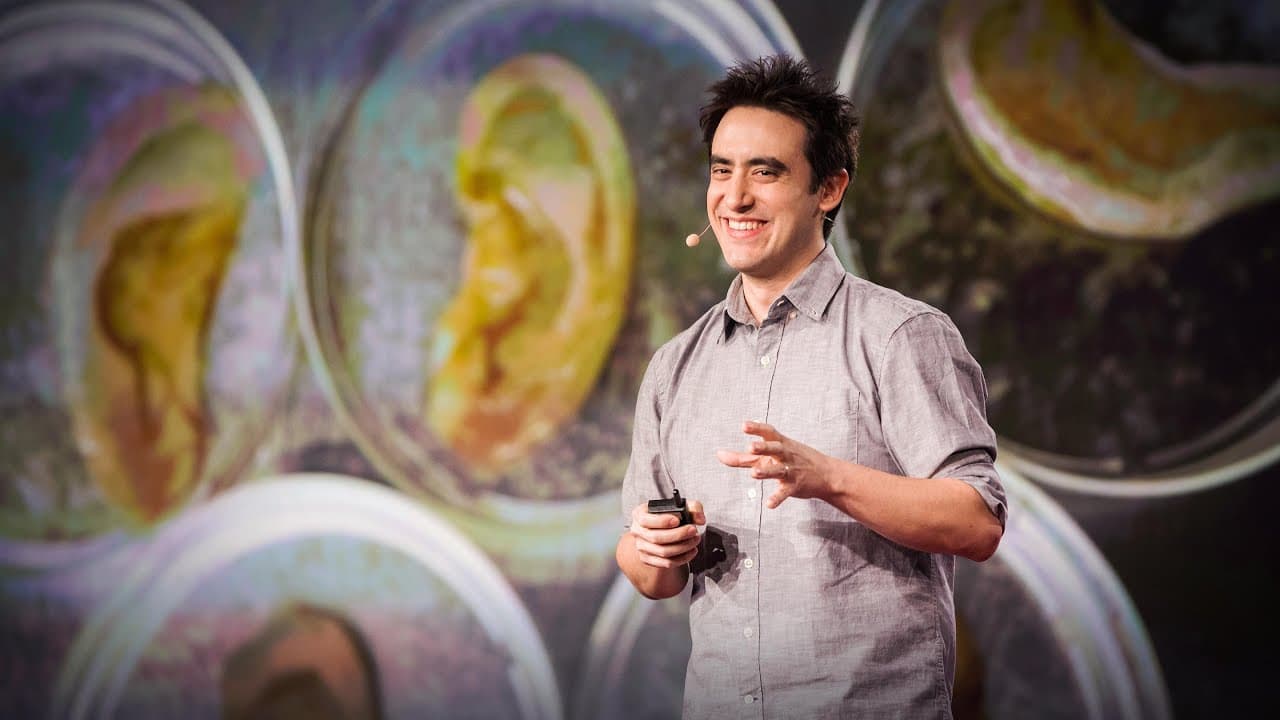
The speaker and his lab removed all the apple cells and DNA from a Macintosh apple, leaving behind the cellulose scaffold. They then implanted human cells into the scaffold, creating a structure reminiscent of how our own tissues are organized.
Q: Can body parts be made out of apples?
The speaker's lab carved ears out of an apple and grew cells on them. While the lab is not in the ear-manufacturing business, they found that using apples as scaffolds is cost-effective and not that difficult to do. They even made the instructions available online for anyone to try it at home.
Q: How does the speaker propose using asparagus in biomedical applications?
The speaker noticed that the cellulose structure of asparagus stalks resembles the organization of nerves and the spinal cord. The lab is exploring the possibility of growing axons and neurons down the channels of asparagus, potentially forming new connections between damaged or severed nerves.
Summary & Key Takeaways
-
The speaker enjoys looking through garbage to find old electronics, particularly CD-ROM drives, which he uses to create new devices.
-
He leads a biological research lab that values creativity and curiosity, and encourages people to build equipment from garbage to foster creativity.
-
The speaker's lab has successfully grown human cells on an apple scaffold and used asparagus as a potential source for growing axons and neurons, showing the potential for using unconventional materials in scientific research.
Read in Other Languages (beta)
Share This Summary 📚
Summarize YouTube Videos and Get Video Transcripts with 1-Click
Try YouTube Summary with ChatGPT & Claude or YouTube Transcript Generator
Explore More Summaries from TED 📚



Summarize YouTube Videos and Get Video Transcripts with 1-Click
Try YouTube Summary with ChatGPT & Claude or YouTube Transcript Generator