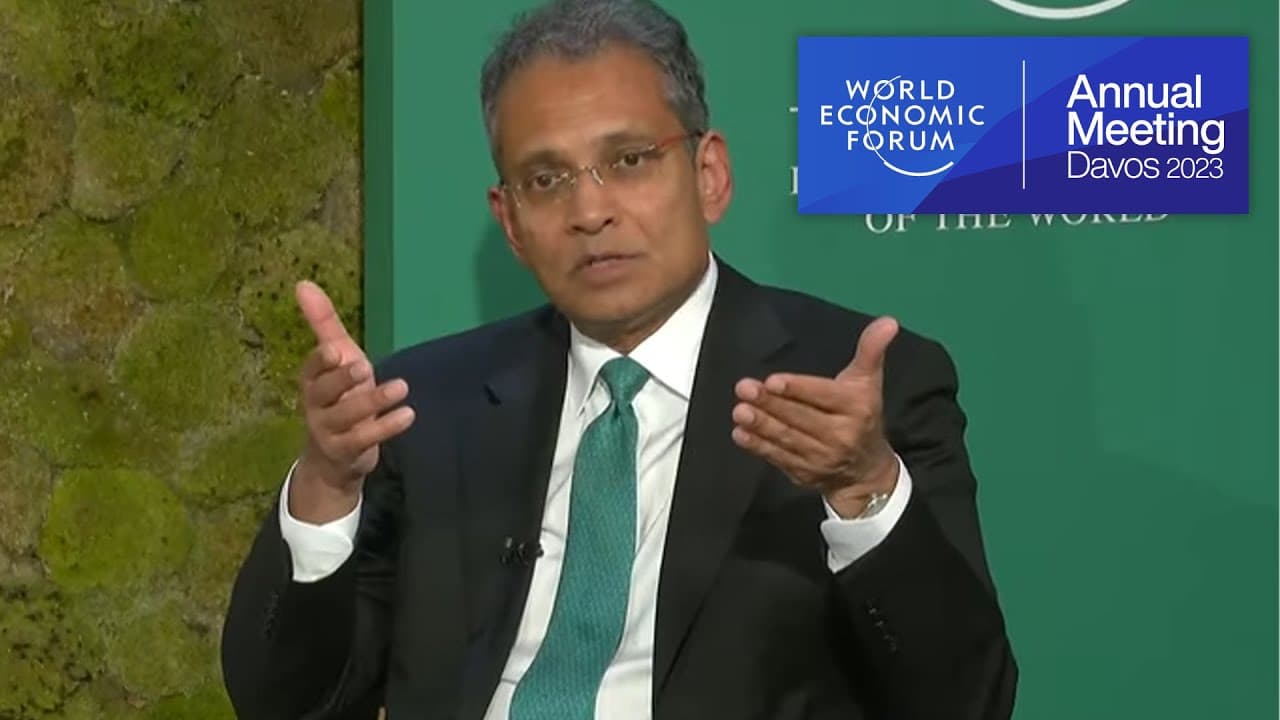
The Jobs and Skills of a Green Transition | World Economic Forum | Davos 2023
TL;DR
The transition to a green economy requires a skilled workforce, but there are challenges in meeting the demand for green jobs.
Transcript
uh good afternoon um on a snowy day a snowy afternoon here in Davos to everybody online thank you for joining us everybody in the room thank you this is uh this is not uh Henry Kissinger's session so I think but this is very much a 21st century uh question and I'm really pleased that the The Forum has brought us together on this subject the issue o... Read More
Key Insights
- 💚 The demand for green jobs is increasing across various sectors, not solely related to energy.
- 💚 Upskilling and reskilling are crucial in preparing the workforce for the transition to a green economy.
- 💦 Governments and companies must work together to create training programs and investment opportunities.
- 📣 The skills gap extends beyond technical skills, requiring a mindset shift towards a greener future.
- 💚 The transition to a green economy provides an opportunity to address regional disparities and develop new partnerships.
- 🌐 Building a global talent pipeline is essential, as talent and opportunities are distributed unevenly.
- 🎓 The curriculum in education systems needs to be updated to include green skills from elementary level to higher education.
Install to Summarize YouTube Videos and Get Transcripts
Explore YouTube Video Summarizer or Get YouTube Transcript Extractor
Questions & Answers
Q: What are green skills, and how are they in demand?
Green skills refer to jobs that contribute to a non-carbon economy, and their demand is growing across various sectors. For example, eco-conscious fashion has seen a 263% increase in demand in the last five years.
Q: How is the European Union supporting the transition to green jobs?
The European Commission is working on a just transition, aiming to transform the threat of job loss into opportunities. They are investing in training programs and funds to help regions affected by the transition, such as coal mining areas.
Q: How are companies like Fortescue and Aqua addressing the skills gap in renewable energy?
These companies recognize the importance of retraining and reskilling their workforce. Fortescue successfully transitioned their mining operations to use autonomous vehicles, retraining workers into digitized and data-driven roles. Aqua focuses on providing training schools in regions where they operate to meet the demand for renewable energy skills.
Q: How can public and private sectors collaborate to address the skills gap?
Collaboration is key in creating a skilled workforce. Governments need to align policy goals with industry needs, and companies must invest in training programs. Engaging with educational institutions to update curricula and providing apprenticeships can also bridge the skills gap.
Summary & Key Takeaways
-
The world economic forum discusses the critical dependencies for a smooth transition and revolution in renewable energy, including the need for a skilled workforce.
-
LinkedIn has identified a variety of green skills in demand, with the fastest-growing skill being eco-conscious fashion.
-
The European Commission emphasizes the importance of a just transition, supporting workers in transforming and finding new jobs.
-
Resource companies like Fortescue and Aqua recognize the need to retrain and reskill their workforce to meet the demands of renewable energy.
Read in Other Languages (beta)
Share This Summary 📚
Summarize YouTube Videos and Get Video Transcripts with 1-Click
Try YouTube Summary with ChatGPT & Claude or YouTube Transcript Generator
Explore More Summaries from World Economic Forum 📚
Summarize YouTube Videos and Get Video Transcripts with 1-Click
Try YouTube Summary with ChatGPT & Claude or YouTube Transcript Generator