"Evil" penguins: The reason you shouldn’t anthropomorphize animals | Lucy Cooke | Big Think
TL;DR
Popular culture likes to portray animals in human terms, seeking moral lessons from their behavior.
Transcript
so I think that a lot of I think a lot of popular Natural History likes to portray the animal kingdom in very human terms and and also stories that are popular seem to be ones where animals are behaving like us they're providing us with some kind of reassurance in some way you know animals on television you know tend to have nice nuclear family set... Read More
Key Insights
- 🍉 Popular culture often portrays animals in human terms, seeking moral lessons from their behavior.
- 🤪 The desire to see animals behaving morally goes back centuries, as seen in medieval beastiaries.
- 😑 The media and popular press continue to perpetuate these myths by telling stories of animals behaving heroically or morally.
- ❓ Anthropomorphizing animals can prevent a true understanding and appreciation of their diverse and sometimes morally repugnant behaviors.
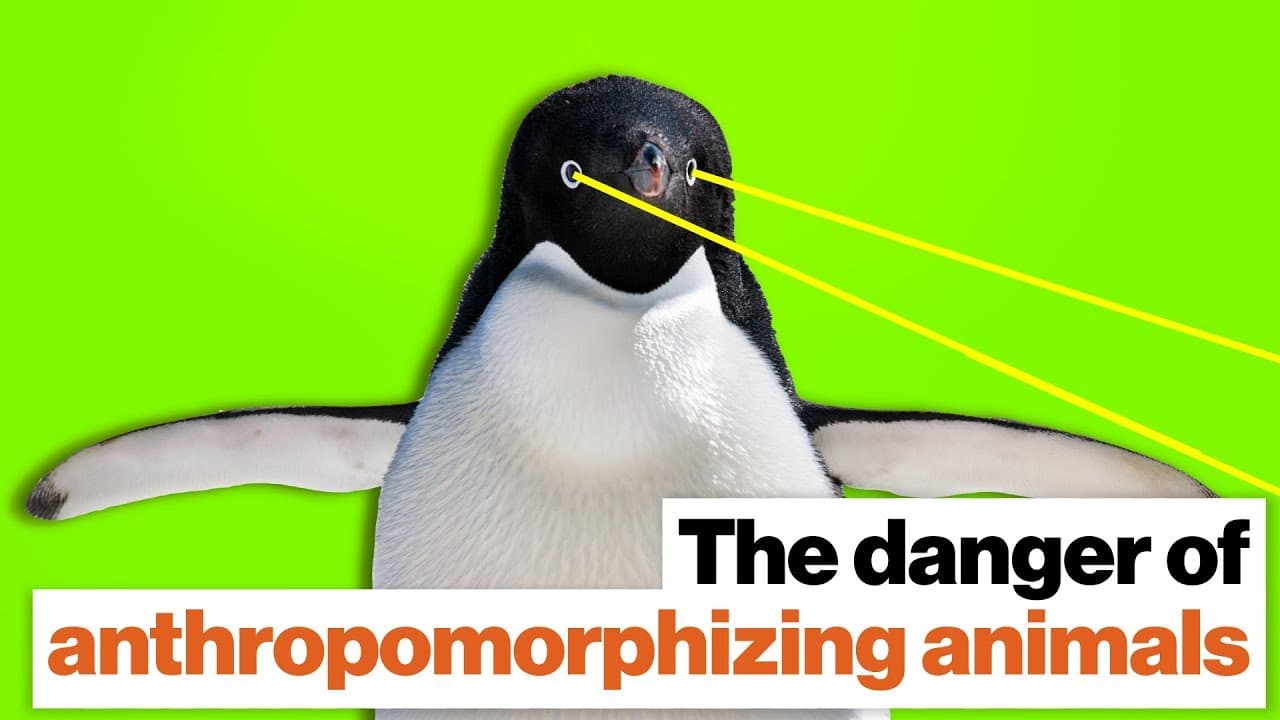
- 🐧 Penguins, often depicted as cute and monogamous, engage in varied and sometimes disturbing sexual behaviors due to reproductive pressures.
Install to Summarize YouTube Videos and Get Transcripts
Explore YouTube Video Summarizer or Get YouTube Transcript Extractor
Questions & Answers
Q: How does popular culture depict animal behavior?
Popular Natural History often portrays animals in human terms, showing them with nice nuclear families and behaving like us, giving us reassurance and moral guidance.
Q: Where does the desire to see animals in moralistic ways come from?
This desire can be traced back to medieval beastiaries, which were religious animal encyclopedias that sought to find moral lessons in animal behavior, believing that God had implanted them for human instruction.
Q: Why is anthropomorphizing animals risky?
Anthropomorphizing animals can prevent us from understanding them for what they truly are. It denies the diversity and complexity of the animal kingdom, which includes behaviors that may be morally repugnant to humans.
Q: Are penguins truly monogamous and cute?
No, the popular belief that penguins are monogamous and cute is a myth. Penguins have short windows for reproduction and are flooded with hormones, leading them to engage in indiscriminate and sometimes disturbing sexual behavior.
Summary & Key Takeaways
-
Animals in popular culture are often portrayed as having human-like behavior and values.
-
The desire to see animals behaving morally, like human families, has been propagated for centuries.
-
The media and popular press often tell stories of animals behaving in heroic or Christian ways, ignoring their true nature.
Read in Other Languages (beta)
Share This Summary 📚
Summarize YouTube Videos and Get Video Transcripts with 1-Click
Try YouTube Summary with ChatGPT & Claude or YouTube Transcript Generator
Explore More Summaries from Big Think 📚




Summarize YouTube Videos and Get Video Transcripts with 1-Click
Try YouTube Summary with ChatGPT & Claude or YouTube Transcript Generator