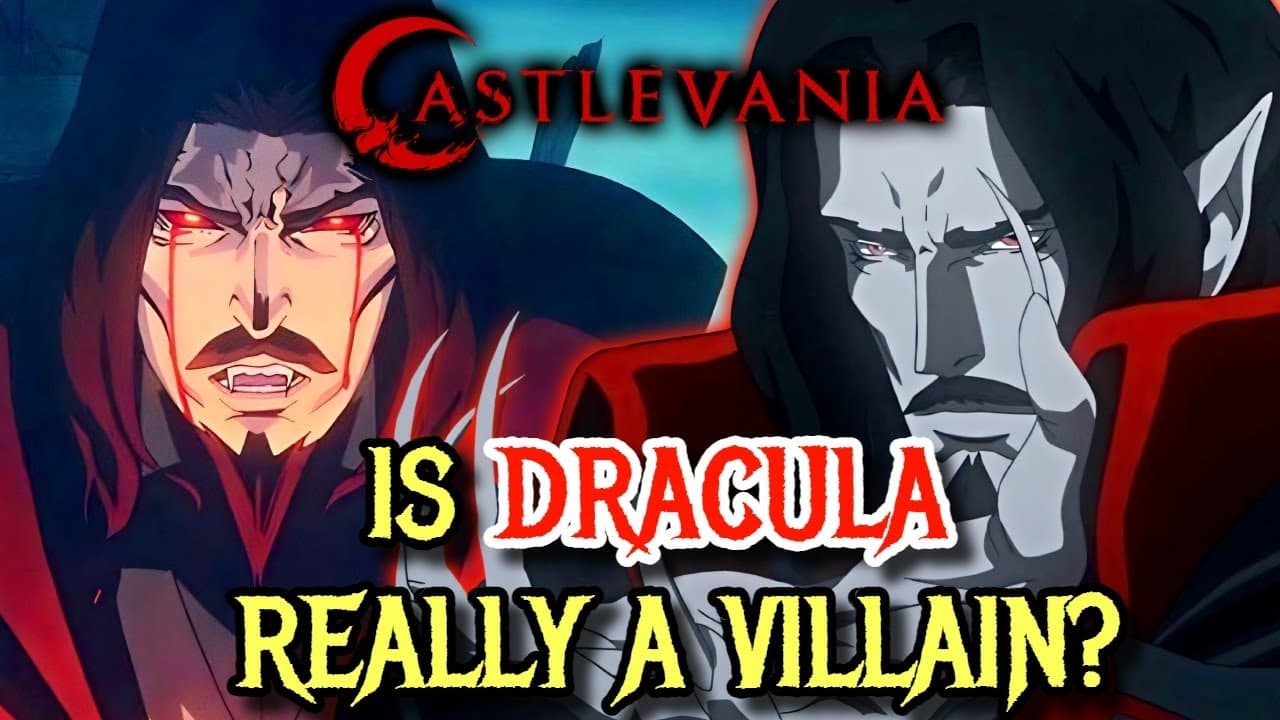
Was Dracula Just A Pawn In Castlevania Netflix Series? - Explored
TL;DR
The analysis explores how Dracula's character evolves from a villain in games to a tragic anti-hero in the Netflix series.
Transcript
now what's a good video game series Without a recurring megalomaniac who's hellbent on world domination the Castlevania franchise has reveled in Dracula's reign of terror for centuries every new era in the Belmont Clan has seen the dark lord camouflage the world in his nefarious agendas and no matter how many times they've taken him down somehow th... Read More
Key Insights
- 🫠 Dracula's character arc in the Netflix series adds layers of complexity to his traditional portrayal as a soulless villain, exploring themes of love and loss.
- 🎁 The depiction of Dracula's relationship with Lisa emphasizes the depth of human connection, presenting her as a grounding force that keeps him tethered to his humanity.
- 🫵 The series highlights how grief and tragedy can distort one's morals, making the viewer question the nature of villainy and the capacity for redemption.
- 🥺 Dracula's descent into tyranny is manipulated by death, showcasing how external forces can instigate personal tragedies leading to catastrophic outcomes.
- 😧 The exploration of vengeance and justice serves as a central theme, with Dracula’s motives shifting from outright malice to a desperate quest for meaning in his anguish.
- 🫵 The series cleverly intertwines historical and fictional elements, grounding Dracula’s character in a blend of mythos and psychological realism, inviting viewers to feel empathy for his plight.
- 🥰 The narrative reinforces the idea that true power lies in emotional connections, as displayed in Dracula's evolution when influenced by love and loss, forcing viewers to grapple with their own interpretations of good and evil.
Install to Summarize YouTube Videos and Get Transcripts
Explore YouTube Video Summarizer or Get YouTube Transcript Extractor
Questions & Answers
Q: How does Dracula's origin differ between the games and the Netflix series?
In the games, Dracula's backstory reveals him as Mithas Chronist, a fallen Crusader within a story fueled by jealousy. Conversely, the Netflix series portrays him primarily as Vlad Tepes, emphasizing his tragic love for Lisa and the profound betrayal he faces, leading to his monstrous transformation. This shift provides viewers with a more sympathetic view of Dracula's motivations.
Q: What pivotal event drives Dracula’s wrath against humanity in the series?
Dracula's murderous agenda is ignited by the tragic execution of his wife, Lisa, who is burned alive by the church on allegations of witchcraft. This unthinkable loss triggers his descent into madness, prompting him to seek vengeance against the very humanity that condemned his beloved, marking a significant turning point in his character arc.
Q: How does the series portray Dracula as an anti-hero?
The series presents Dracula as an anti-hero through his tragic backstory and his feelings of profound loss after Lisa's death. Although he commits horrific acts against humanity, these actions are depicted as reactions to his grief and manipulation, showing moments of compassion that reflect his lingering humanity, which ultimately complicates the audience's perception of him as merely a villain.
Q: Who are the significant characters that influence Dracula’s actions in the series?
Lisa, as Dracula's wife, is a primary influence, as her belief in him reshapes his humanity. Additionally, figures like the church's bishop catalyze his wrath, while death, disguised as Varney, manipulates him to nurture his darker ambitions. These relationships create a tangled web of loyalty and betrayal that significantly impact Dracula's choices and transformations throughout the series.
Q: How does the ending of the series reflect on Dracula and Lisa's relationship?
The series concludes with Dracula and Lisa resurrected, illustrating the cyclical nature of their love and suffering. Their reunion symbolizes hope and closure, showcasing their codependent relationship as essential to both characters' identities. By distancing themselves from their past traumas, they illustrate a poignant message of redemption and the potential for peace after chaos.
Summary & Key Takeaways
-
Dracula, traditionally seen as a villain in the Castlevania games, gains depth in the Netflix adaptation, revealing vulnerabilities and motives centered around his love for Lisa.
-
The Netflix series showcases Dracula's descent into madness following Lisa's wrongful execution, portraying his genocidal acts as fueled by grief and manipulation by death itself.
-
The conclusion of the series offers closure for Dracula and Lisa, emphasizing their dependence on each other, highlighting themes of love, loss, and redemption.
Read in Other Languages (beta)
Share This Summary 📚
Summarize YouTube Videos and Get Video Transcripts with 1-Click
Try YouTube Summary with ChatGPT & Claude or YouTube Transcript Generator
Explore More Summaries from Marvelous Videos 📚


Summarize YouTube Videos and Get Video Transcripts with 1-Click
Try YouTube Summary with ChatGPT & Claude or YouTube Transcript Generator