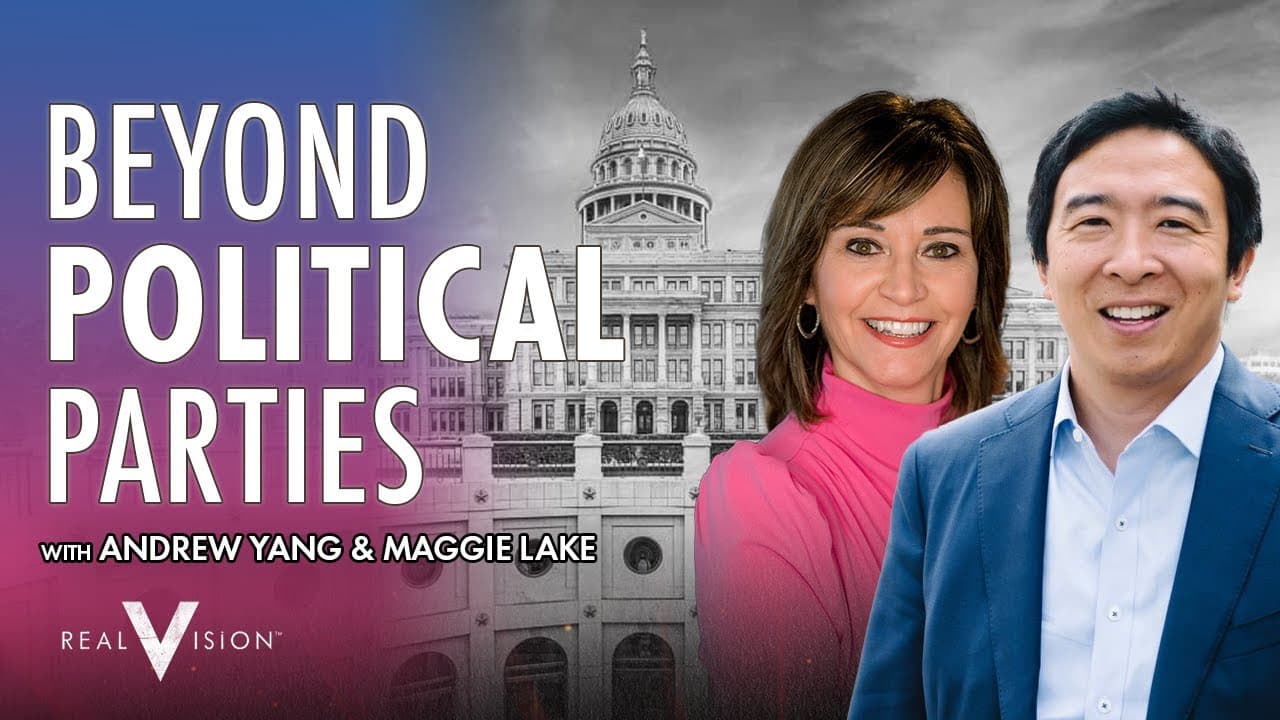
Andrew Yang: Using Blockchain to Change the System
TL;DR
Andrew Yang discusses blockchain's potential to depoliticize American governance.
Transcript
Beyond political parties please welcome associate general counsel for copper.co karil Khan public speaking professionals say that you win or lose the battle for audience in the first 30 seconds fortunately I only have 30 seconds to introduce myself and more importantly to immensely interesting guests I'm kurokan AGC associate General counselor for ... Read More
Key Insights
- Andrew Yang advocates for blockchain as a tool to reduce political polarization and improve governance, emphasizing its potential in secure mobile voting.
- Yang highlights the Forward Party's mission to provide a centrist alternative to the two-party system, aiming for practical solutions that benefit the public.
- The Forward Party seeks to leverage independent voters and promote non-partisan primaries and ranked-choice voting to align political incentives with public interest.
- Yang notes that blockchain could offer personal data control, countering current commoditization by tech giants, and improve systems like healthcare data management.
- He acknowledges the negative perception of blockchain due to financial speculation and stresses the need for practical use cases to shift the narrative positively.
- Yang discusses the impact of FTX's collapse on regulatory discussions, advocating for balanced regulation that fosters innovation while addressing security concerns.
- He stresses the importance of education and storytelling in Washington to convey blockchain's potential benefits beyond financial speculation.
- The Forward Party plans to influence the 2024 election by organizing swing voters in key states to push for intelligent, non-extremist policies.
Install to Summarize YouTube Videos and Get Transcripts
Explore YouTube Video Summarizer or Get YouTube Transcript Extractor
Questions & Answers
Q: What is Andrew Yang's vision for blockchain in politics?
Andrew Yang envisions blockchain as a tool to reduce political polarization and improve governance by enabling secure mobile voting and giving individuals control over their personal data. He believes these technologies can solve fundamental problems, such as financial inclusion and data privacy, and help depoliticize governance by providing practical solutions that benefit the public.
Q: What is the Forward Party's mission?
The Forward Party's mission is to provide a centrist alternative to the traditional two-party system. It aims to align political incentives with public interest through non-partisan primaries and ranked-choice voting. The party seeks to leverage independent voters to promote practical, non-extremist solutions that genuinely benefit families and communities, moving beyond the entrenched political polarization.
Q: How does Andrew Yang propose to change the current political system?
Andrew Yang proposes changing the current political system by advocating for non-partisan primaries and ranked-choice voting to better align political incentives with public interest. He believes these changes can create a more representative system that weakens the control of the two-party system, allowing for more innovative and practical solutions that address the needs of the public.
Q: What challenges does blockchain face in gaining acceptance in Washington?
Blockchain faces challenges in gaining acceptance in Washington due to its current association with financial speculation and the negative perception following events like the FTX collapse. To overcome these challenges, Yang emphasizes the need for education and storytelling to convey blockchain's potential benefits beyond speculation, focusing on practical use cases that solve real-world problems and improve governance.
Q: How does Yang view the role of states in blockchain regulation?
Yang views states as crucial in leading blockchain regulation, as state-level initiatives can create momentum and influence federal policy. He cites examples like California's consumer privacy laws, which spurred federal discussions. He believes states adopting progressive regulatory Frameworks can anchor and guide federal approaches, ultimately fostering innovation while addressing security concerns.
Q: What is the Forward Party's strategy for the 2024 election?
For the 2024 election, the Forward Party plans to organize swing voters in key states to push for intelligent, non-extremist policies. By aggregating 300,000 voters across six swing states, the party aims to influence policy direction and advocate for a more representative system that addresses the country's problems, leveraging the dissatisfaction with the current political choices.
Q: What impact did FTX's collapse have on blockchain regulation discussions?
FTX's collapse had a significant negative impact on blockchain regulation discussions, increasing the appetite for regulation due to the headlines and real-world consequences. Yang believes this event has shifted the focus towards more stringent regulatory measures, potentially hindering innovation. He advocates for balanced regulation that addresses security concerns while fostering the development of blockchain technologies.
Q: What are the potential benefits of blockchain for personal data control?
Blockchain offers potential benefits for personal data control by allowing individuals to own and manage their data, countering the current commoditization by tech giants. Yang highlights how blockchain could enable secure, portable profiles across platforms, improve systems like healthcare data management, and reduce costs, providing individuals with greater privacy and control over their personal information.
Summary & Key Takeaways
-
Andrew Yang, speaking at the Texas Blockchain Summit, argues that blockchain technology could help depoliticize American governance by enabling secure mobile voting and personal data control. He emphasizes the Forward Party's goal of providing a centrist alternative to the traditional two-party system, aiming for solutions that genuinely benefit the public.
-
Yang highlights the need for non-partisan primaries and ranked-choice voting to better align political incentives with public interest. He also notes the negative perception of blockchain due to financial speculation and stresses the need for practical use cases to shift the narrative positively.
-
Discussing regulation, Yang acknowledges the impact of FTX's collapse on regulatory discussions, advocating for balanced regulation that fosters innovation while addressing security concerns. He emphasizes the importance of education and storytelling in Washington to convey blockchain's potential benefits beyond financial speculation.
Read in Other Languages (beta)
Share This Summary 📚
Summarize YouTube Videos and Get Video Transcripts with 1-Click
Try YouTube Summary with ChatGPT & Claude or YouTube Transcript Generator
Explore More Summaries from Real Vision 📚




Summarize YouTube Videos and Get Video Transcripts with 1-Click
Try YouTube Summary with ChatGPT & Claude or YouTube Transcript Generator