Why we see what we do - Professor Wiliam Ayliffe
TL;DR
Our brain constructs our perception of the visual world based on ambiguous information from our eyes, past experiences, and evolutionary factors.
Transcript
uh thanks very much for coming along this evening to this the final part of the series of lectures that I've done trying to explain how we see things and we've started off some time ago looking at the anatomy of the visual system we'll run through those bits where they're relevant and then we looked at where so-called divisional system goes wrong w... Read More
Key Insights
- 🤑 The retinal image is ambiguous and lacks depth and color information, yet our brain constructs a rich perception of the visual world.
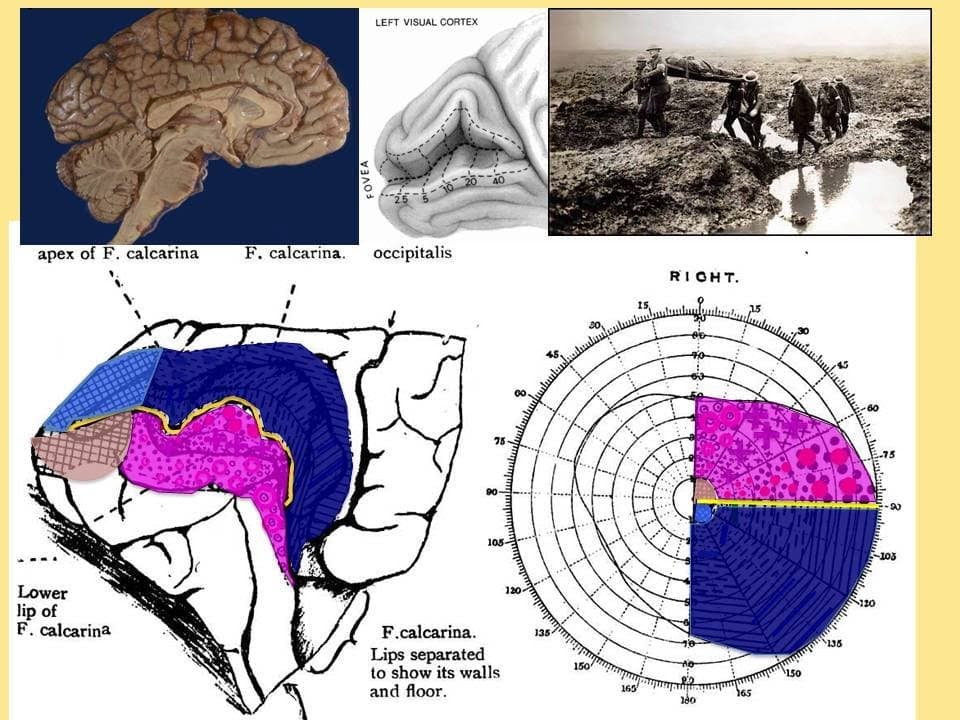
- 🧠 Different areas of the brain, such as the visual cortex and associated visual areas, specialize in processing specific aspects of vision.
- 💁 Our perception is influenced by past experiences, evolutionary factors, and contextual information such as lighting and background.
- ⛑️ Depth perception relies on a combination of monocular and binocular depth cues to determine the relative distances of objects.
- 💠 Object recognition involves analyzing shape, color, and other features to identify and categorize objects accurately.
- 😒 Our brain uses probabilistic models and Bayesian inference to make informed guesses about perception based on available evidence.
Install to Summarize YouTube Videos and Get Transcripts
Explore YouTube Video Summarizer or Get YouTube Transcript Extractor
Questions & Answers
Q: How does our brain construct our perception of the visual world?
Our brain combines sensory input from our eyes with past experiences and evolutionary factors to create our perception of the visual world. It processes the retinal image and extracts features such as depth, color, motion, and object recognition to form a cohesive and meaningful perception.
Q: What role does the visual cortex play in vision?
The visual cortex is responsible for processing visual information from the eyes. It receives input from the retina and then further analyzes and interprets the information to extract important features. Different areas within the visual cortex specialize in processing specific aspects of vision, such as depth, color, and motion.
Q: How does our brain perceive depth?
Our brain uses various depth cues, such as perspective, texture gradients, and shape from shading, to perceive depth. These cues provide information about the relative distances and positions of objects in the visual scene. Our brain also relies on the binocular disparity between the two eyes, which allows us to perceive depth in three dimensions.
Q: How does the brain recognize objects?
Object recognition involves complex processing in the visual cortex, particularly in the ventral stream. This stream is responsible for analyzing shape, color, and other features to identify and categorize objects. It employs a combination of bottom-up processing, which involves processing the raw visual input, and top-down processing, which uses prior knowledge and expectations to guide perception.
Summary & Key Takeaways
-
Vision is a complex process that involves the interpretation of the retinal image, which is inherently ambiguous and lacks depth and color information.
-
Our brain uses a combination of sensory input, past experiences, and evolutionary factors to construct our perception of the visual world.
-
Different areas of the brain, such as the visual cortex and associated visual areas, are responsible for processing various aspects of vision, including depth, color, motion, and object recognition.
Read in Other Languages (beta)
Share This Summary 📚
Summarize YouTube Videos and Get Video Transcripts with 1-Click
Try YouTube Summary with ChatGPT & Claude or YouTube Transcript Generator
Explore More Summaries from Gresham College 📚

Summarize YouTube Videos and Get Video Transcripts with 1-Click
Try YouTube Summary with ChatGPT & Claude or YouTube Transcript Generator