Advanced Quantum Mechanics Lecture 8
TL;DR
Second quantization is a mathematical framework used to describe many-particle systems by treating particles as excitations of a quantum field.
Transcript
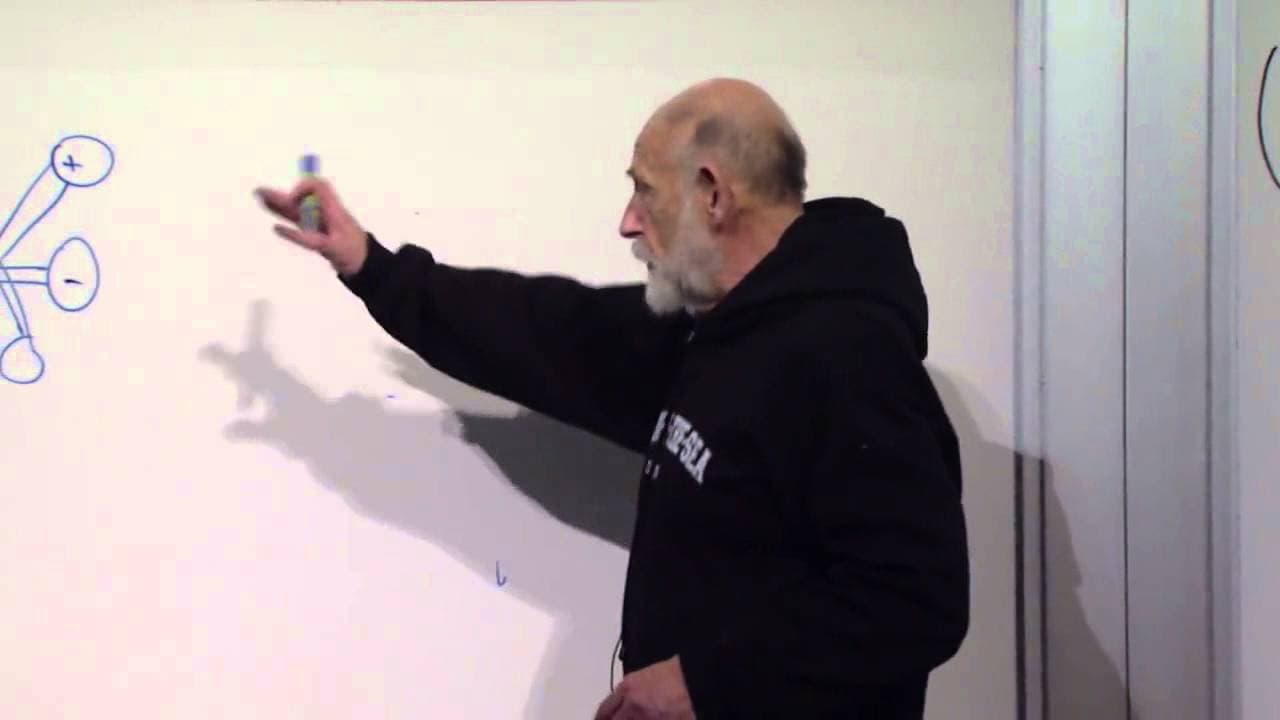
Stanford University um this goes back to particle physics it's a bit off the subject to class but there's evidence that the neutrinos have math and they mix MH in a particle physics class we didn't address mixing and I but I wanted to ask if the neutrinos if they have a mass must they have the same mass no they don't have all the same mass so then ... Read More
Key Insights
- 🦾 Second quantization is a mathematical framework used to describe many-particle systems in quantum mechanics.
- 👻 Field operators are used to represent particles in second quantization, allowing for creation and annihilation of particles.
- 🏑 The field operators capture the statistical behavior of particles through commutation or anti-commutation relations.
Install to Summarize YouTube Videos and Get Transcripts
Explore YouTube Video Summarizer or Get YouTube Transcript Extractor
Questions & Answers
Q: What is second quantization and how is it different from first quantization?
Second quantization is a mathematical formalism that describes many-particle systems, treating particles as excitations of a quantum field. In contrast, first quantization describes particles as individual objects with wave functions.
Q: How are particles represented in second quantization?
In second quantization, particles are represented by field operators, which can create or annihilate particles. The field operators have commutation or anti-commutation relations that determine the statistics of the particles.
Q: What is the role of the field operators in second quantization?
The field operators describe the creation and annihilation of particles in second quantization. They allow us to express many-particle states in terms of occupation numbers, which indicate the number of particles in each mode of the quantum field.
Q: How does second quantization handle quantum statistics?
Second quantization naturally incorporates quantum statistics through the commutation or anti-commutation relations of the field operators. This leads to the correct statistical behavior of particles, such as the Pauli exclusion principle for fermions or the Bose-Einstein statistics for bosons.
Summary & Key Takeaways
-
Second quantization is a mathematical framework used to describe many-particle systems in quantum mechanics.
-
It treats particles as excitations of a quantum field, leading to the use of field operators instead of wave functions.
-
The field operators can create or annihilate particles, and their commutation or anti-commutation relations determine the statistics of the particles.
Read in Other Languages (beta)
Share This Summary 📚
Summarize YouTube Videos and Get Video Transcripts with 1-Click
Try YouTube Summary with ChatGPT & Claude or YouTube Transcript Generator
Explore More Summaries from Stanford 📚

Summarize YouTube Videos and Get Video Transcripts with 1-Click
Try YouTube Summary with ChatGPT & Claude or YouTube Transcript Generator