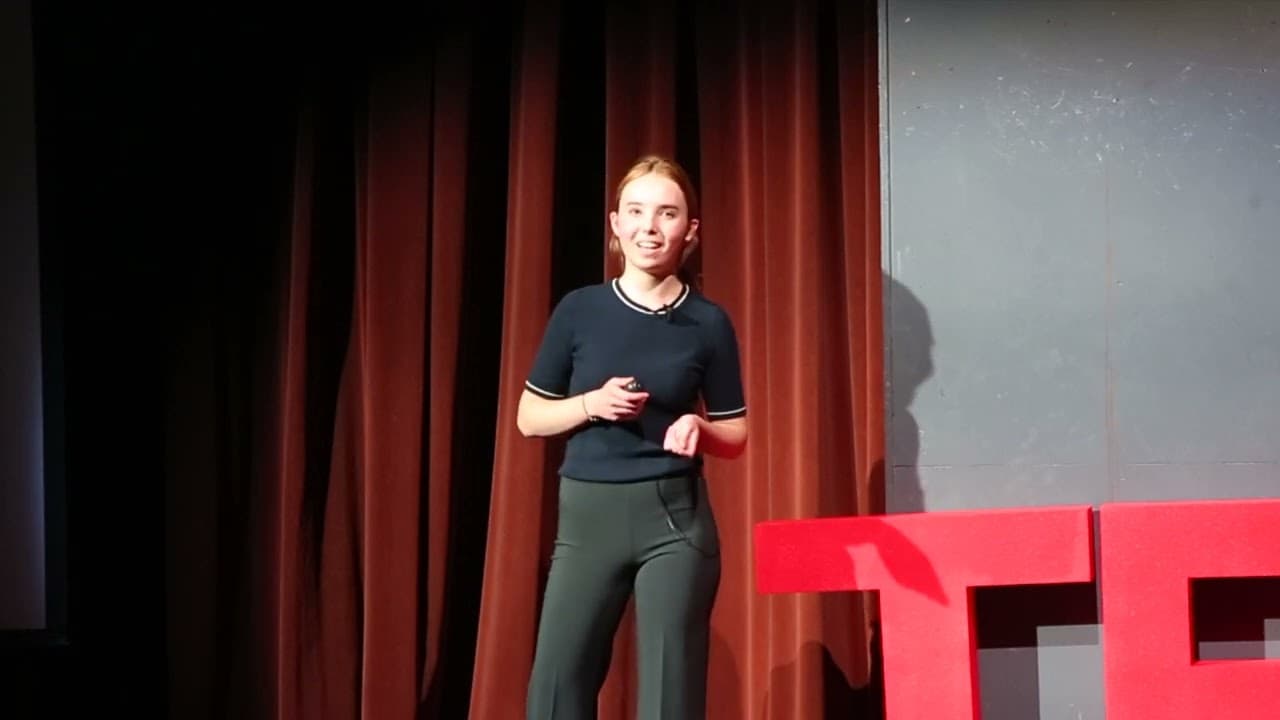
Technology, US Political Climate, and the Perception of Morality | Taran Hano | TEDxLickWilmerdingHS
TL;DR
The rapid advancement in technology has made it challenging to distinguish between right and wrong, and raises questions about AI, robots, and the impact on morality.
Transcript
foreign [Applause] for those of you who have never seen this embalmed yes embalmed philosopher let me familiarize you Jeremy Bentham was born in 1782 and died in 1848. and at his request was then preserved and placed in a glass case in a University Center in London where unknowing passerbys could be greeted by his comforting face which is Wax By th... Read More
Key Insights
- ❓ Jeremy Bentham's philosophy of utilitarianism heavily influenced legal and social reform.
- ❓ Technology and political polarization have made it difficult to differentiate between political adversaries and moral enemies.
- 💄 Social media has contributed to the spread of fake information, making ethical decision-making challenging.
- 🤙 The rejection of patent applications for AI inventors calls into question the definition of a natural person and challenges traditional legal frameworks.
- 🤨 The fear of robots taking over jobs raises ethical concerns about the future of work.
- 🛟 Technological advancements have made our lives easier but also complicated our moral decision-making.
- ❓ It is crucial to be morally conscious and consider the impact of our decisions on technology and society.
Install to Summarize YouTube Videos and Get Transcripts
Explore YouTube Video Summarizer or Get YouTube Transcript Extractor
Questions & Answers
Q: Who was Jeremy Bentham and what were his contributions to philosophy?
Jeremy Bentham was a British philosopher known as the father of modern utilitarianism. He advocated for legal and social reform based on the greatest pleasure and least pain principle.
Q: How has technology and political polarization affected moral decision-making?
Technology and political polarization have blurred the lines between political adversaries and moral enemies. It has become challenging to distinguish between an individual and their political views, leading to demonization and a reduction of free thinking and independence.
Q: How has social media impacted ethical decision-making?
Social media has made it easier to spread fake information and subjective truths. This makes it more difficult to determine what is ethically and morally correct, as exemplified by the spread of a false infographic comparing the death toll of Uyghur Muslims to the Holocaust.
Q: What are the implications of patenting an AI system as an inventor?
The rejection of patent applications for an AI system as an inventor raises questions about the definition of a natural person and the decisions made by governments worldwide. It challenges the traditional understanding of human inventors and prompts us to consider the legality and implications of AI technology.
Summary & Key Takeaways
-
Jeremy Bentham, a British philosopher and the father of modern utilitarianism, emphasized legal and social reform.
-
With technology and political polarization, it has become difficult to differentiate between political adversaries and moral enemies.
-
Social media and the prevalence of fake information have further complicated ethical decision-making.
Read in Other Languages (beta)
Share This Summary 📚
Summarize YouTube Videos and Get Video Transcripts with 1-Click
Try YouTube Summary with ChatGPT & Claude or YouTube Transcript Generator
Explore More Summaries from TEDx Talks 📚




Summarize YouTube Videos and Get Video Transcripts with 1-Click
Try YouTube Summary with ChatGPT & Claude or YouTube Transcript Generator