Greek Historian Accepts Islam
TL;DR
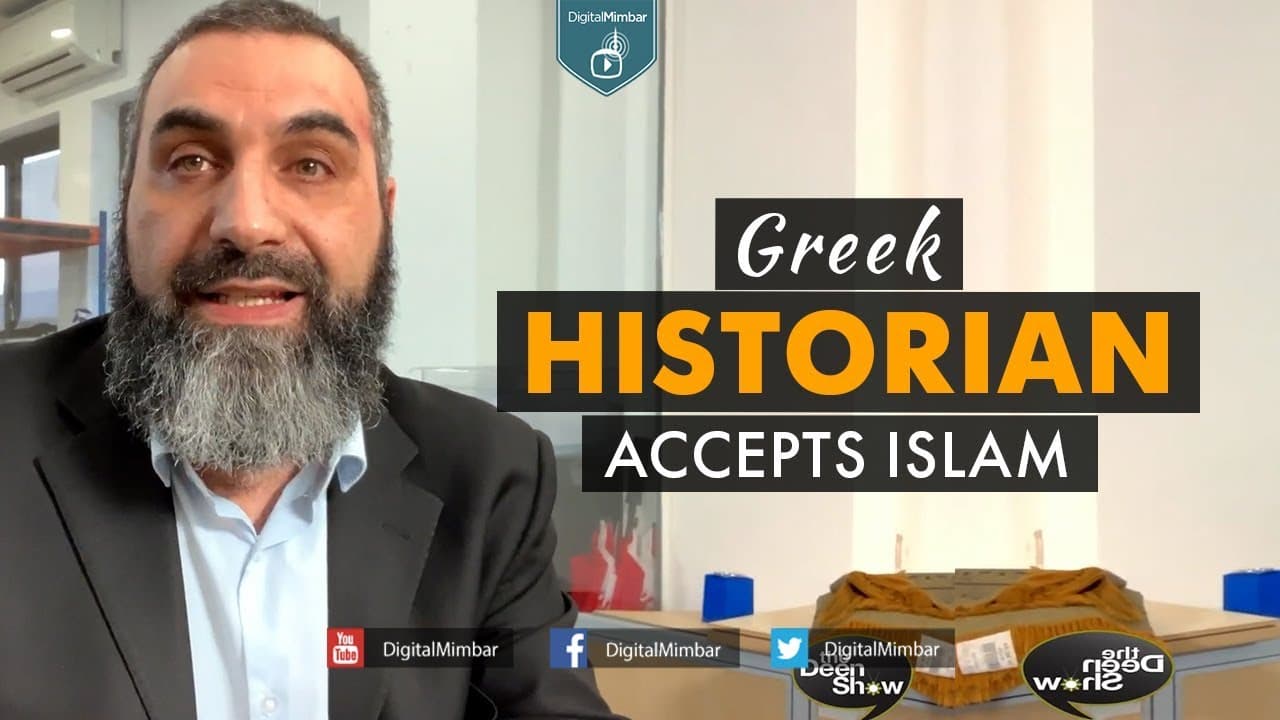
Despite the misconception that converting to Islam means changing one's nationality, a Greek historian highlights that Islam is a personal choice, not a nationality, and emphasizes the importance of education and understanding history to combat radical ideologies.
Transcript
if they made all our young boys Janissaries then how come we still have a Greek nation how come we Greeks are still there we still speak Greek and we're still Greek worship one God straightforward simple basically nationality stays the same I will die Greek and shout Allah saw that's also for my parents that they know that I will die greatly Tess h... Read More
Key Insights
- 🛐 Converting to Islam does not change one's nationality, but is a personal choice of worshiping the Creator.
- 🖐️ History can play a significant role in shaping one's understanding of Islamic teachings and dispelling misconceptions.
- ❓ Nationalism and religion should not be conflated, as they are separate aspects of an individual's identity.
- 😐 Clear education and a neutral perspective on history are essential in combating radical ideologies.
- ❓ The connection between Islam and historical figures, such as Abdul William, highlights the diverse and inclusive nature of the faith.
- 😌 Myths and lies in history can lead to misunderstandings and perpetuate hate, necessitating a critical examination of historical sources.
- 🛐 Recognizing the importance of worshiping the Creator rather than the creation is a fundamental aspect of Islam.
Install to Summarize YouTube Videos and Get Transcripts
Explore YouTube Video Summarizer or Get YouTube Transcript Extractor
Questions & Answers
Q: Does converting to Islam mean changing one's nationality?
No, converting to Islam is a personal choice and does not alter one's nationality. Nationality and religion are separate identities.
Q: How did the historian's Greek background influence his journey to Islam?
Coming from a Greek background where religion and nationality are intertwined, the historian had to challenge the misconception that converting to Islam would change his Greek identity.
Q: How did history play a role in the historian's conversion to Islam?
History was the catalyst for the historian's acceptance of Islam. By studying history, he found the truth and realized that many myths and lies were perpetuated.
Q: How can education and understanding history combat radical ideologies?
By providing clear and accurate education, individuals can combat radical ideologies based on misinformation. Understanding history with a neutral perspective helps separate fact from fiction.
Summary & Key Takeaways
-
A Greek man shares his personal journey of converting to Islam and dispels the misconception that converting to Islam means changing one's nationality.
-
He urges individuals to look beyond religion and focus on worshiping the Creator, emphasizing the importance of understanding history to combat radical ideologies.
-
The historian highlights the need for a clear education and a neutral perspective when examining historical facts, as myths and lies can perpetuate hate and misunderstandings.
Read in Other Languages (beta)
Share This Summary 📚
Summarize YouTube Videos and Get Video Transcripts with 1-Click
Try YouTube Summary with ChatGPT & Claude or YouTube Transcript Generator
Explore More Summaries from Digital Mimbar 📚


Summarize YouTube Videos and Get Video Transcripts with 1-Click
Try YouTube Summary with ChatGPT & Claude or YouTube Transcript Generator